
Campervan ownership costs in Spain: a 2026 budget guide
 Spaziou
Look beyond the purchase price.
Make a better campervan decision by adding up purchase or finance, insurance, fuel, maintenance, tyres, equipment, overnight stops and a contingency fund.
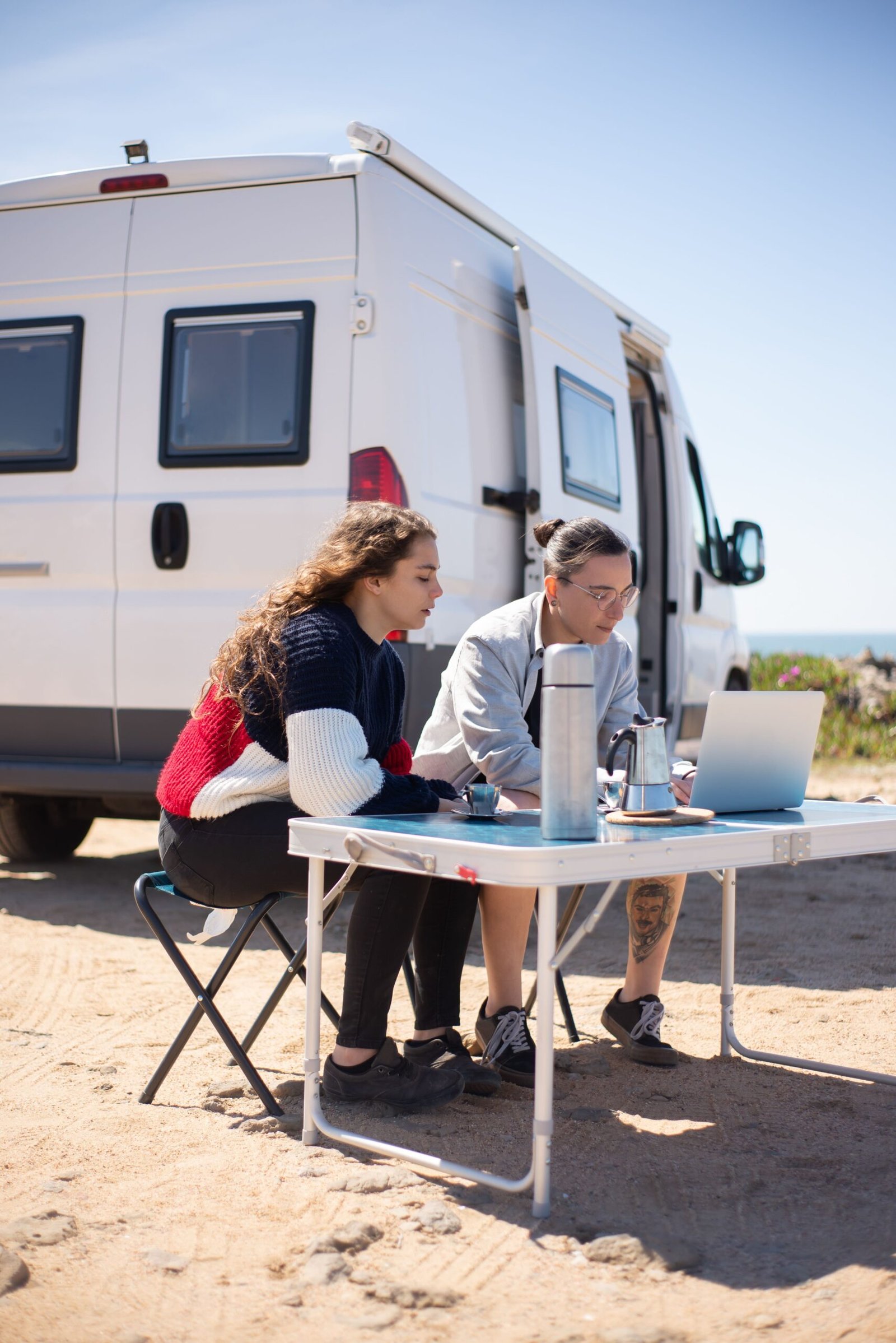
What does owning a campervan in Spain really cost in 2026? A complete expenses guide
Buying a campervan is only the beginning. If you want to know the real cost of owning one in Spain, you need to look well beyond the purchase price.
When you start looking at converted vans, it is easy to focus solely on the purchase price and forget everything that follows: insurance, fuel, maintenance, tyres, equipment, electricity, water, parking, repairs and, above all, the actual annual running costs.
Before buying a campervan, ask yourself something more important than “How much does a campervan cost?”.
What does owning and using a campervan really cost for a full year?
In this Spaziou guide, we look at every expense to consider in Spain in 2026, from buying the van to the small costs that can add up to hundreds of euros a year.
We will also look at different user profiles so you can estimate campervan costs for your own situation.
How much does owning a campervan cost per year?
There is no single price for a campervan.
The market ranges from small converted vans to large, fully equipped vehicles that can approach the price of a home.
As a general guide, we can divide them into several groups:
| Campervan type | Approximate range | Typical user |
|---|---|---|
| Compact used campervan | From a few thousand euros | Short breaks and first trips |
| Well-equipped used campervan | €20,000–40,000 | Couples and regular travellers |
| New compact campervan | €30,000–50,000+ | Mixed use and short breaks |
| Large panel-van camper | €40,000–70,000+ | Long trips |
| Premium campervan | €70,000+ | High level of equipment and comfort |
These amounts are only a guide: prices can vary greatly with the base vehicle, year, mileage, condition, conversion approval, equipment and demand.
This is where many people make their first mistake:
comparing two campervans only by their purchase price.
A €35,000 campervan can end up costing much more than a €40,000 one if it needs conversion work, tyres, a battery, heating or a major electrical upgrade.
The real cost of a campervan: more than the purchase price
To calculate campervan costs properly, divide expenses into several categories.
- Vehicle purchase.
- Finance.
- Insurance.
- Taxes.
- Fuel.
- Maintenance.
- Tyres.
- Repairs.
- Equipment.
- Power.
- Water.
- Parking.
- Campsites and motorhome stopovers.
- Accessories.
- Depreciation.
Some expenses recur, while others arise only occasionally.
That is precisely why it is important to look beyond the amount leaving your bank account each month.
1. The purchase price
Buying the vehicle will usually be the largest expense.
Even here, there are several possibilities.
Buying a new campervan
The main advantage of buying new is much greater freedom to choose the configuration, layout and equipment.
You also reduce the risk of certain problems caused by previous use.
The obvious drawback is the price.
A new campervan also starts losing value as soon as it leaves the dealership.
Buying a used campervan
It can be a much more attractive financial option.
A properly maintained used campervan can offer very good equipment for the price.
You need to check much more than the engine.
Before buying a used campervan, check:
- Engine condition.
- Clutch.
- Gearbox.
- Layout.
- Tyres.
- Brakes.
- Electrical installation.
- Batteries.
- Solar panels.
- Heating.
- Water tanks.
- Leaks.
- Damp.
- Seals.
- Windows.
- Interior equipment.
- Vehicle and conversion approvals.
A pre-purchase inspection can save you a lot of money.
2. How much does campervan finance cost?
If you do not buy the campervan outright, the real cost increases.
Finance can help you get the vehicle sooner, but you need to assess the total cost of credit and not just the monthly payment.
An apparently affordable monthly payment can result in several thousand euros of extra costs over several years.
Before signing a finance agreement, always check:
- Amount financed.
- Deposit.
- Term.
- Interest rate.
- TIN (nominal interest rate).
- TAE (annual percentage rate).
- Fees.
- Linked insurance.
- Total cost.
The right question is not “How much do I pay each month?” but “How much will I have paid by the end of the agreement?”
3. Campervan insurance
Insurance is another annual expense to include in your budget.
The price depends on the vehicle, driver, age, location, cover and value of the equipment.
A campervan may contain equipment whose value goes beyond that of the base vehicle.
For example:
- Solar panel.
- Leisure battery.
- Inverter.
- Fridge.
- Heating.
- Awning.
- Furniture.
- Electronic equipment.
Check exactly what the policy covers.
Not every insurance policy treats equipment installed in a campervan the same way.
4. Fuel: one of the largest annual expenses
If you use the campervan frequently, fuel can become one of the largest expenses.
You only need three figures to calculate it:
- Kilometres driven per year.
- Average fuel consumption.
- Average fuel price.
For example, imagine a campervan that uses 8 l/100 km and covers 15,000 km a year.
Annual consumption would be approximately:
1,200 litres of fuel.
If the average price used in the calculation were €1.50/litre, the cost would be approximately:
€1,800 a year.
This shows something important:
actual fuel consumption can have a huge impact on the total cost of travel.
5. How much does campervan maintenance cost?
Maintenance depends heavily on the vehicle's age and mileage.
Like any van, a campervan needs mechanical maintenance.
It also has a second part: the living area.
Mechanical maintenance
- Oil.
- Filters.
- Brakes.
- Tyres.
- Timing belt replacement, where applicable.
- Starter battery.
- Suspension.
- Cooling.
- Clutch.
Living-area maintenance
- Electrical installation.
- Leisure battery.
- Solar panel.
- Controller.
- Inverter.
- Tanks.
- Water pump.
- Heating.
- Fridge.
- Seals.
- Windows and roof vents.
A campervan should therefore be assessed as more than just a van.
It is both a van and a small mobile home.
6. An often-overlooked expense: tyres
Tyres are particularly important on a campervan because it often travels with a substantial load.
Your usual load can be substantial when carrying water, food, clothes, bicycles, tools and equipment.
It is important to check:
- Tyre pressures.
- Wear.
- Manufacturing date.
- Load index.
- Sidewall condition.
Tyres are not a sensible place to cut costs on a heavy vehicle used for long journeys.
7. Equipping a campervan can cost more than you expect
Once you buy the campervan, you enter a stage that can be dangerous for your budget.
The phase of:
“Now I have the campervan, I could add this…”
That is perfectly normal.
There is an almost endless range of upgrades you can make to a campervan.
Typical equipment
- Solar panels.
- LiFePO4 batteries.
- Inverter.
- Portable power station.
- Portable fridge.
- Heating.
- Fan.
- Awning.
- Bike rack.
- Organisers.
- Mosquito screens.
- Thermal curtains.
- Mattress or topper.
- Lighting.
- Cooking equipment.
- Safety equipment.
Some accessories cost 20 or 30 euros.
Others can easily exceed €1,000.
If you start upgrading several systems at once, costs can soar.
8. Power: one of the most important areas
Electrical autonomy has become a key consideration in modern campervans.
A basic system may be enough for lighting, phones and small devices.
If you want to use a computer, television, coffee machine, hairdryer, electric cooker or any other high-consumption appliance, the situation changes.
A complete power system may include:
- Leisure battery.
- Solar panel.
- MPPT controller.
- Charger.
- Alternator charger.
- 12V–230V inverter.
- Monitoring.
The aim should not simply be to install the largest possible battery.
What matters is sizing the system to your actual consumption.
9. Water and consumables
Water also brings small expenses which, added up over the year, form part of the running costs.
Allow for:
- Drinking water.
- Tank treatment products.
- Cleaning.
- Filters.
- Pump maintenance.
- Bathroom products.
These expenses are small compared with fuel or maintenance, but they are part of the real budget.
10. How much does an overnight stop in a campervan cost?
It depends entirely on where you choose to spend the night.
One of the great advantages of campervan travel is the range of alternatives:
- Motorhome stopovers.
- Campsites.
- Private stopovers.
- Authorised parking places.
- Other places permitted under the applicable rules.
Prices can vary enormously.
If you take many trips using campsites, this can become a major expense.
If you mainly use free or low-cost places where legal and possible, your budget can be much lower.
Always check local rules and any specific restrictions where you want to park.
11. How much does a weekend campervan trip cost?
Let us build a simple example.
Imagine a short trip covering 400 kilometres in total.
With a campervan that uses 8 l/100 km:
400 km × 8 l/100 km = 32 litres.
Using a hypothetical price of €1.50/litre:
32 × €1.50 = €48 of fuel.
You would then need to add:
- Food.
- Campsite or motorhome stopover, where applicable.
- Tolls.
- Activities.
- Other expenses.
A campervan does not make travelling free.
It gives you a different way to organise your trip.
12. How much does a week-long campervan trip cost?
The budget for a week can vary greatly depending on the type of trip.
| Expense | Example |
|---|---|
| Fuel | €100–250 |
| Accommodation | €0–200+ |
| Food | €100–250+ |
| Tolls | €0–100+ |
| Activities | Variable |
A couple who cook in the campervan and stay in low-cost places can spend relatively little.
Another couple travelling long distances, staying at campsites and eating out frequently could spend several times more.
13. The cost of depreciation
This is one of the most frequently overlooked expenses.
A campervan is a vehicle and, like any vehicle, can lose value over time.
Actual depreciation depends on:
- Make.
- Model.
- Year.
- Mileage.
- Condition.
- Equipment.
- Demand.
- Maintenance history.
For certain models, used-market demand can help them retain their value.
Do not assume that every campervan will automatically retain its value.
14. How much does a campervan cost per year?
Let us create an illustrative scenario.
Profile A: occasional user
Someone who takes a few trips a year and uses the campervan occasionally.
| Item | Annual estimate |
|---|---|
| Insurance | €400–800 |
| Maintenance | €300–700 |
| Fuel | €500–1,000 |
| Accessories | €200–500 |
| Campsites/stopovers | €100–500 |
Excluding finance, taxes, depreciation and major repairs, annual costs can easily reach around €1,500–3,500.
Profile B: frequent traveller
Now imagine someone driving around 15,000 kilometres a year.
| Item | Annual estimate |
|---|---|
| Insurance | €500–1,000 |
| Fuel | €1,500–2,500 |
| Maintenance | €500–1,000 |
| Tyres | €300–700 |
| Campsites/stopovers | €300–1,000 |
| Equipment | €300–1,000 |
In this scenario, annual running costs can easily exceed €3,500–7,000, depending on how you travel.
Again, these are illustrative examples, not universal rates.
15. Is campervan travel cheaper than staying in hotels?
This comparison is more complicated than it seems.
A campervan has a high initial cost.
A hotel, by contrast, does not require buying a vehicle.
The comparison therefore makes sense over several years of use.
If you buy a campervan and take few trips, accommodation savings alone are unlikely to justify the purchase financially.
If you travel frequently, cook and sleep inside, and use the vehicle for years, the situation changes.
A campervan also offers something a hotel cannot:
the freedom to move from place to place with your own small home.
16. When is buying a campervan worthwhile?
Buying a campervan can make a lot of sense if:
- You enjoy travelling frequently.
- You take frequent short breaks.
- You enjoy nature.
- You want to choose routes spontaneously.
- You take frequent road trips.
- You want another way to travel.
- You plan to use it for many years.
However, buying may make less sense if you will only use it for one week a year.
17. Buying or hiring a campervan
There is another option before you buy:
hiring.
Hiring a campervan can be an excellent way to find out whether you really enjoy this style of travel.
Especially if you have never spent several days living in one.
After trying it, you may discover things no catalogue will tell you:
- That you need more storage.
- That you want a bathroom.
- That a particular bed is uncomfortable for you.
- That you need more autonomy.
- That you prefer a small campervan.
- That you want a large panel-van camper.
A week's hire can teach you a great deal before you spend tens of thousands of euros on a purchase.
18. Expenses to budget for unexpected problems
If you buy a campervan, always try to keep an emergency fund.
An unexpected repair can be needed at any time.
A few examples:
- Mechanical breakdown.
- Electrical fault.
- Leisure battery.
- Fridge.
- Heating.
- Water pump.
- Tyre.
- Leak.
- Roof vent.
- Interior damage.
We therefore do not recommend spending your entire available budget on the purchase.
A campervan with €2,000 set aside for unexpected expenses can be a safer purchase than a slightly better-equipped one that leaves your bank account empty.
19. How to save money when owning a campervan
Plan your routes
Avoiding unnecessary kilometres can significantly reduce fuel consumption.
Watch your speed
Speed has a significant impact on fuel consumption because of aerodynamic drag.
Look after your tyres
Incorrect tyre pressure increases fuel consumption and can accelerate wear.
Do not buy all your accessories at once
This is probably one of our favourite tips.
Travel first.
You will then discover what you really need.
It is far better to buy five accessories you use constantly than twenty that end up taking up cupboard space.
Optimise your power system
A good electrical installation can reduce your dependence on certain external services and improve autonomy.
Learn to maintain your vehicle
Understanding your campervan's basic systems can help you spot problems before they turn into major faults.
20. What is the minimum budget to get started with a campervan?
There is no single figure.
There is something important to remember:
you do not need the perfect campervan from day one.
A simple campervan can help you discover what kind of traveller you are.
Over time, you can improve:
- The bed.
- Organisation.
- Power.
- Lighting.
- The kitchen.
- Autonomy.
- Storage.
- Comfort.
In fact, it is often better to travel first and make changes afterwards.
Conclusion: what does owning a campervan really cost?
The short answer is:
it depends very much on how you use it.
The purchase price is only part of the budget.
A campervan can be relatively economical to run if you drive short distances, cook inside, choose overnight stops carefully and avoid unnecessary accessories.
It can also become an expensive hobby if you drive long distances, constantly use campsites, frequently replace equipment and make major upgrades.
Before buying, always calculate:
- Purchase price.
- Finance.
- Insurance.
- Fuel.
- Maintenance.
- Tyres.
- Taxes.
- Campsites.
- Equipment.
- Repairs.
- Depreciation.
Always leave a contingency margin.
Enjoying a campervan is not about having the most expensive vehicle or the most comprehensive installation.
It means having a vehicle you can maintain, use and enjoy for many years.
🚐 The best equipment is what you will actually use
Once you know which campervan you need, the next question is: which equipment is really worth having?
At Spaziou, we analyse solutions to improve organisation, power, comfort, cooking, outdoors and safety in your campervan without filling it with unnecessary accessories.
Campervan cost FAQs
How much does a campervan cost in Spain in 2026?
The price varies enormously by vehicle type, age, mileage and equipment. There are affordable used options as well as new or premium campervans costing well over 50,000 or 60,000 euros.
How much does campervan maintenance cost per year?
It depends on mileage and the vehicle. Insurance, fuel, maintenance, tyres, campsites and equipment can add up to several thousand euros a year.
Is owning a campervan expensive?
It can be, but it depends mainly on how often you use it. A campervan used occasionally has different costs from one covering 20,000 kilometres a year.
What expenses does a campervan have beyond the purchase price?
The main expenses are insurance, fuel, maintenance, tyres, taxes, repairs, equipment, parking, campsites and depreciation.
Is buying a campervan worth it financially?
It can pay off for people who travel frequently and keep the vehicle for many years, but you should compare more than the price of one hotel night with sleeping in the campervan.
Is a new or used campervan better?
A used campervan can offer excellent value, while a new one gives you more choice of configuration and reduces certain risks. In both cases, checking the vehicle's actual condition is essential.
How much savings should I have left after buying a campervan?
Keep an emergency fund separate from your purchase budget. An unexpected repair is much easier to manage if you have not spent all your savings on the vehicle.
Should I hire a campervan before buying one?
Yes. Hiring for several days can help you discover the layout, size, bed, storage and equipment you really need before making a major purchase.