Spaziou · Campervan power
Freedom starts
with energy independence.
Batteries, portable power stations and solar panels are different parts of an off-grid setup. Start with your energy use, then find a solution that suits your campervan, budget and charging options.

Shop by need · Guides + selection
Choose how you want to gain autonomy.
Before getting into components, decide what you need to solve: generate, store, carry portable power, or recharge while driving.
 01 · GENERATECampervan solar ↗
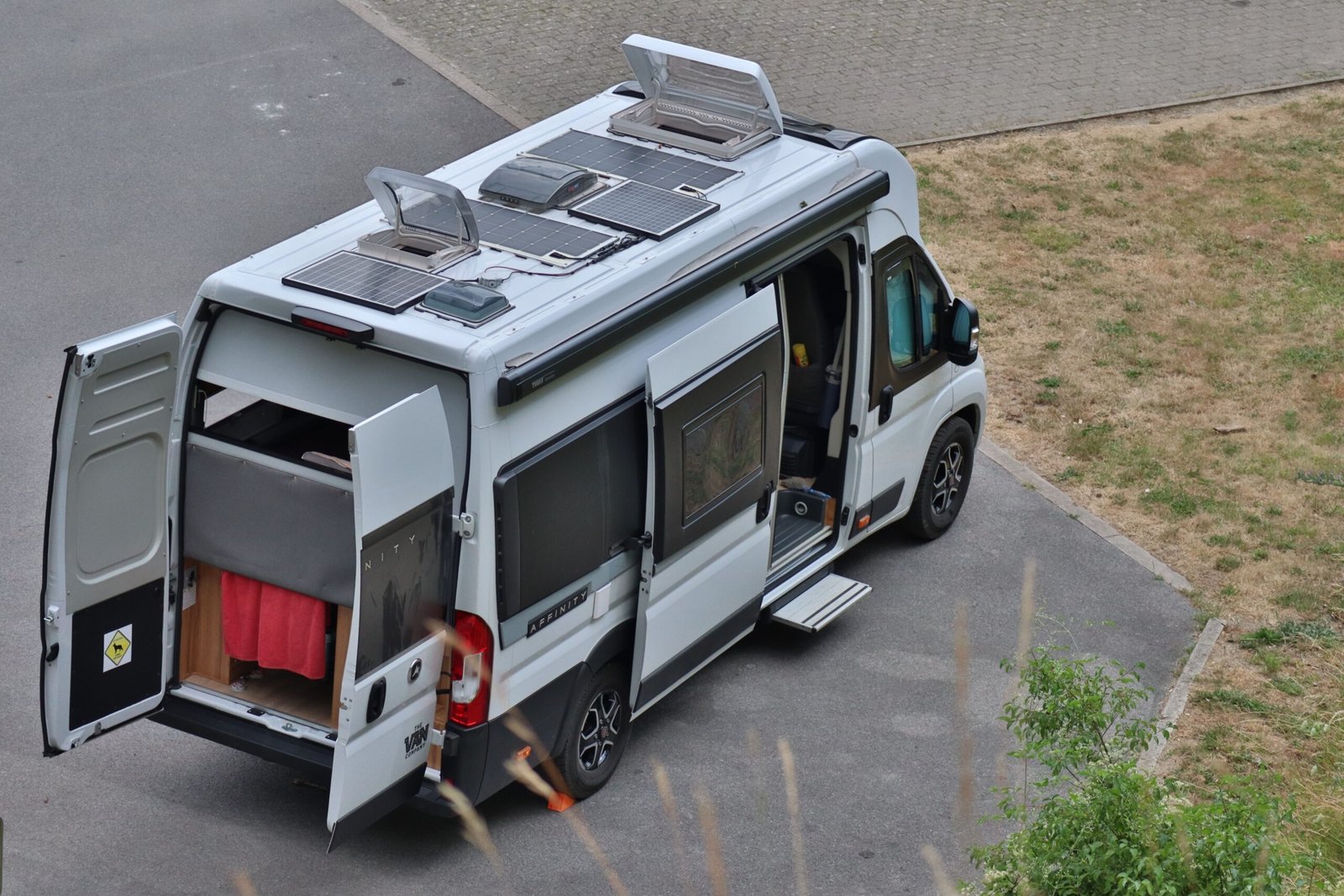
Panels, power ratings and formats for generating energy while parked.
View solar + selection → 02 · STORAGELiFePO₄ batteries ↗
Capacity and discharge capability for practical off-grid use, rather than just a large number.
View batteries → 03 · PORTABLEPower stations ↗
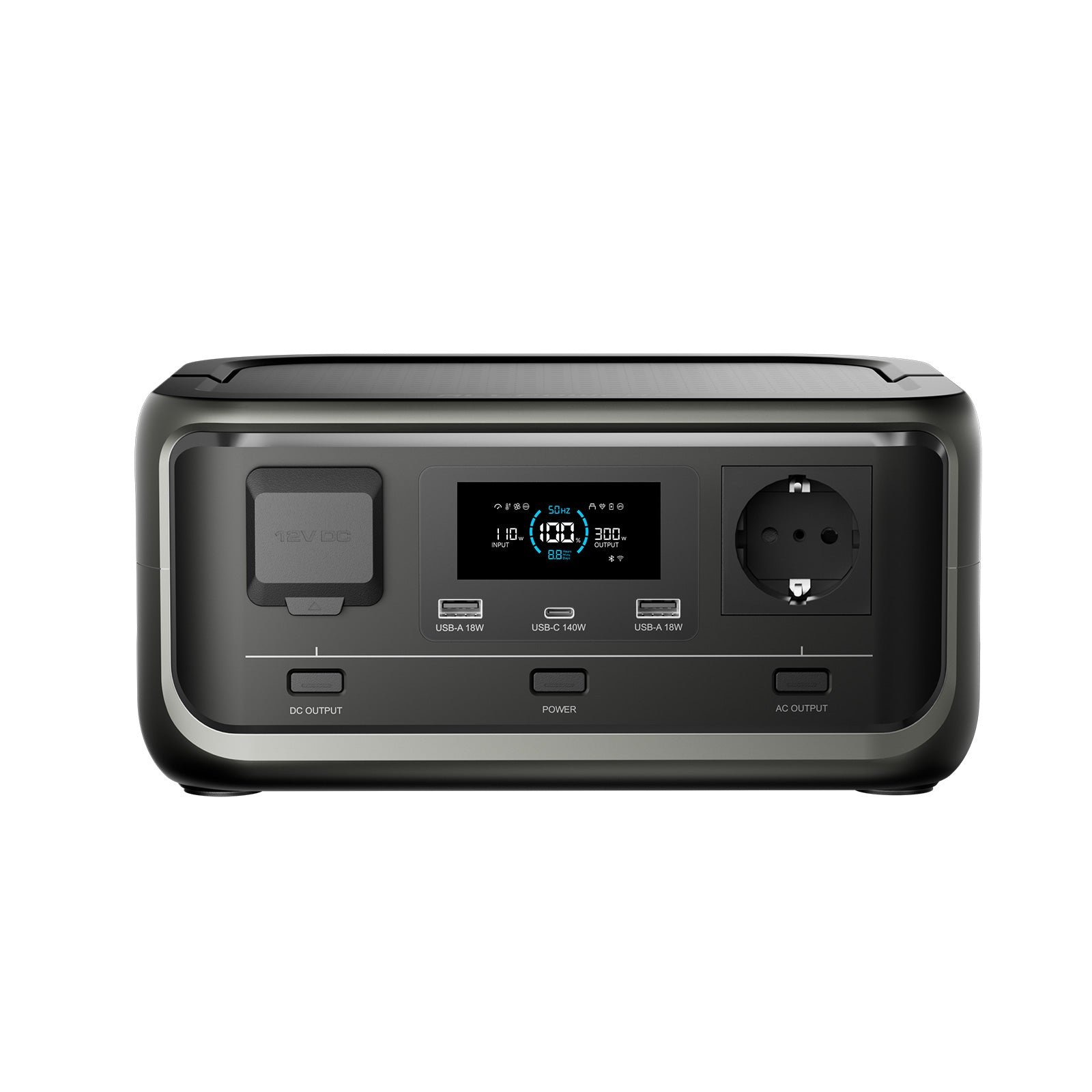
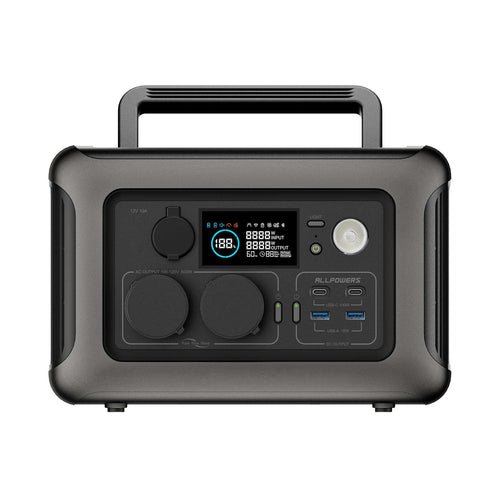
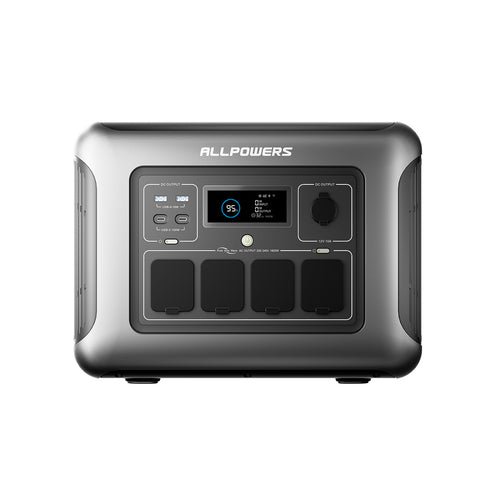
Portable 230 V power, fast charging and trips without a fixed installation.
View power stations → 04 · RECHARGE EN ROUTEDC-DC and alternator ↗
Recover energy while driving and size the charging system together with the battery.
View chargers →Start with what you need
Choose your energy section.
Explore the parts of your electrical system and go straight to what you need. If unsure where to start, calculate consumption before comparing capacities.
The quick answer
Capacity, output and charging: decide on all three.
Wh describe stored energy; W describe instantaneous power. You can have a large battery with inadequate charging, or a powerful station with insufficient energy for several days. For portability, consider a power station. For an integrated fixed system, compare the auxiliary battery, chargers and protection as a whole. Start with the consumption calculator ↗
Compare before choosing
What each component adds to your energy independence.
| Product | Best suited to | What to check |
|---|---|---|
| BLUETTI Elite 30 V2 | Charge devices and travel light | Daily energy and equipment power |
| FOSSiBOT F1800 | More runtime without a fixed installation | Weight, charging and simultaneous power |
| Rvpozwer LiFePO4 100 Ah | Medium-capacity auxiliary system | Chargers, dimensions and limits of the BMS |
| Dyness LiFePO4 100 Ah Bluetooth | Mid-range capacity with monitoring from your phone | App functions and electrical compatibility |
| ECO-WORTHY EnergyTrek 314 Ah | Store more energy in a fixed system | Space, current and charging time |
| DOKIO folding 160 W | Catch the sun during stops | Controller, connectors and target battery |
| enjoy solar TOPCon 200 W | Permanent solar installation | Dimensions, mounting and electrical parameters |
| ECO-WORTHY portable 200 W | Recharge a power station while parked | Permitted solar input range and connectors |
More power options
Compare by use and brand. We keep the featured selections and add further options for your project.
Affiliate links: Spaziou may receive a commission on purchases. “Search model on Amazon” opens a search; check the exact product and variant before buying.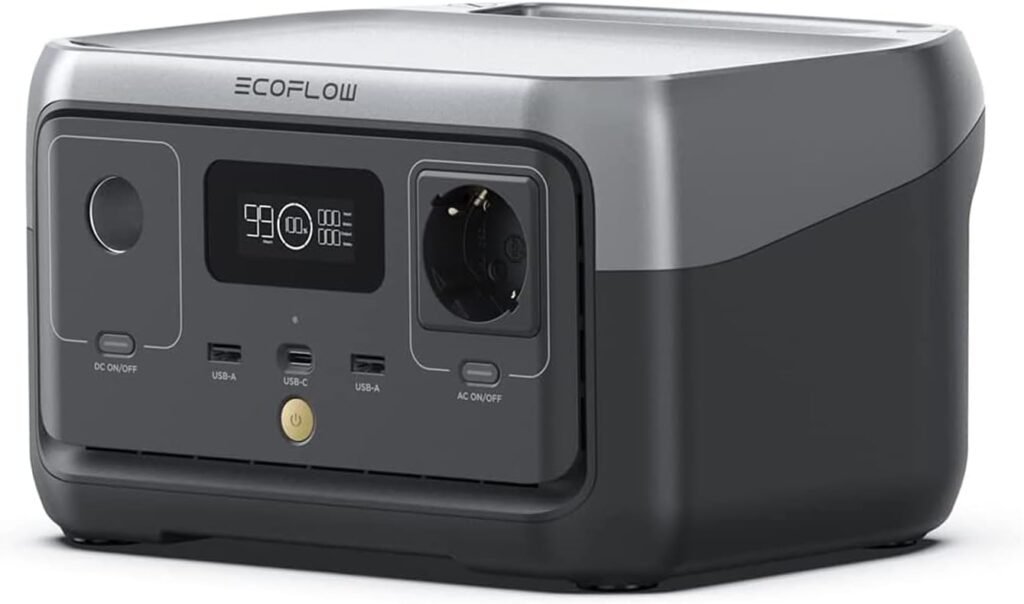
EcoFlow RIVER 2 Pro
768 Wh · 800 W AC. Mid-range capacity for electronics and moderate consumption.
Guide and selection criteria →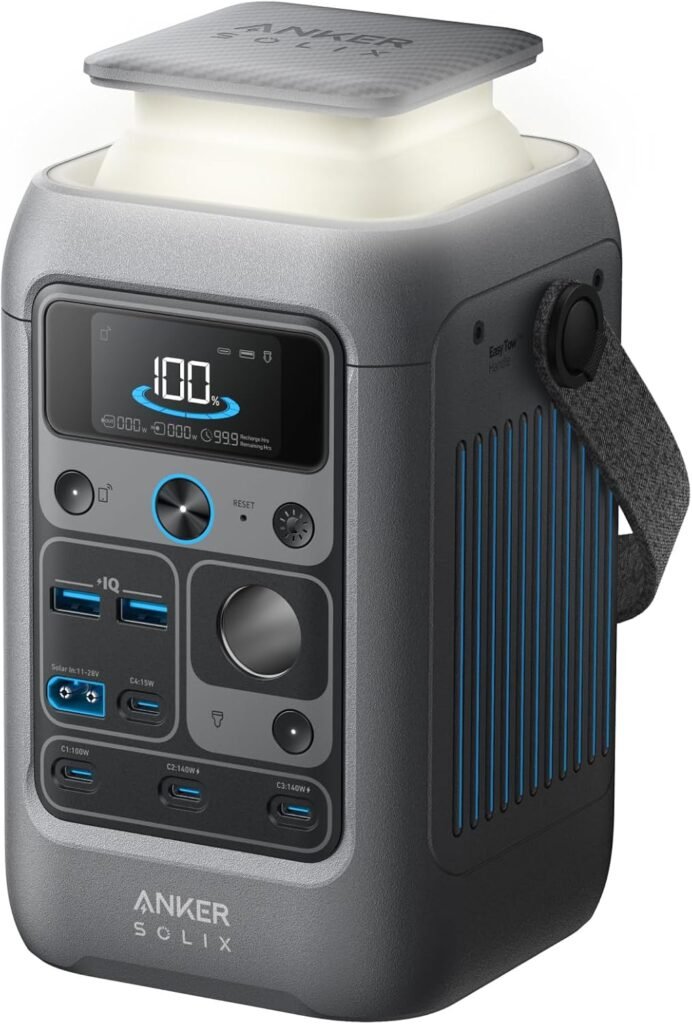
Anker SOLIX C300 DC
288 Wh · USB and DC output. This DC version has no 230 V socket.
Guide and selection criteria →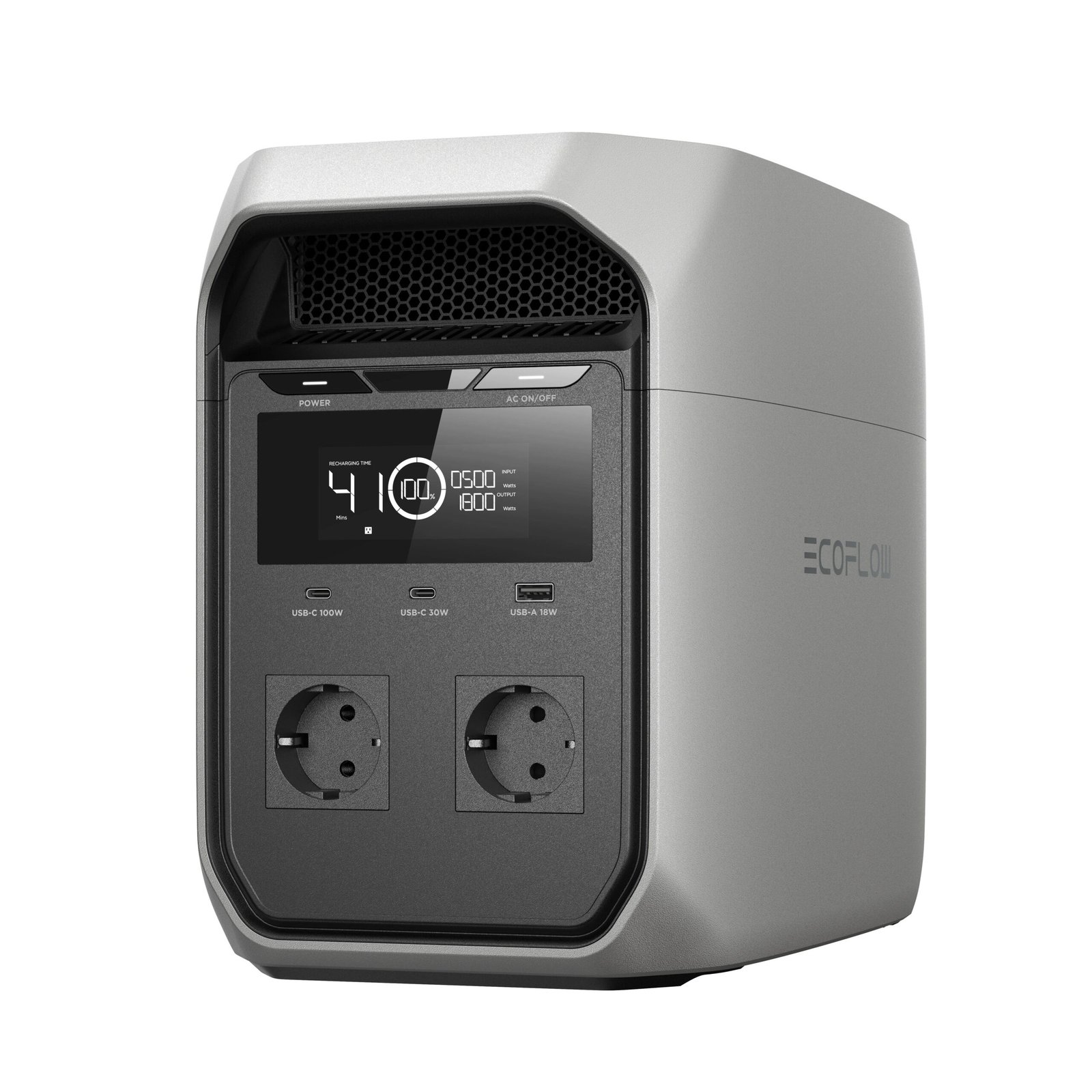
EcoFlow DELTA 3 Classic
1,024 Wh · 1,800 W AC. No 12 V cigarette-lighter socket according to the manufacturer's specification.
Guide and selection criteria →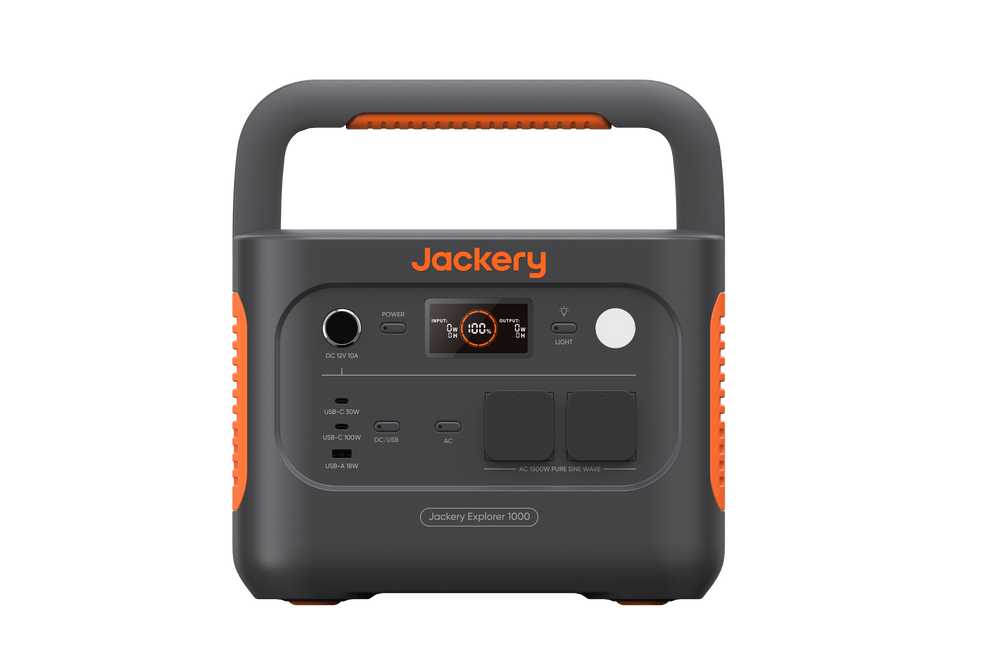
Jackery Explorer 1000 v2
1,070 Wh · 1,500 W AC. Do not confuse the standalone station with solar kits.
Guide and selection criteria →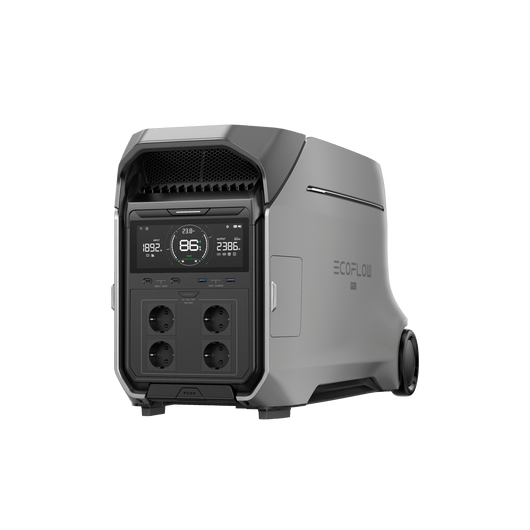
EcoFlow DELTA Pro 3
4,096 Wh · 4,000 W AC. Its 51.5 kg weight requires transport and placement planning.
Guide and selection criteria →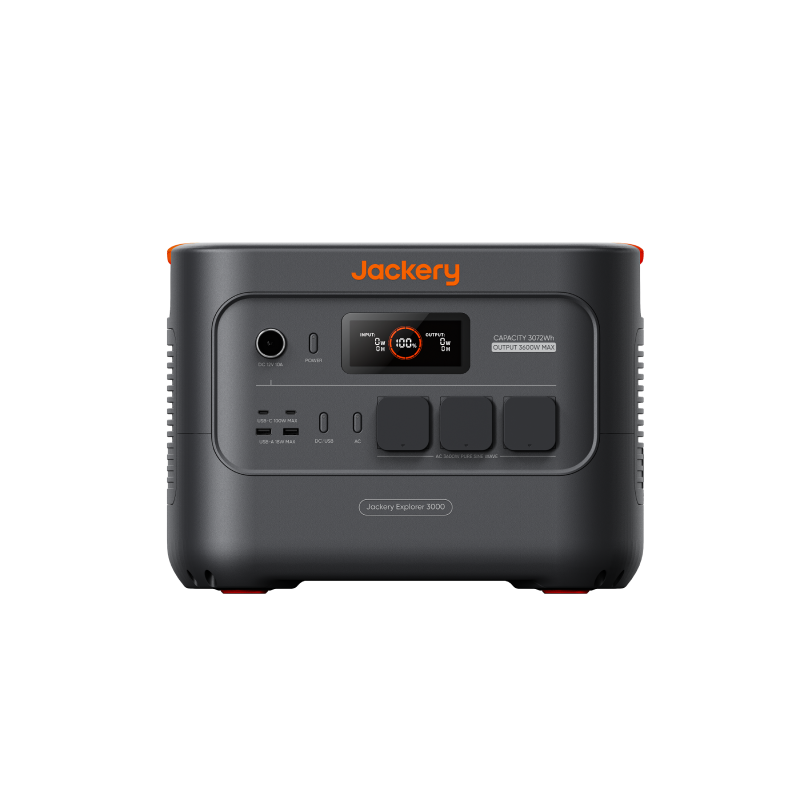
Jackery Explorer 3000 v2
3,072 Wh · 3,600 W AC. A high-capacity platform weighing around 27 kg.
Guide and selection criteria →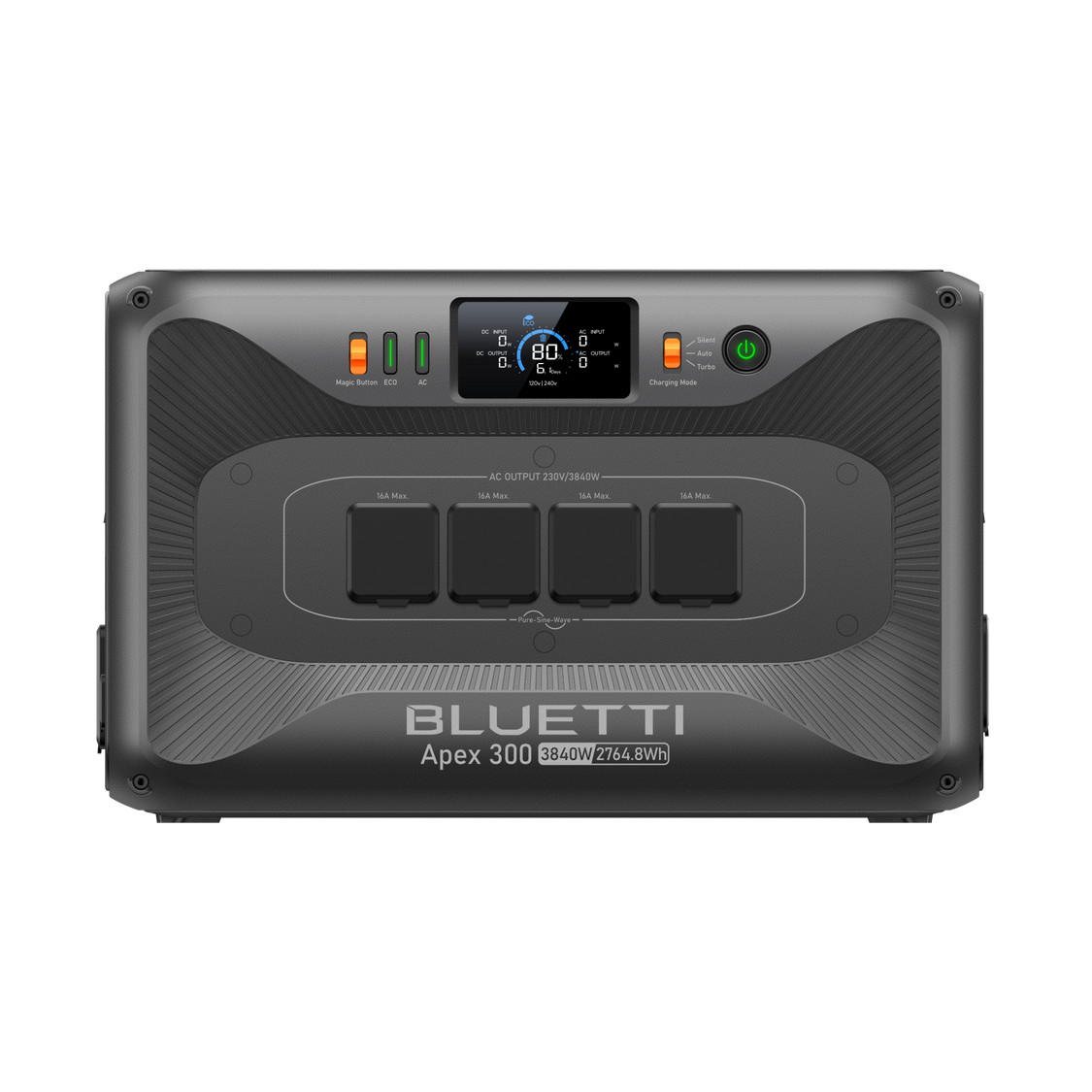
BLUETTI Apex 300
2,764.8 Wh · 3,840 W AC. Modular ecosystem: check which accessories the kit includes.
Guide and selection criteria →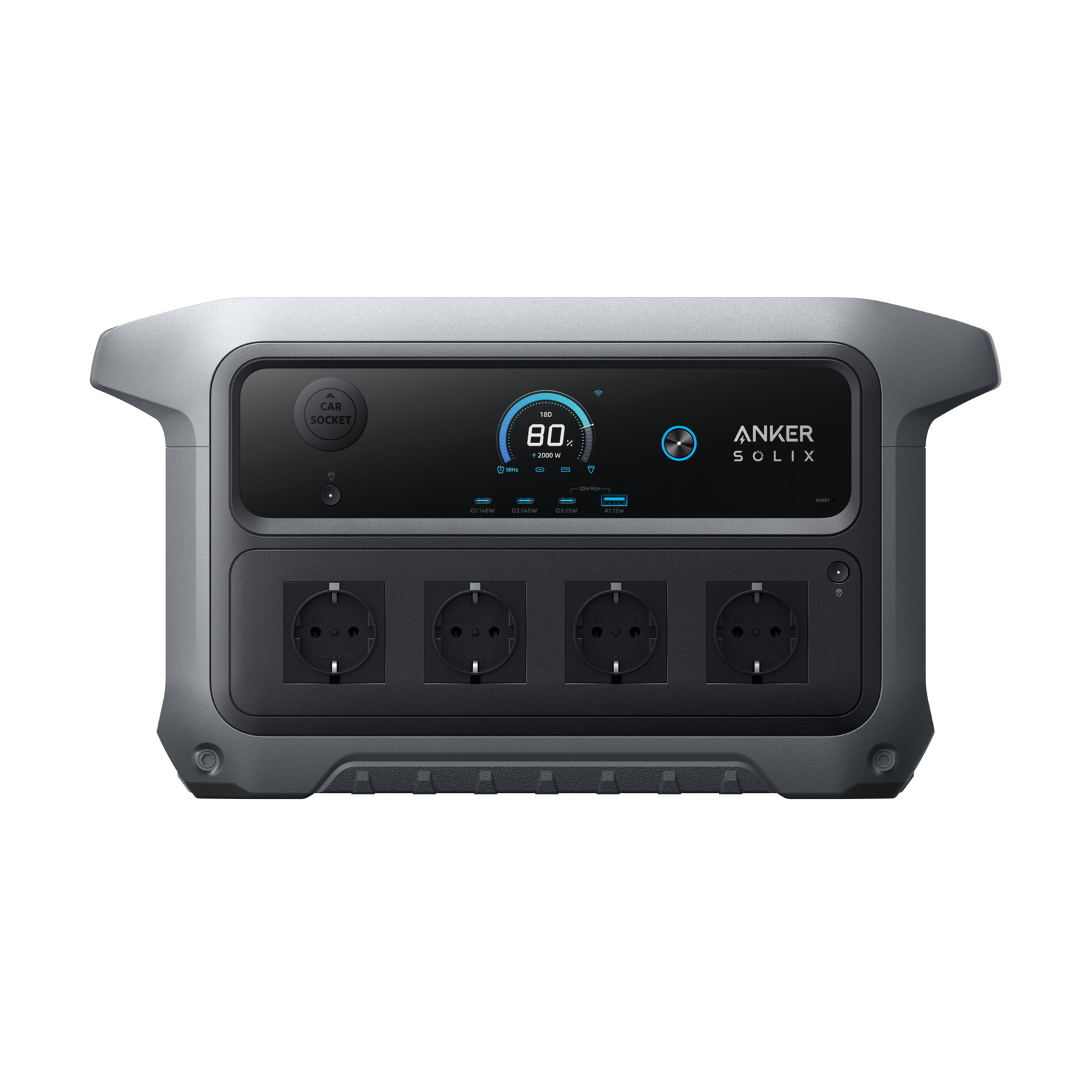
Anker SOLIX C2000 Gen 2
2,048 Wh · 2,400 W AC. Approximately 18.9 kg according to the manufacturer.
Guide and selection criteria →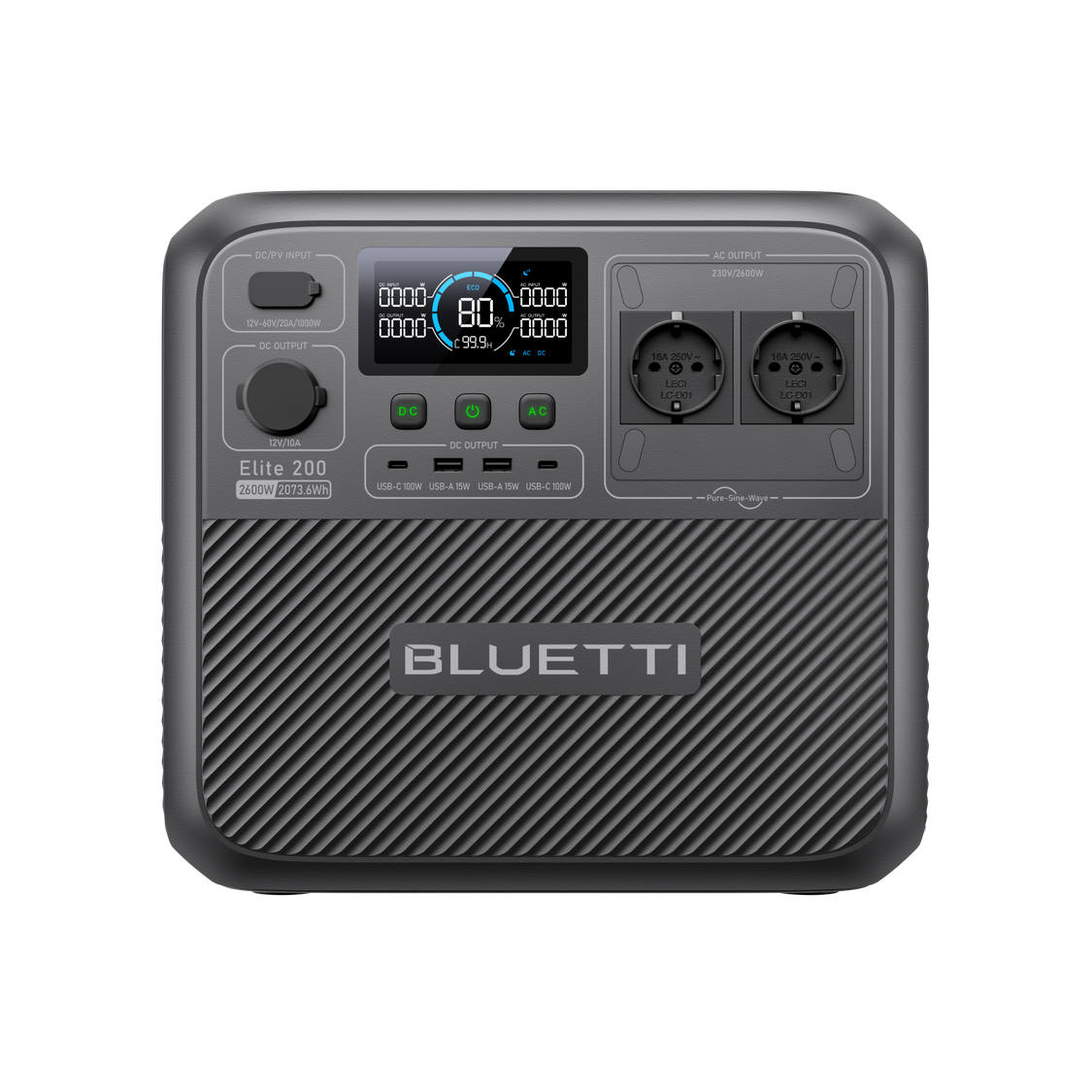
BLUETTI Elite 200 V2
2,073.6 Wh · 2,600 W AC. Consider ventilation space and charging too.
Guide and selection criteria →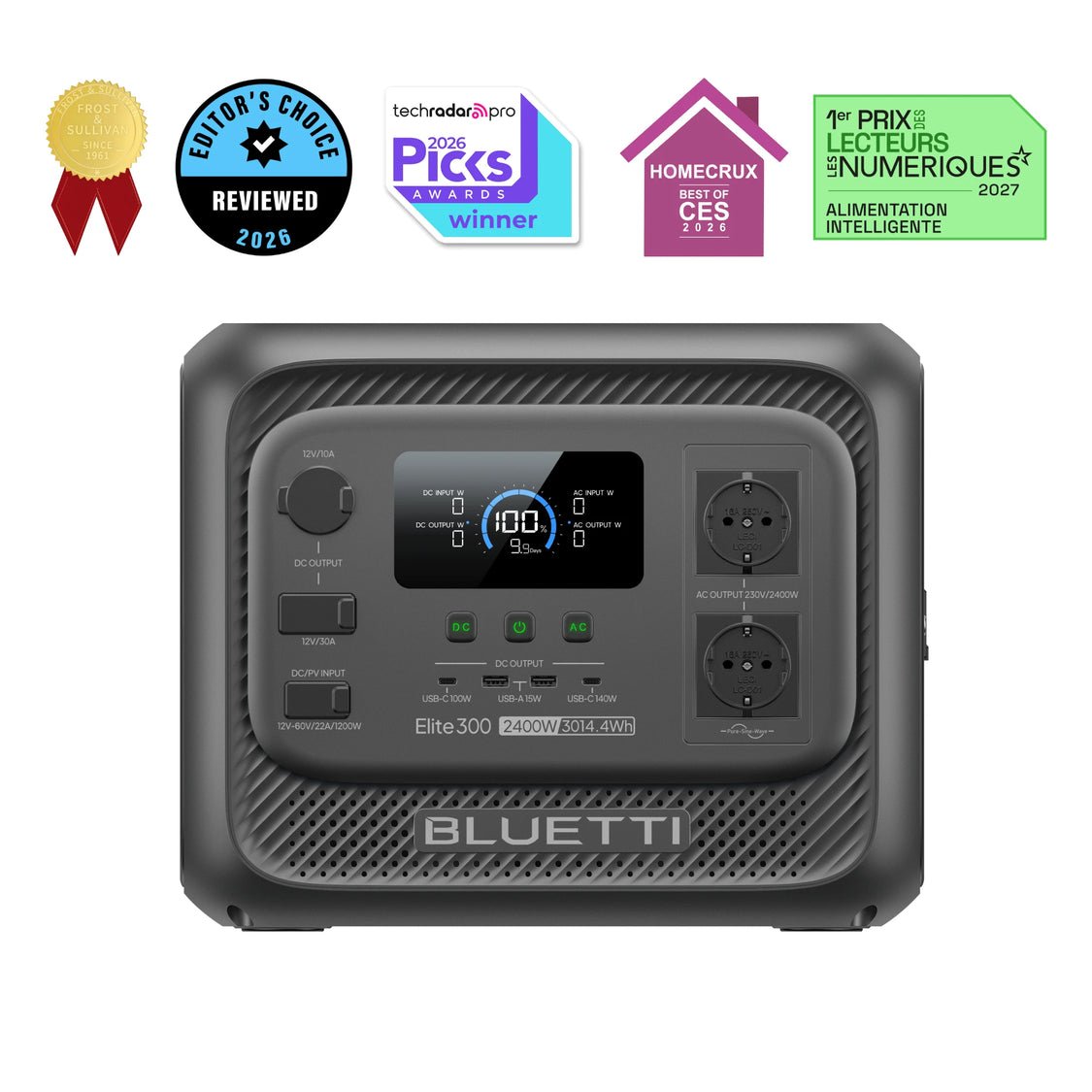
BLUETTI Elite 300
3,014.4 Wh · 2,400 W AC. Check connectors and accessories for using its RV output.
Guide and selection criteria →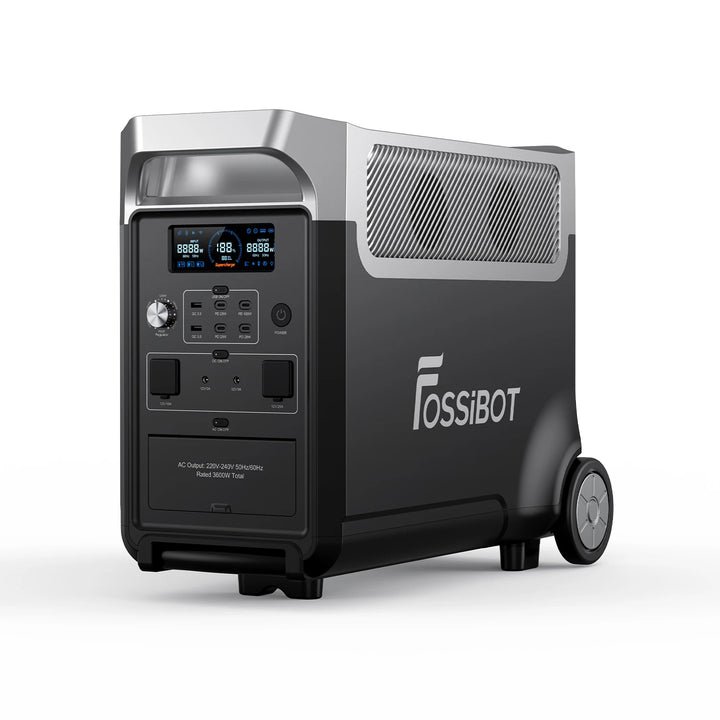
FOSSiBOT F3600 Pro
3,840 Wh · 3,600 W AC. At 42 kg, it is better suited to a more permanent position.
Guide and selection criteria →
EcoFlow Alternator Charger Plus 1000
Up to 1,000 W. Confirm charging mode and cables compatible with your power station.
Guide and selection criteria →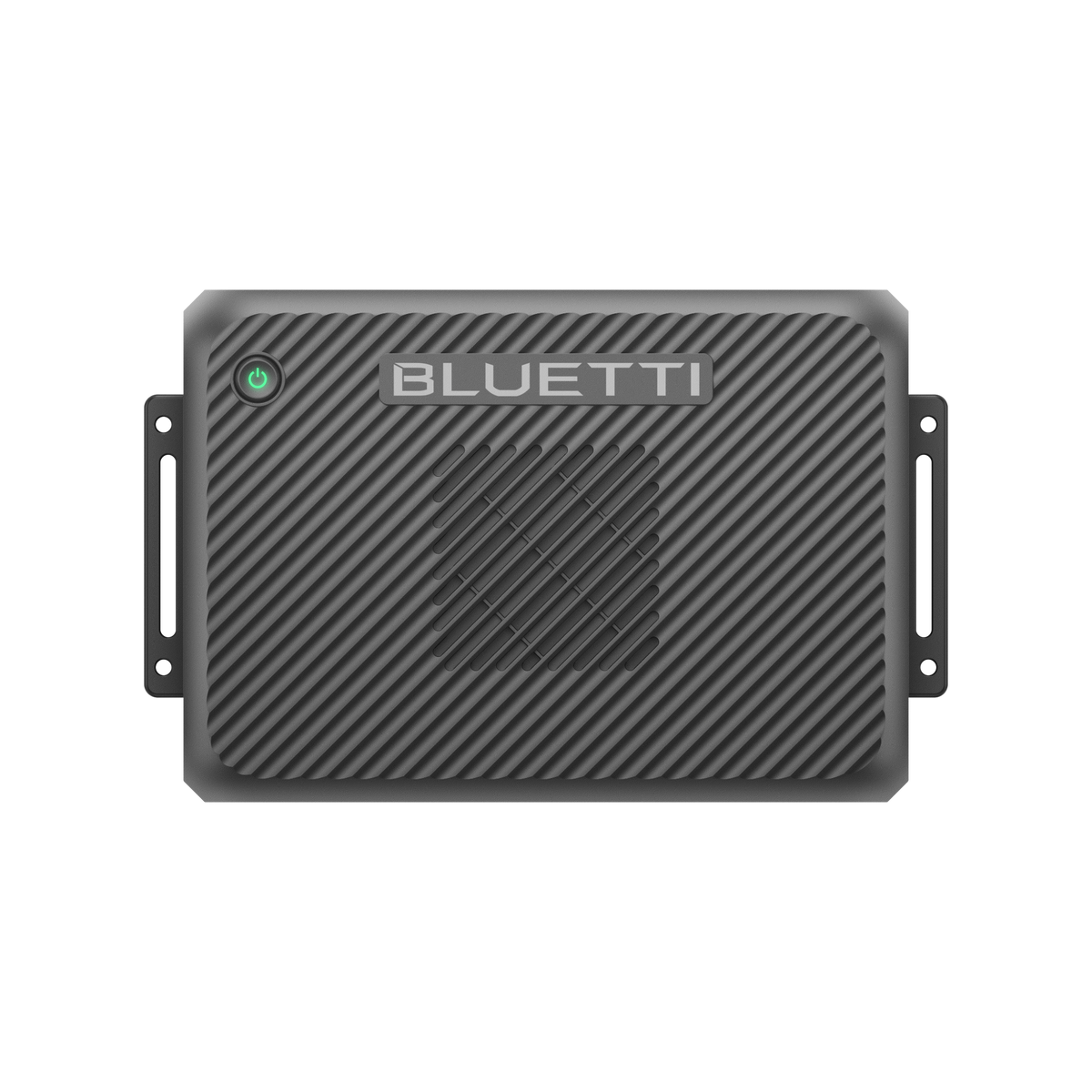
BLUETTI Charger 2
Up to 1,200 W combined. Solar and alternator charging share the total limit.
Guide and selection criteria →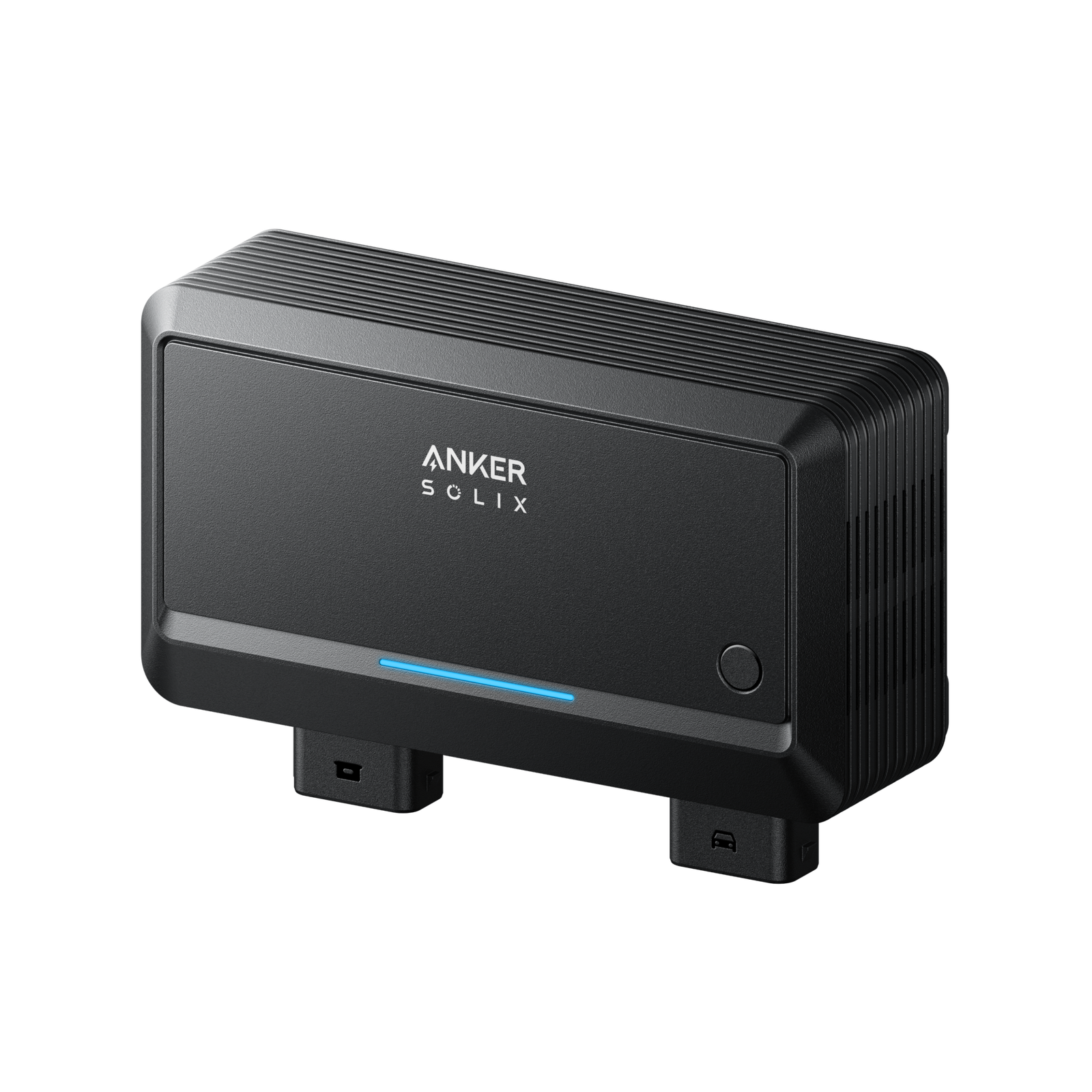
Anker SOLIX Alternator Charger
Reference AS200. Check regional version, compatibility and fused installation.
Guide and selection criteria →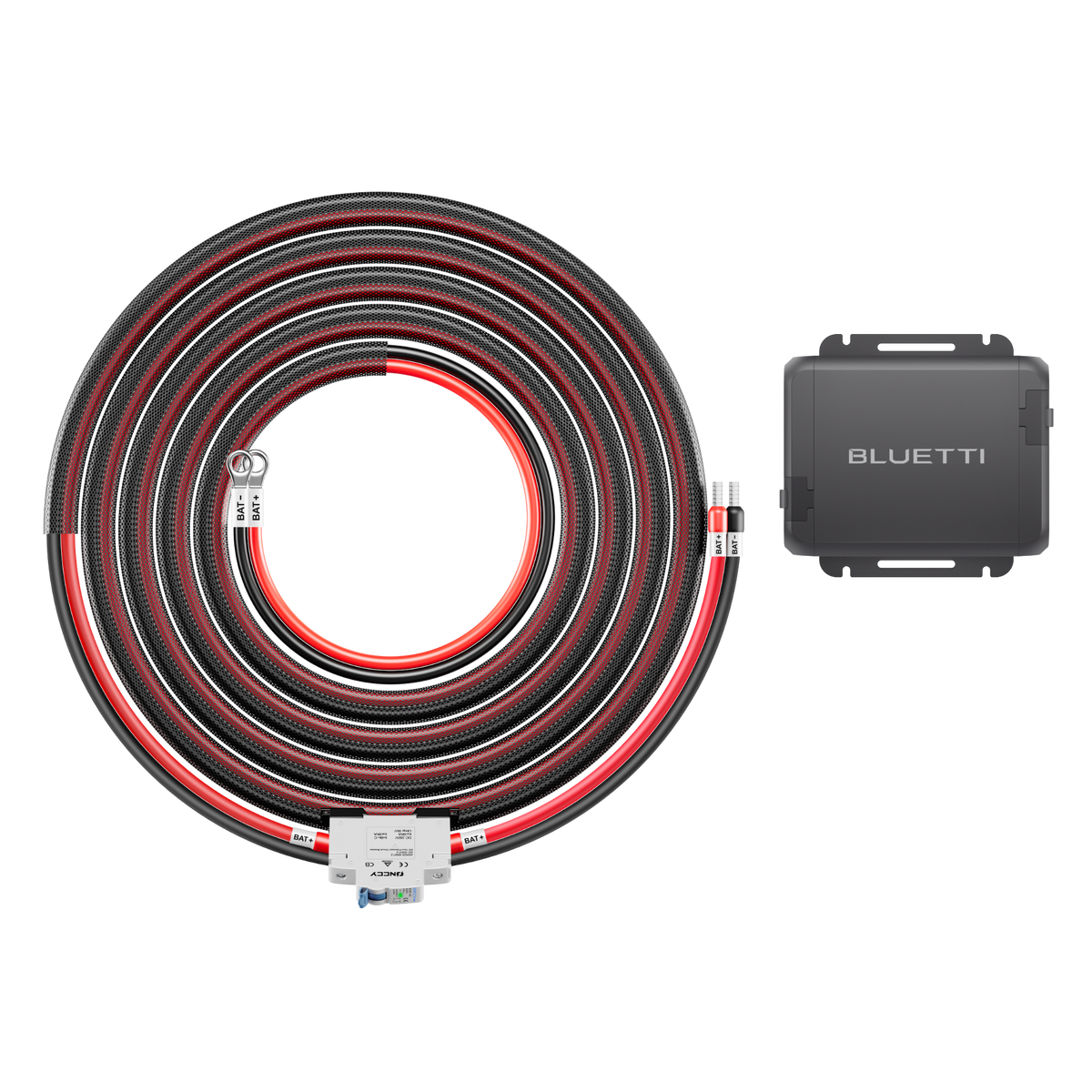
BLUETTI Charger 1
Up to 560 W. Check input voltage and power-station compatibility.
Guide and selection criteria →
Jackery SolarSaga 500 X
Portable solar generation. Confirm open-circuit voltage, current and connectors for your controller or power station.
Guide and selection criteria →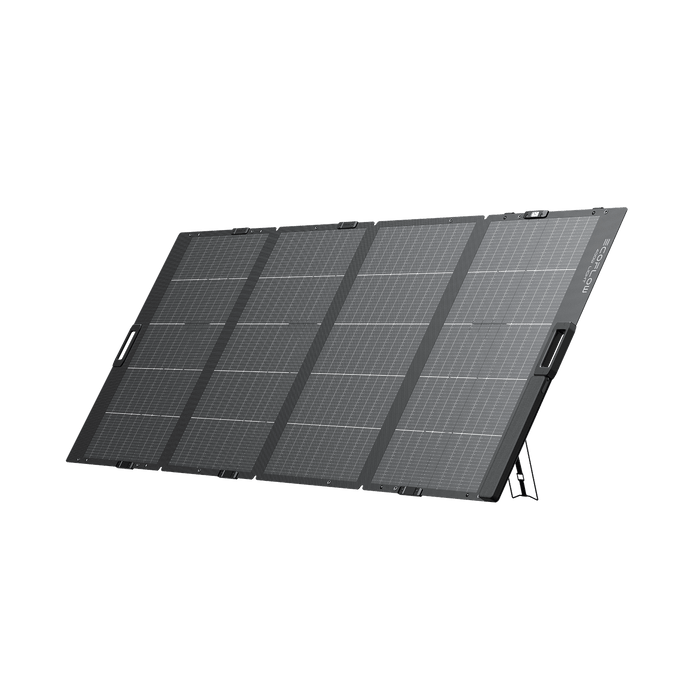
EcoFlow 400 W Lightweight
Portable solar generation. Confirm open-circuit voltage, current and connectors for your controller or power station.
Guide and selection criteria →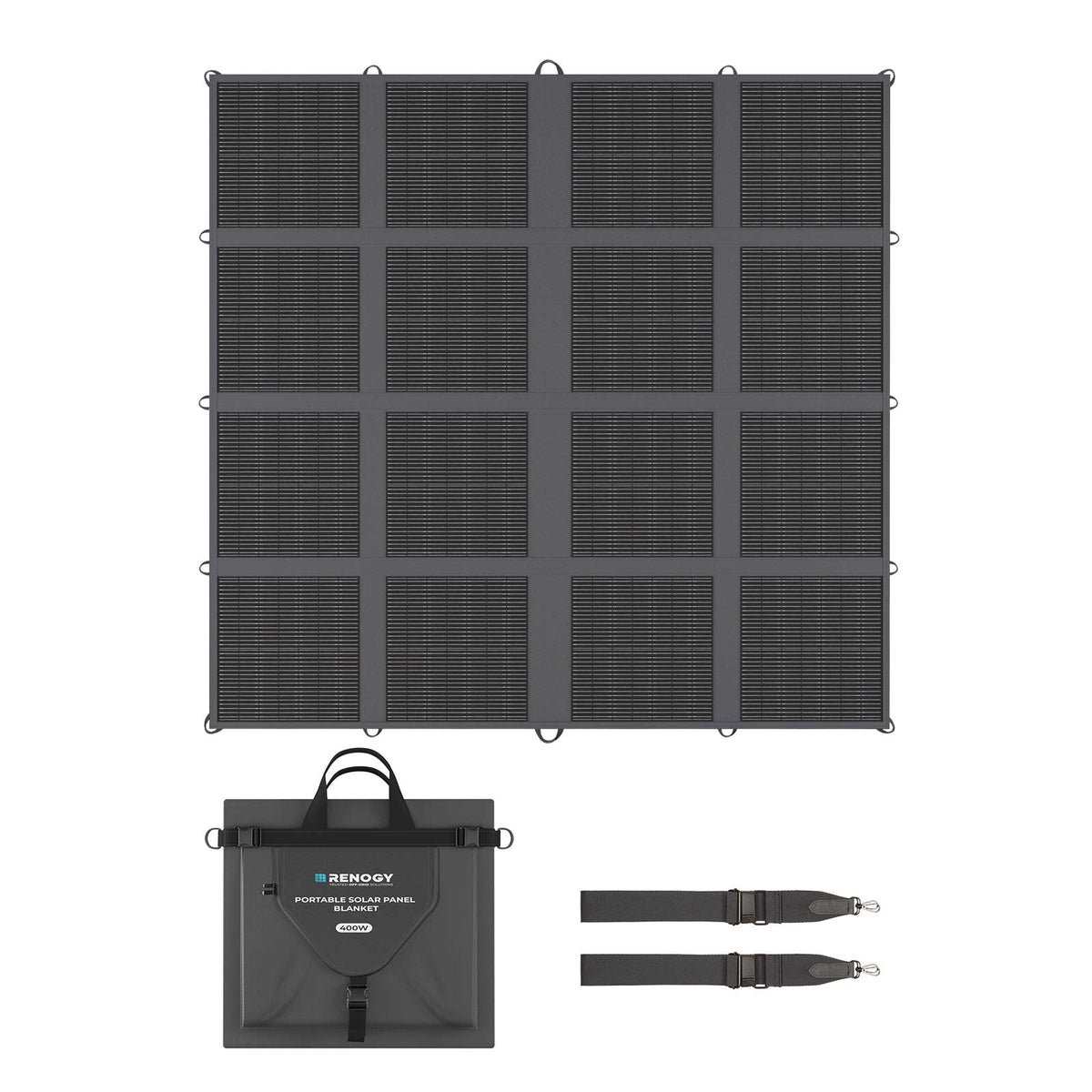
Renogy 400 W N-Type Solar Blanket
Portable solar generation. Confirm open-circuit voltage, current and connectors for your controller or power station.
Guide and selection criteria →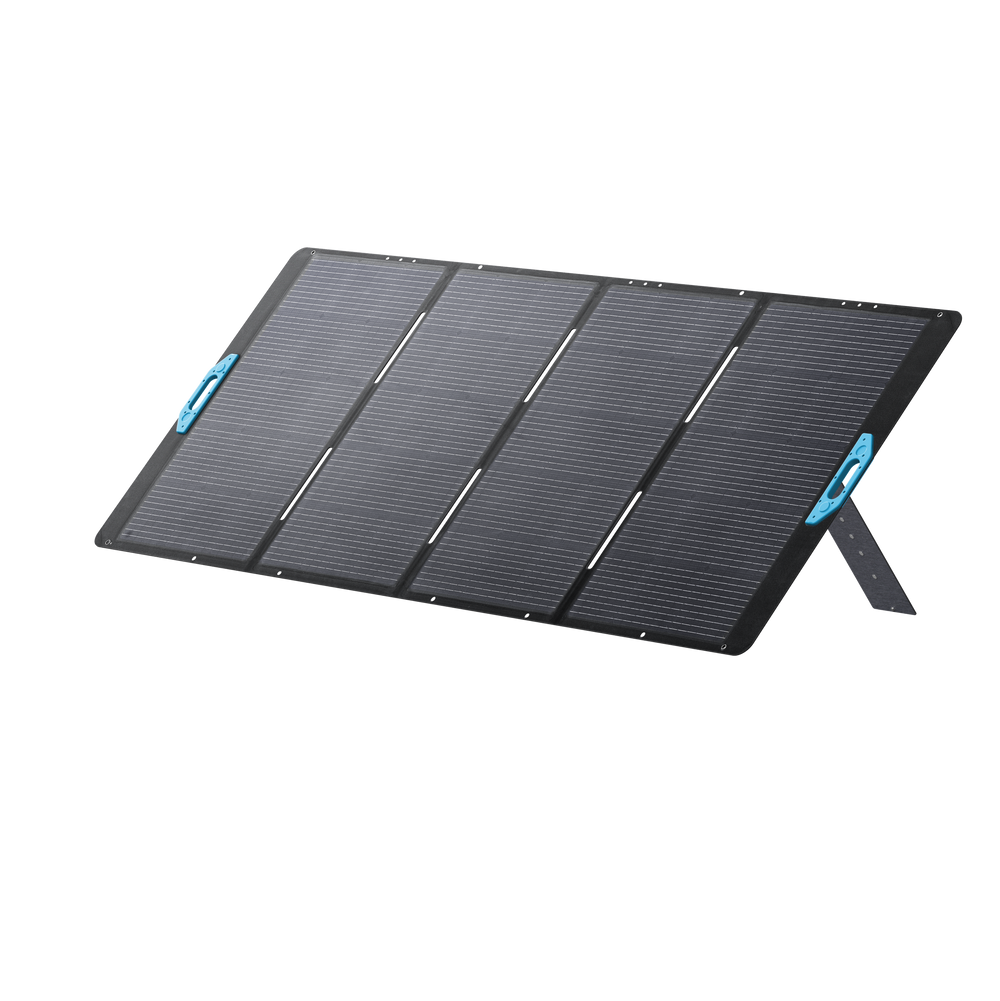
Anker SOLIX PS400
Portable solar generation. Confirm open-circuit voltage, current and connectors for your controller or power station.
Guide and selection criteria →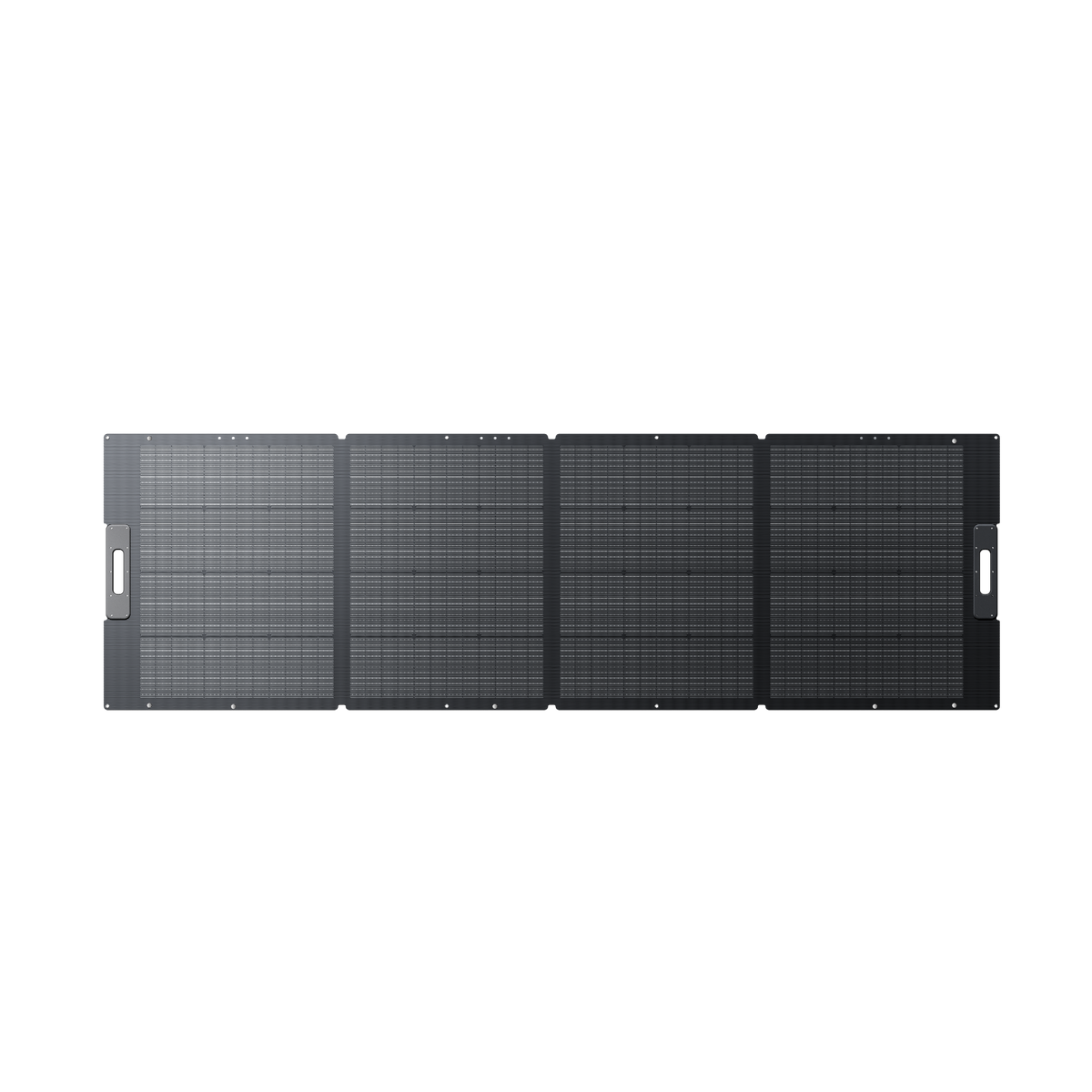
BLUETTI PV350
Portable solar generation. Confirm open-circuit voltage, current and connectors for your controller or power station.
Guide and selection criteria →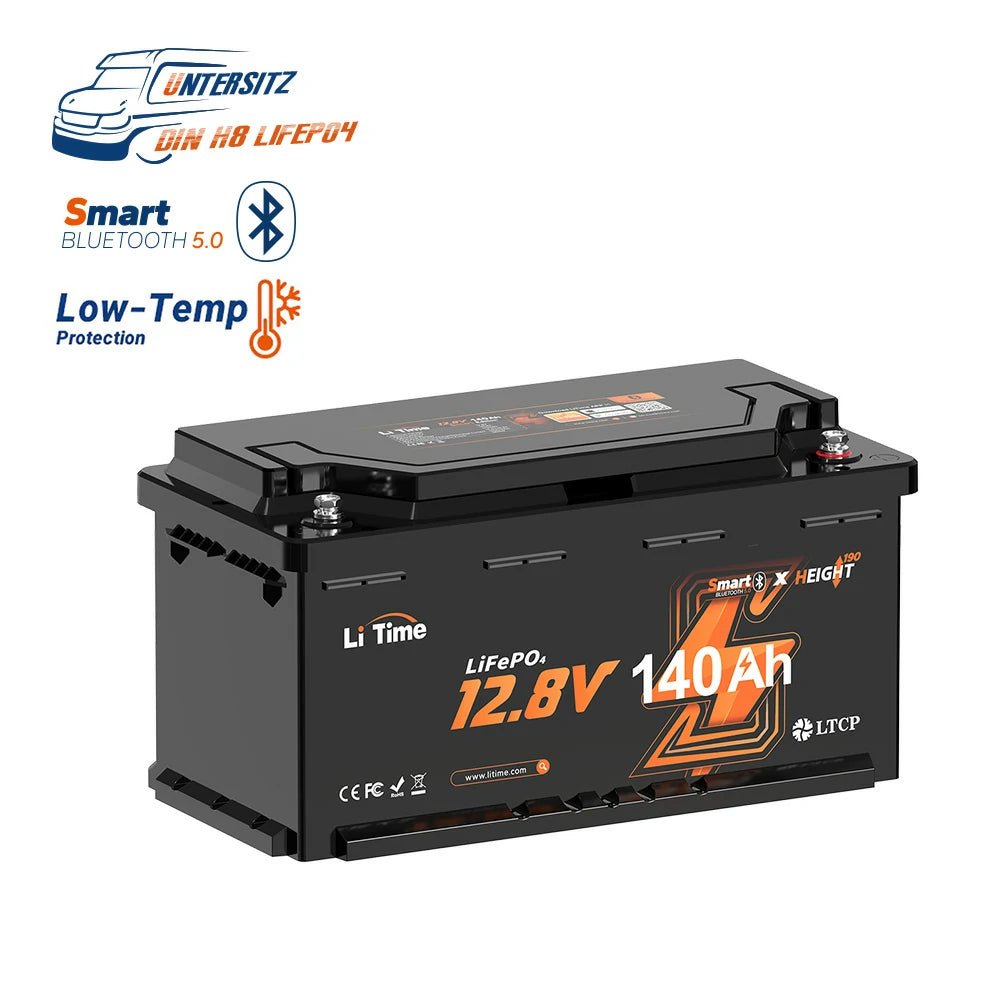
LiTime 140 Ah H190 Bluetooth
1,792 Wh rated · 150 A BMS. Height 189 mm; confirm terminals, mounting and clearances.
Guide and selection criteria →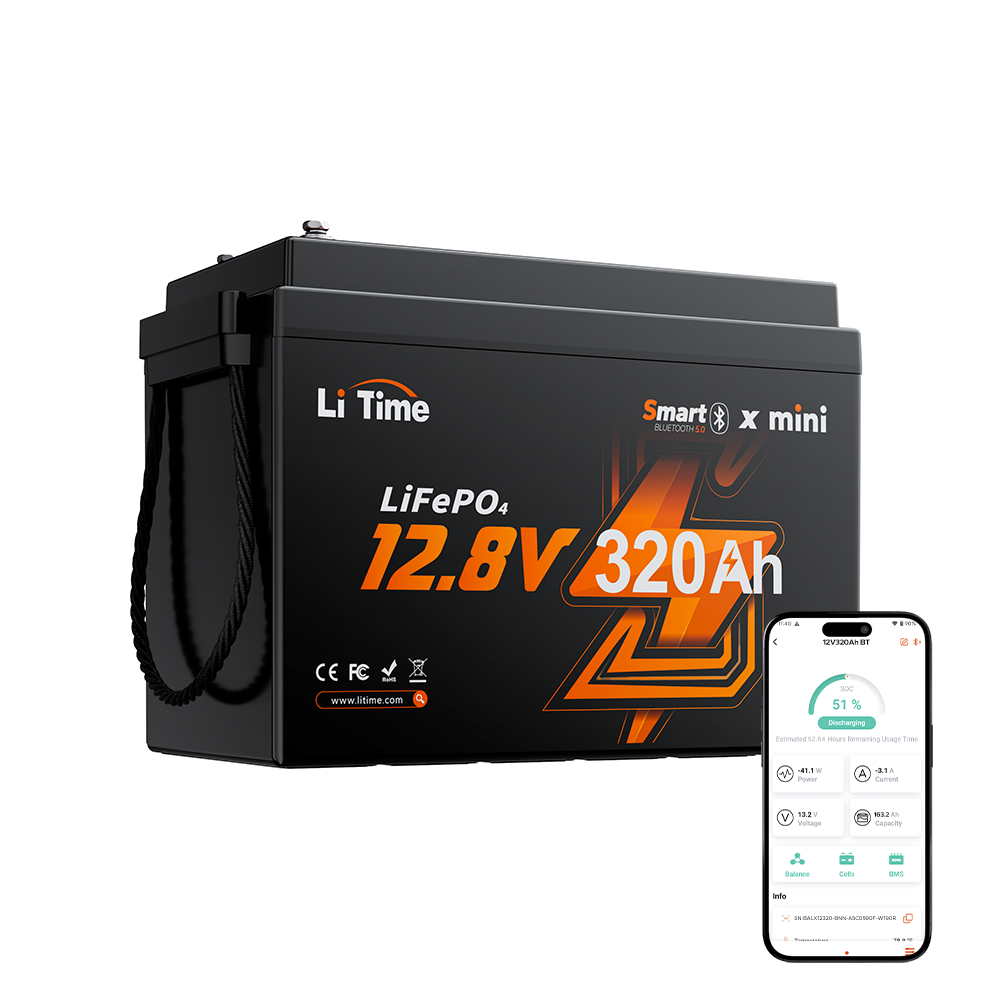
LiTime 320 Ah W190 Bluetooth
4,096 Wh rated · 200 A BMS. W190 refers to width; published height is 255 mm.
Guide and selection criteria →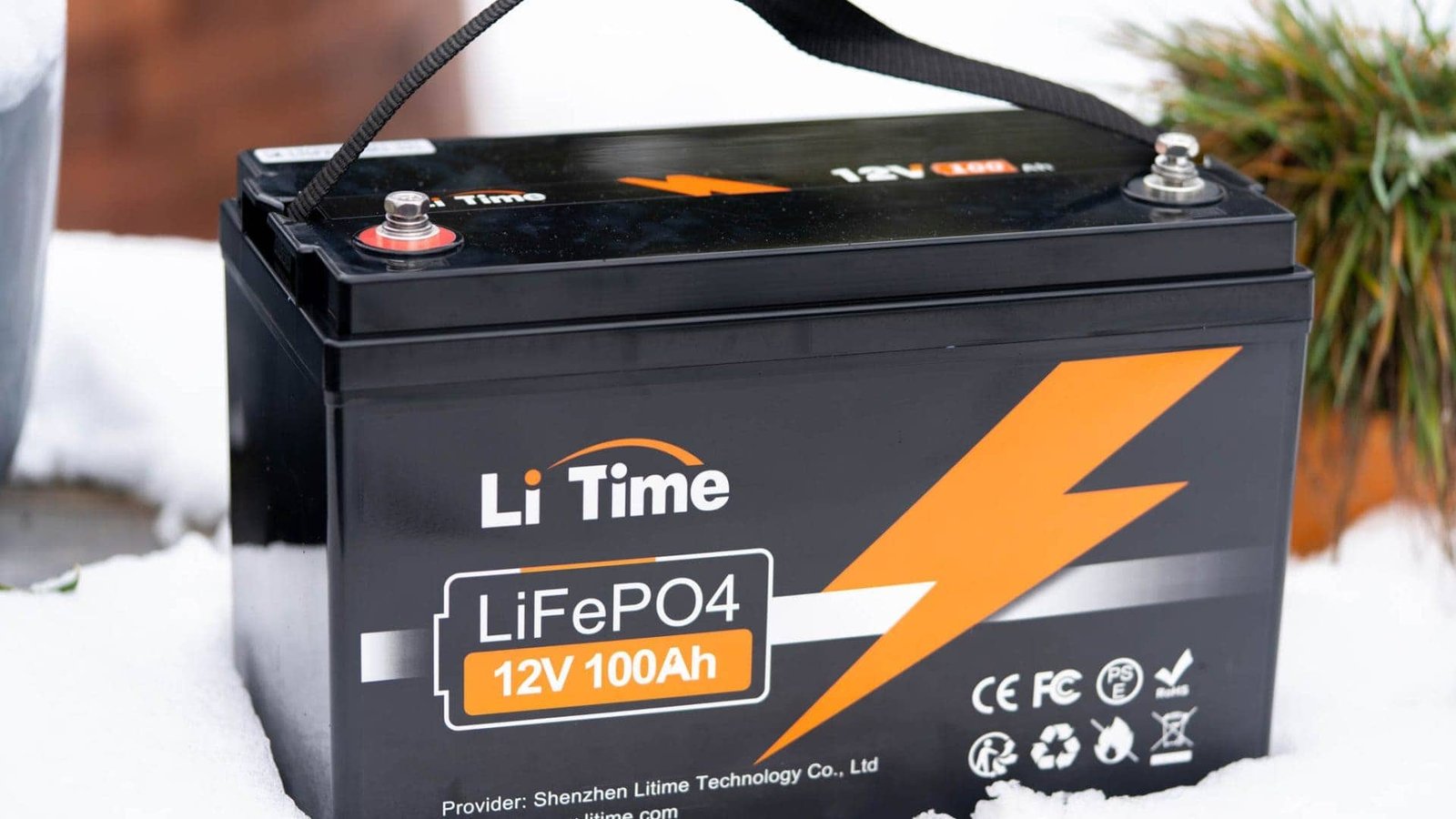
LiTime LiFePO4 12V 100Ah
For a fixed electrical installation. Size capacity, BMS current, charging and available space.
Guide and selection criteria →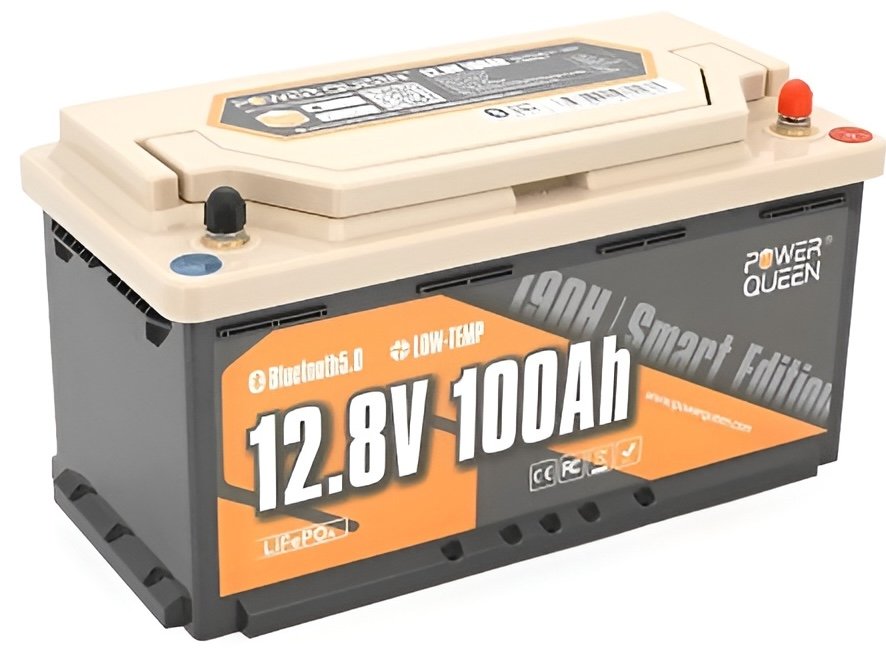
Power Queen LiFePO4 12V 100Ah
For a fixed electrical installation. Size capacity, BMS current, charging and available space.
Guide and selection criteria →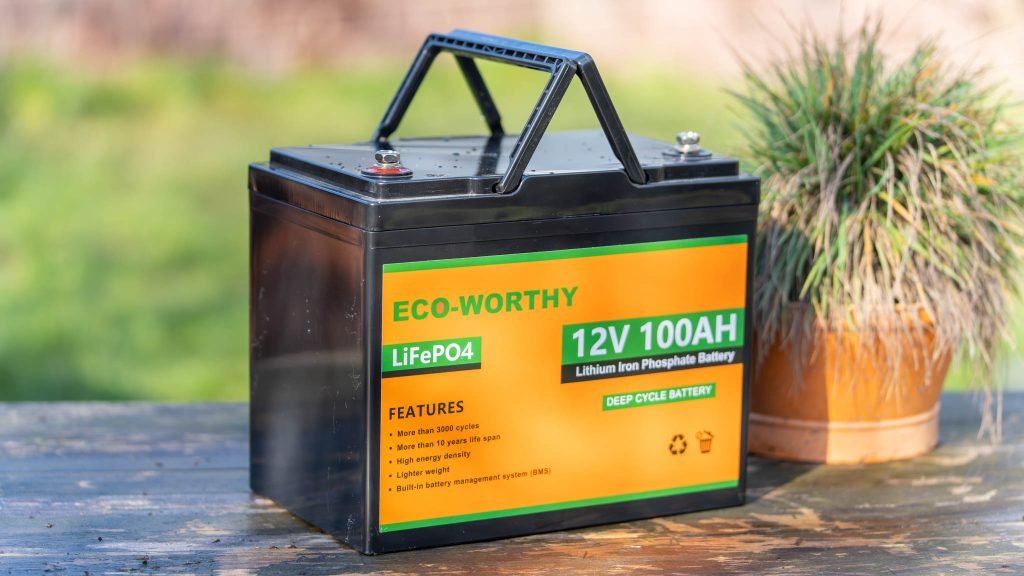
ECO-WORTHY LiFePO4 12V 100Ah
For a fixed electrical installation. Size capacity, BMS current, charging and available space.
Guide and selection criteria →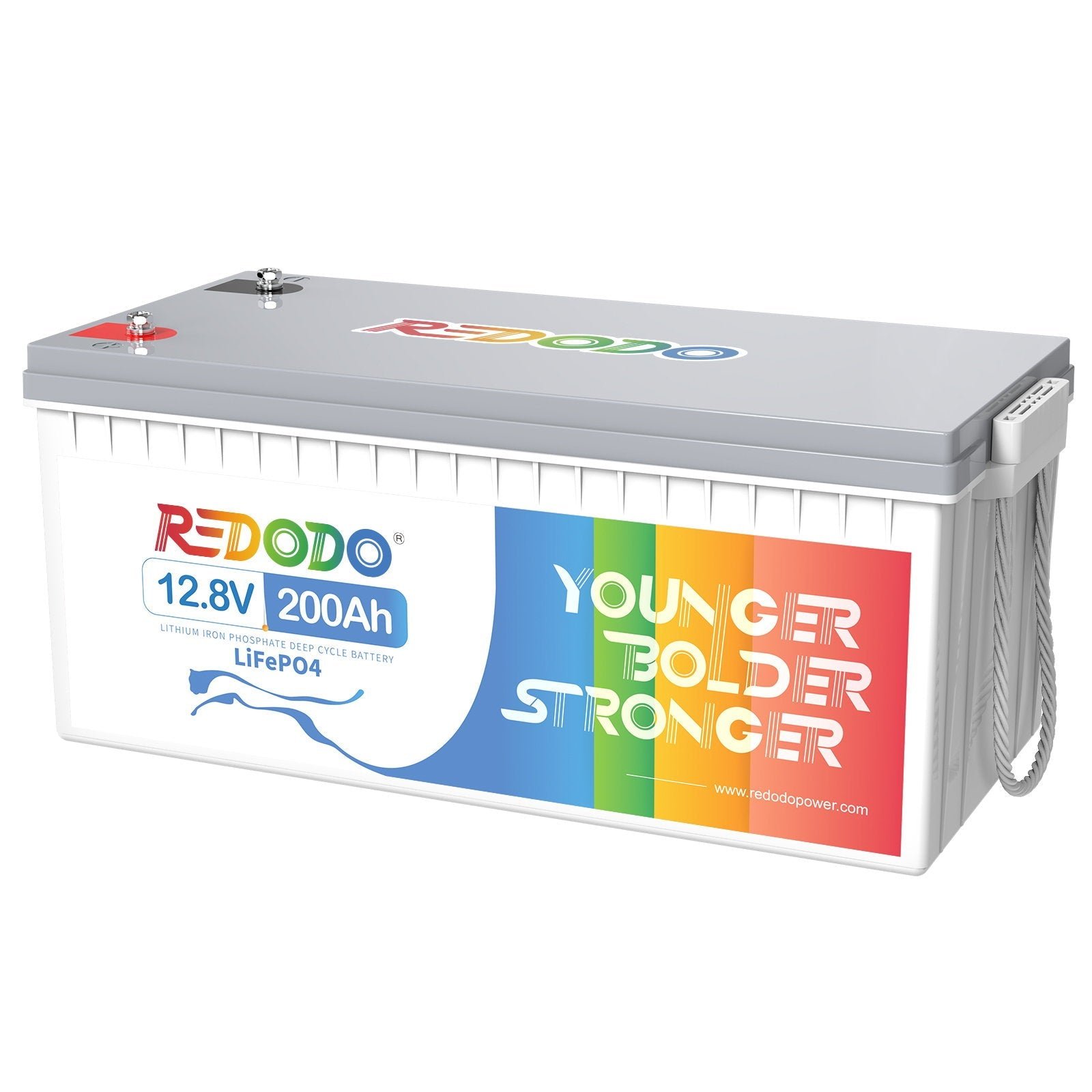
Redodo LiFePO4 12V 200Ah
For a fixed electrical installation. Size capacity, BMS current, charging and available space.
Guide and selection criteria →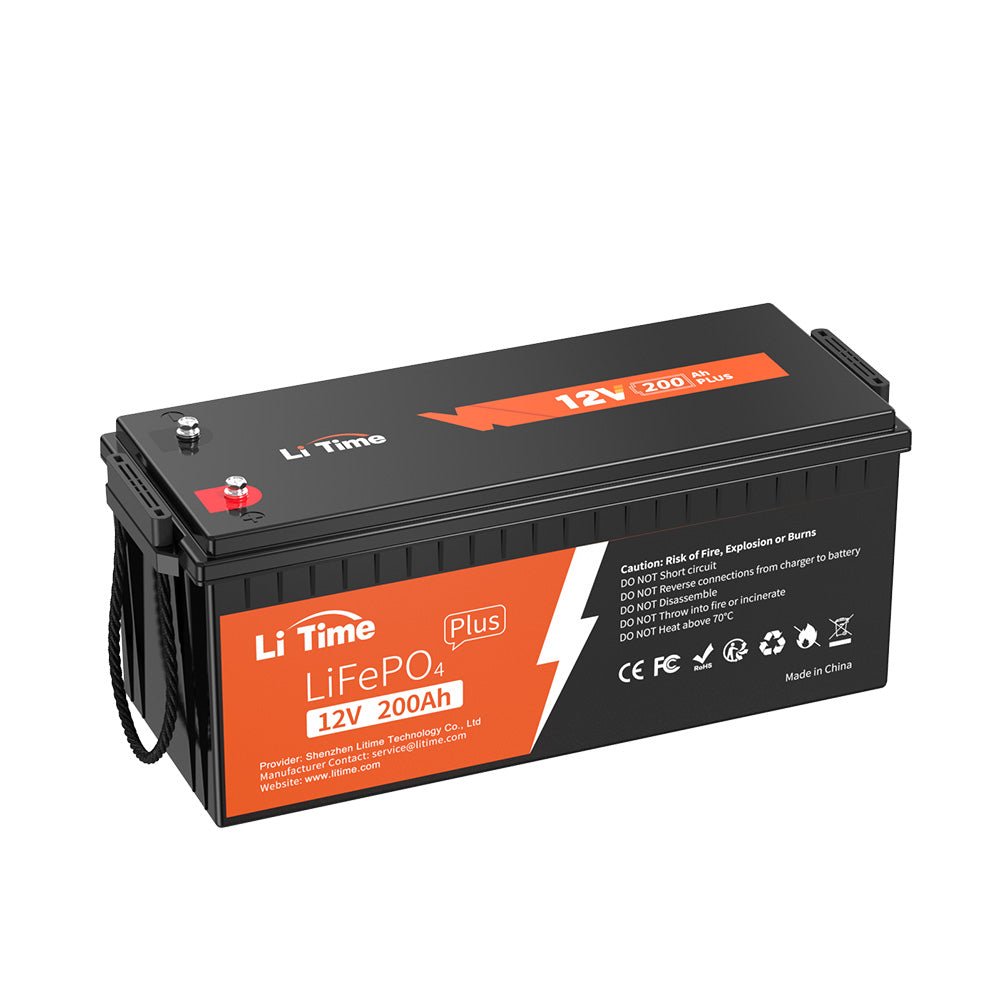
LiTime LiFePO4 12V 200Ah Plus
For a fixed electrical installation. Size capacity, BMS current, charging and available space.
Guide and selection criteria →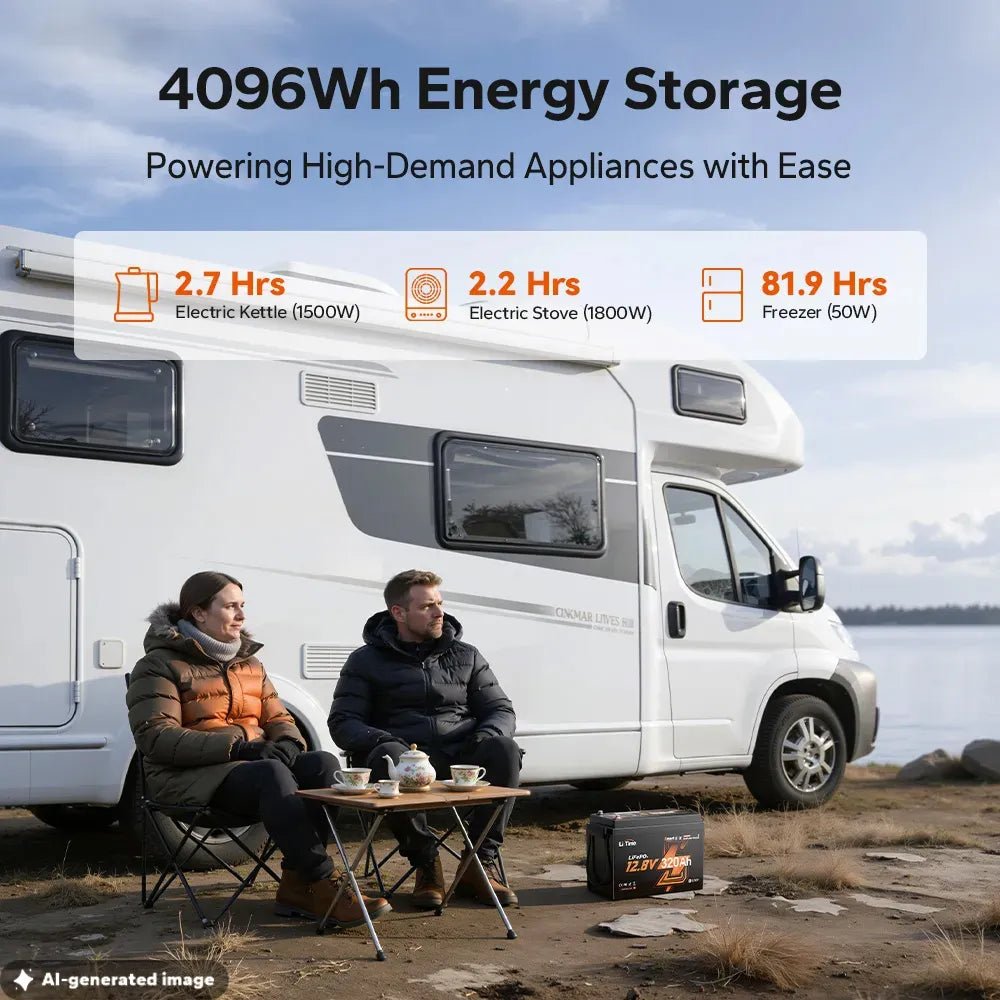
LiTime LiHeat 12 V 320 Ah Mini
4,096 Wh rated · 200 A BMS. Self-heating version, distinct from standard W190.
Guide and selection criteria →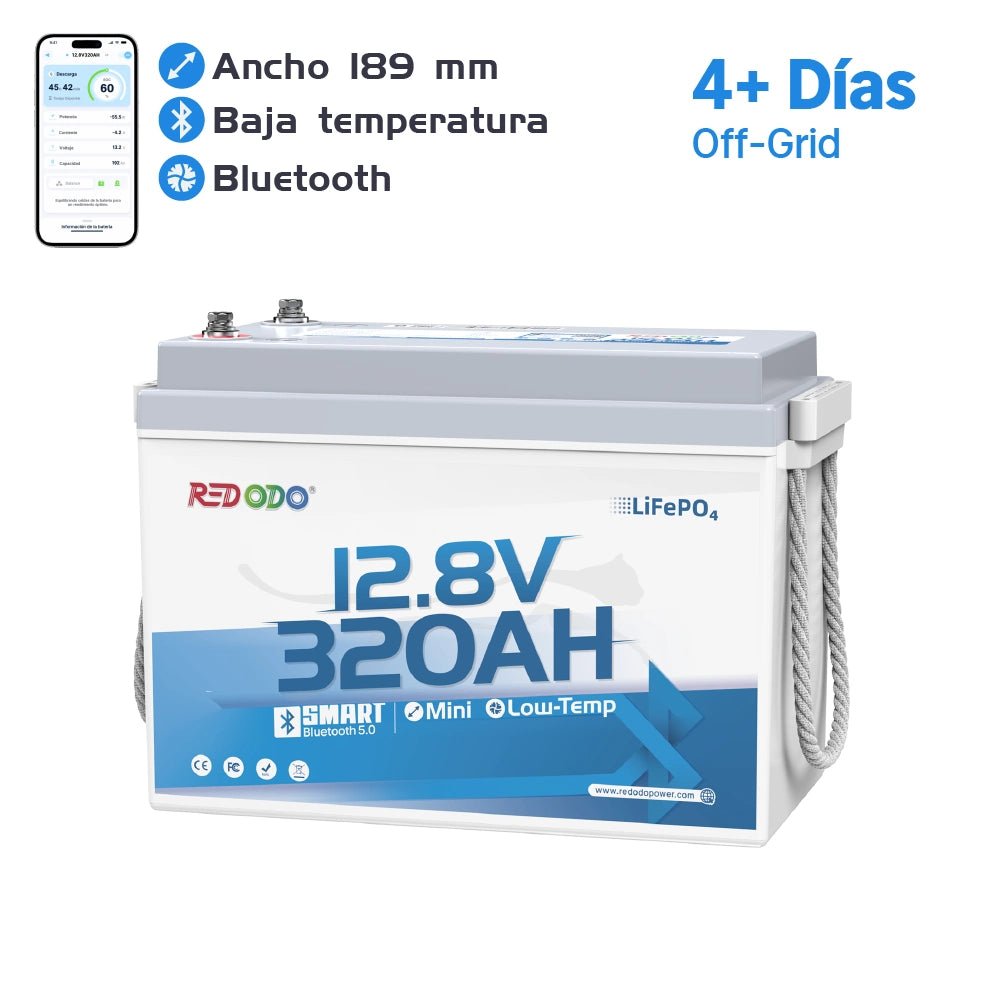
Redodo 12 V 320 Ah W190 Bluetooth
4,096 Wh rated · 200 A BMS. Dimensions: 368 × 189 × 255 mm.
Guide and selection criteria →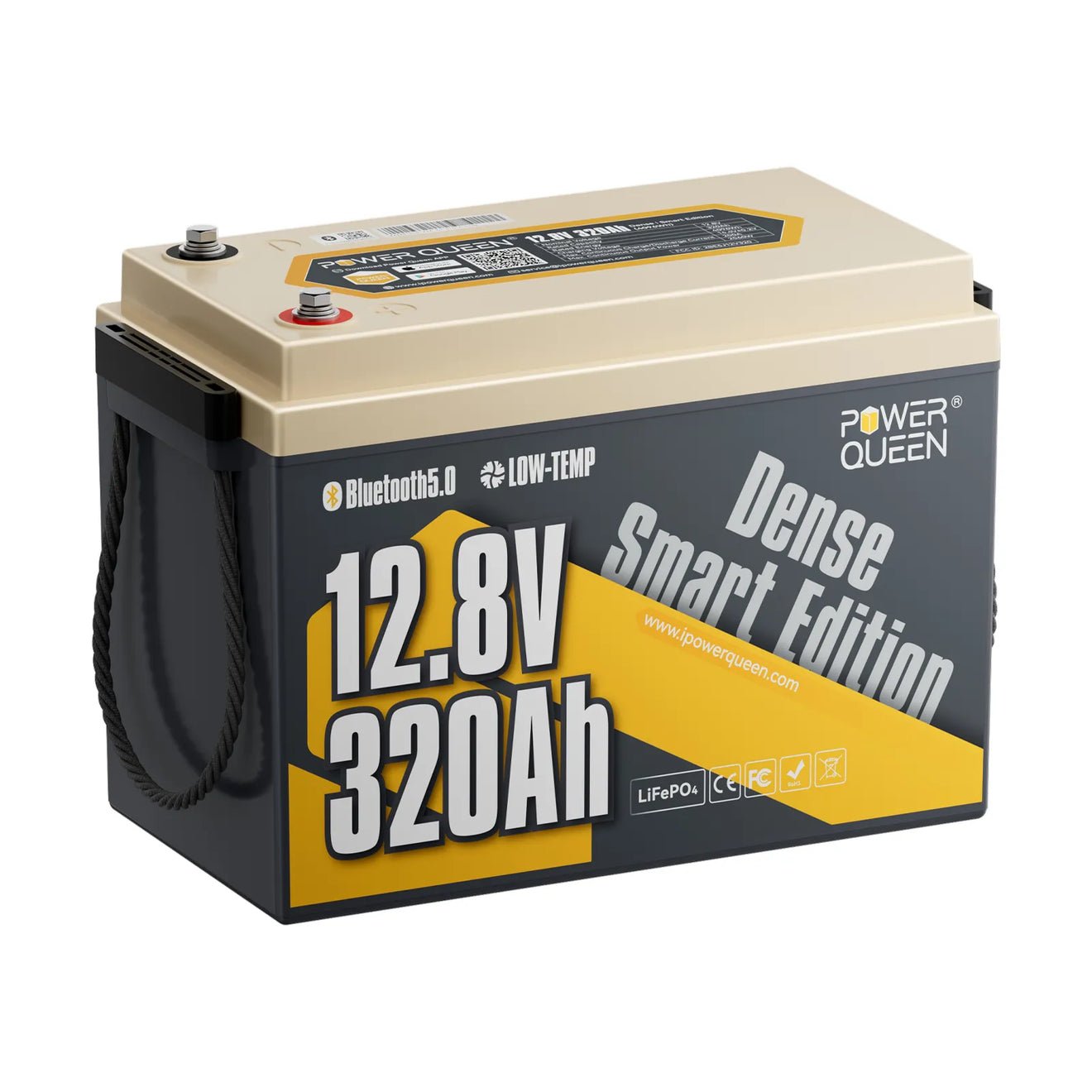
Power Queen 12 V 320 Ah Dense Smart
4,096 Wh rated · 200 A BMS. Confirm mounting orientation and manual limits.
Guide and selection criteria →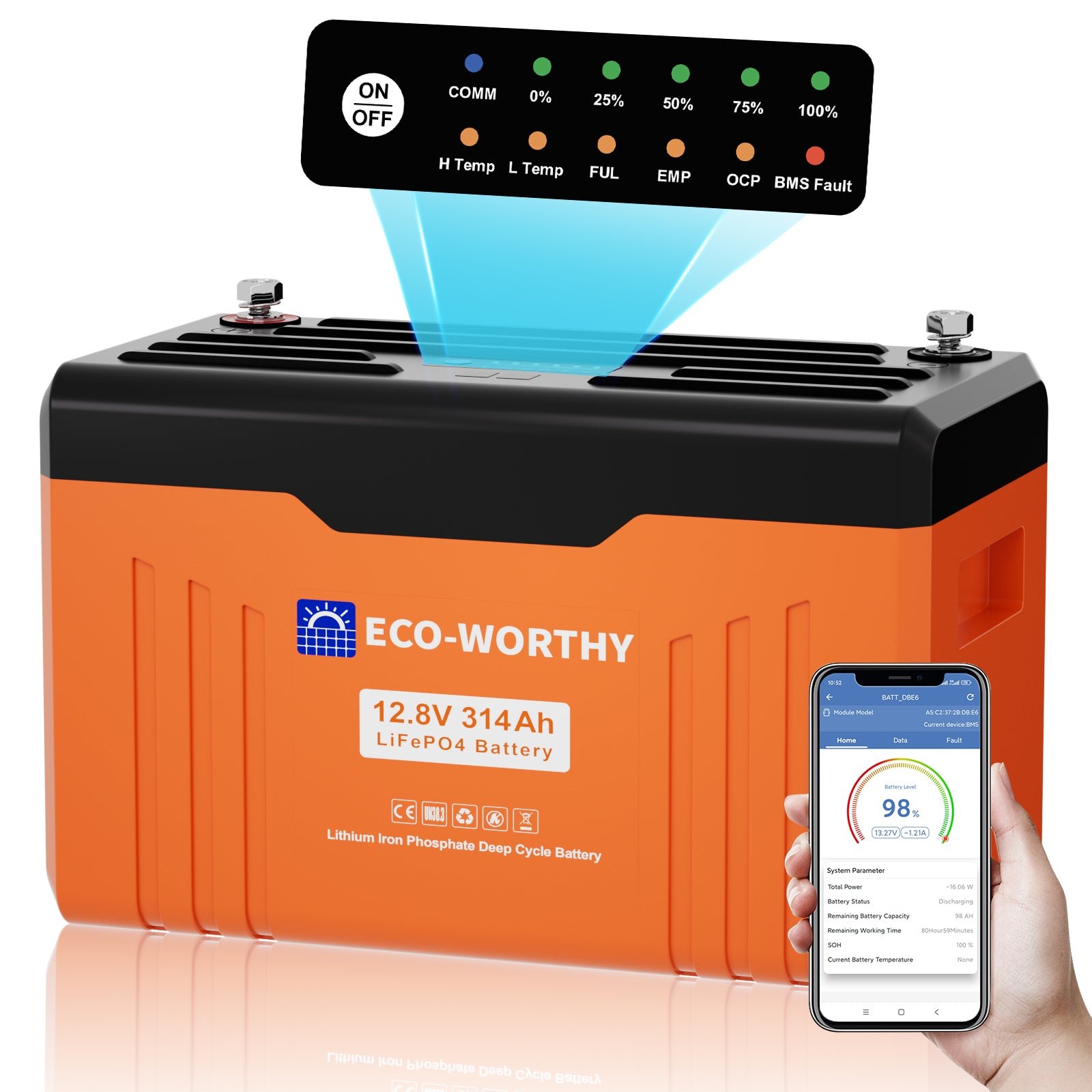
ECO-WORTHY EnergyTrek 12 V 314 Ah
4,019 Wh rated · 200 A BMS. Check whether the offer includes a charger.
Guide and selection criteria →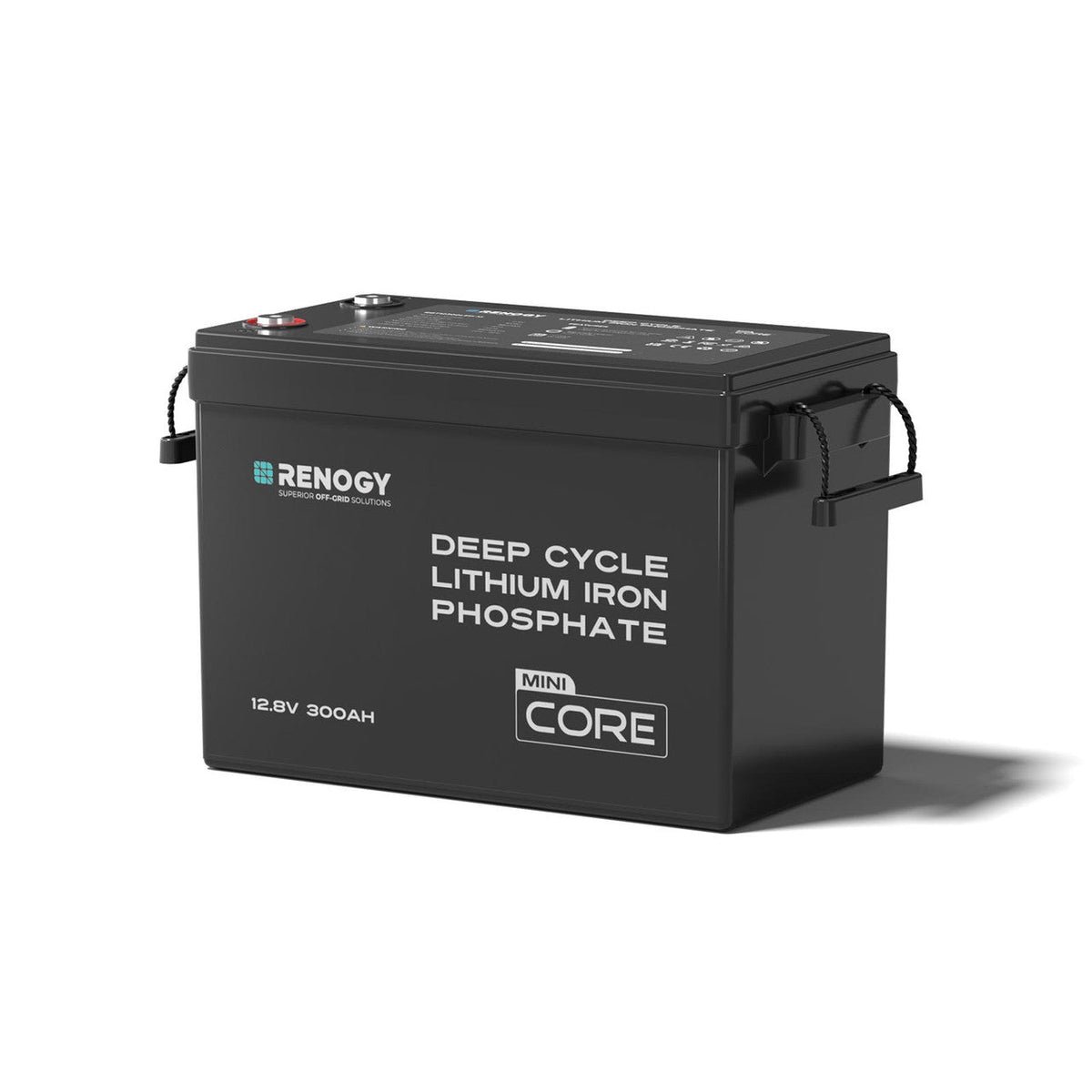
Renogy Core Mini 12 V 300 Ah
3,840 Wh rated · 200 A BMS. This version has neither Bluetooth nor self-heating.
Guide and selection criteria →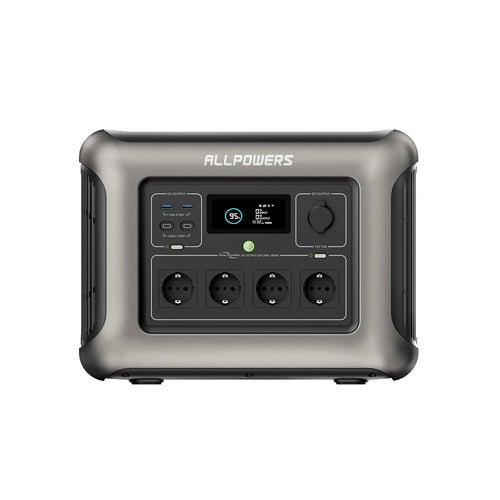
ALLPOWERS R1500
Portable energy without a fixed leisure battery. Choose by runtime, outputs and charging method.
Jackery Explorer 2000 v2
Portable energy without a fixed leisure battery. Choose by runtime, outputs and charging method.
Jackery Explorer 240 v2
Portable energy without a fixed leisure battery. Choose by runtime, outputs and charging method.
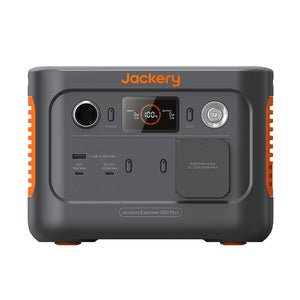
Jackery Explorer 300 Plus
Portable energy without a fixed leisure battery. Choose by runtime, outputs and charging method.
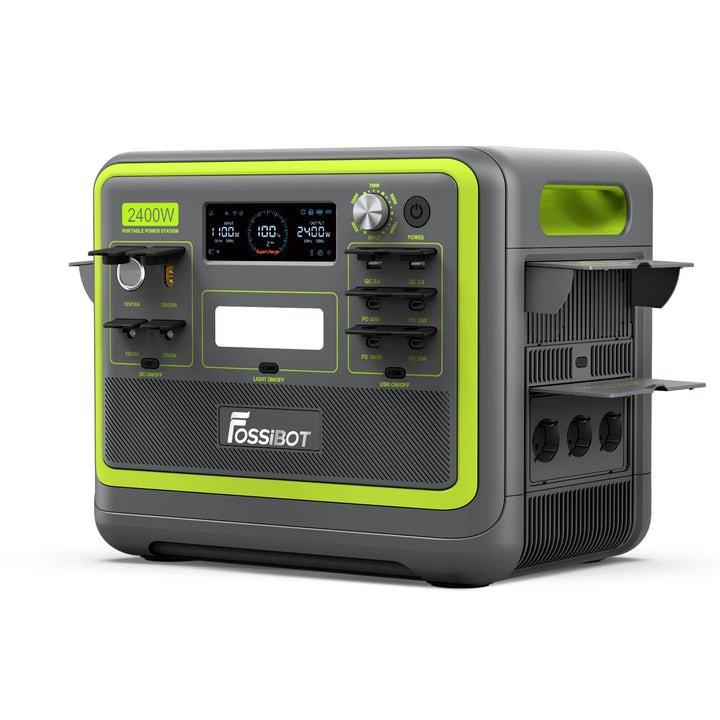
FOSSiBOT F2400
Portable energy without a fixed leisure battery. Choose by runtime, outputs and charging method.
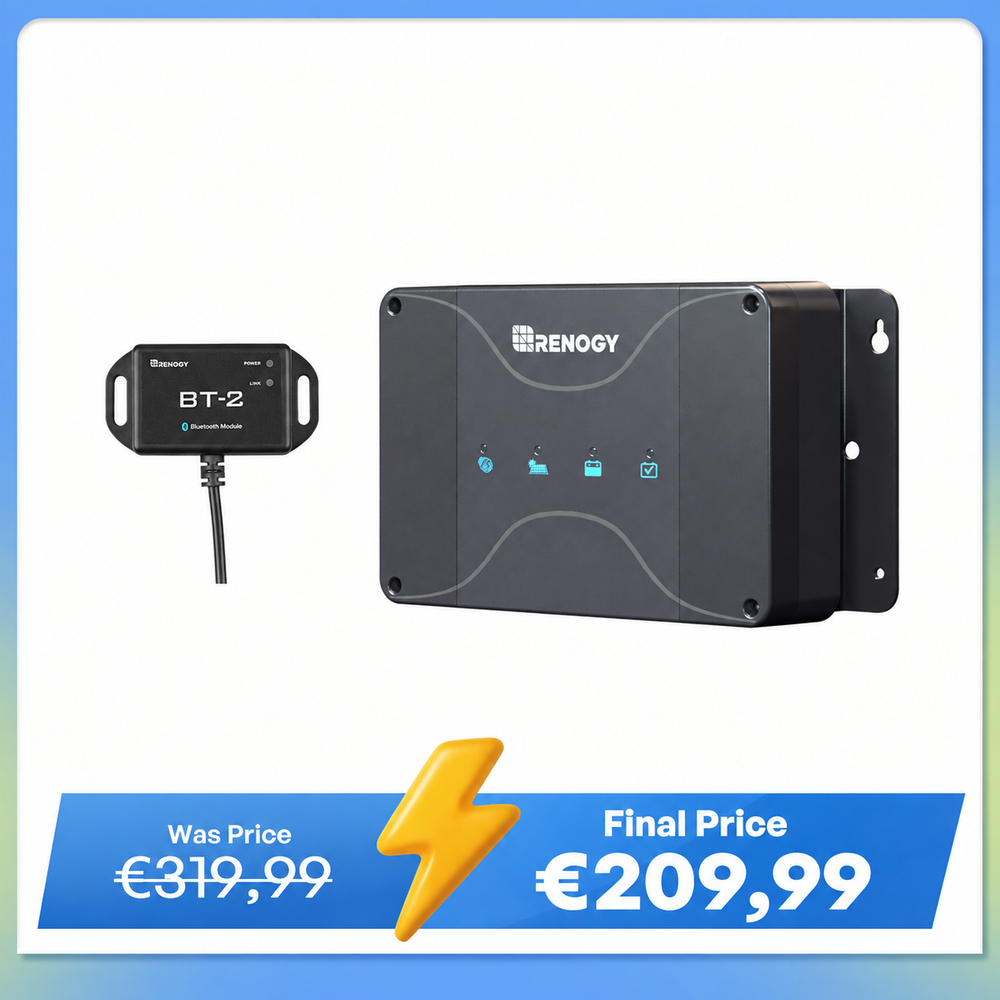
Renogy DCC50S · 50 A
Combines DC-DC and MPPT in a 12 V system. Check exact revision, solar Voc and current sharing.
Guide and selection criteria →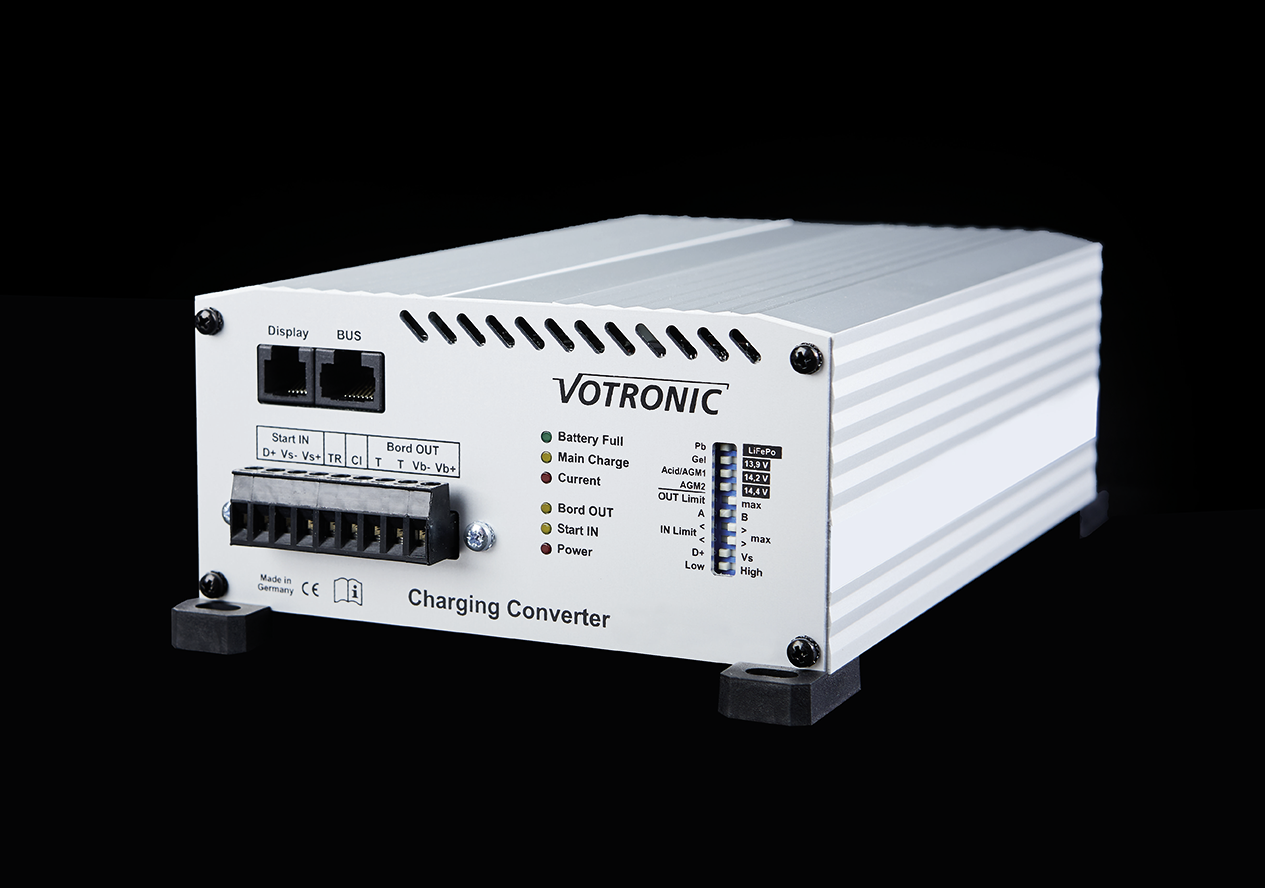
Votronic VCC 1212-50
Booster for a leisure battery. Check the D+/ignition activation signal and the wiring diagram for your alternator.
Guide and selection criteria →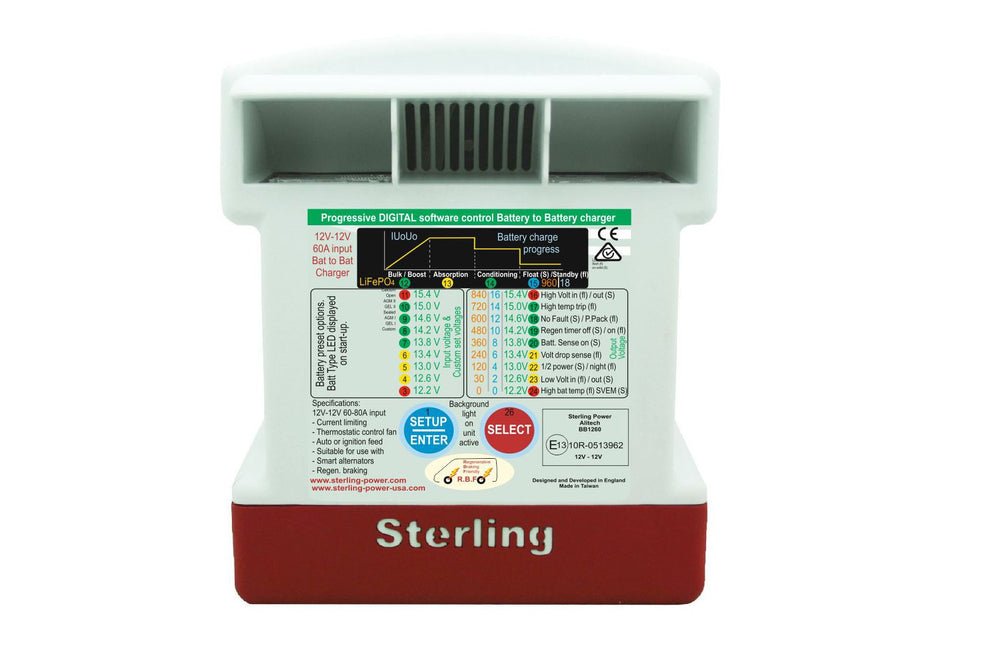
Sterling Power BB1260
12 V, 60 A battery-to-battery charger. Size cables, fuses and alternator headroom before choosing it.
Guide and selection criteria →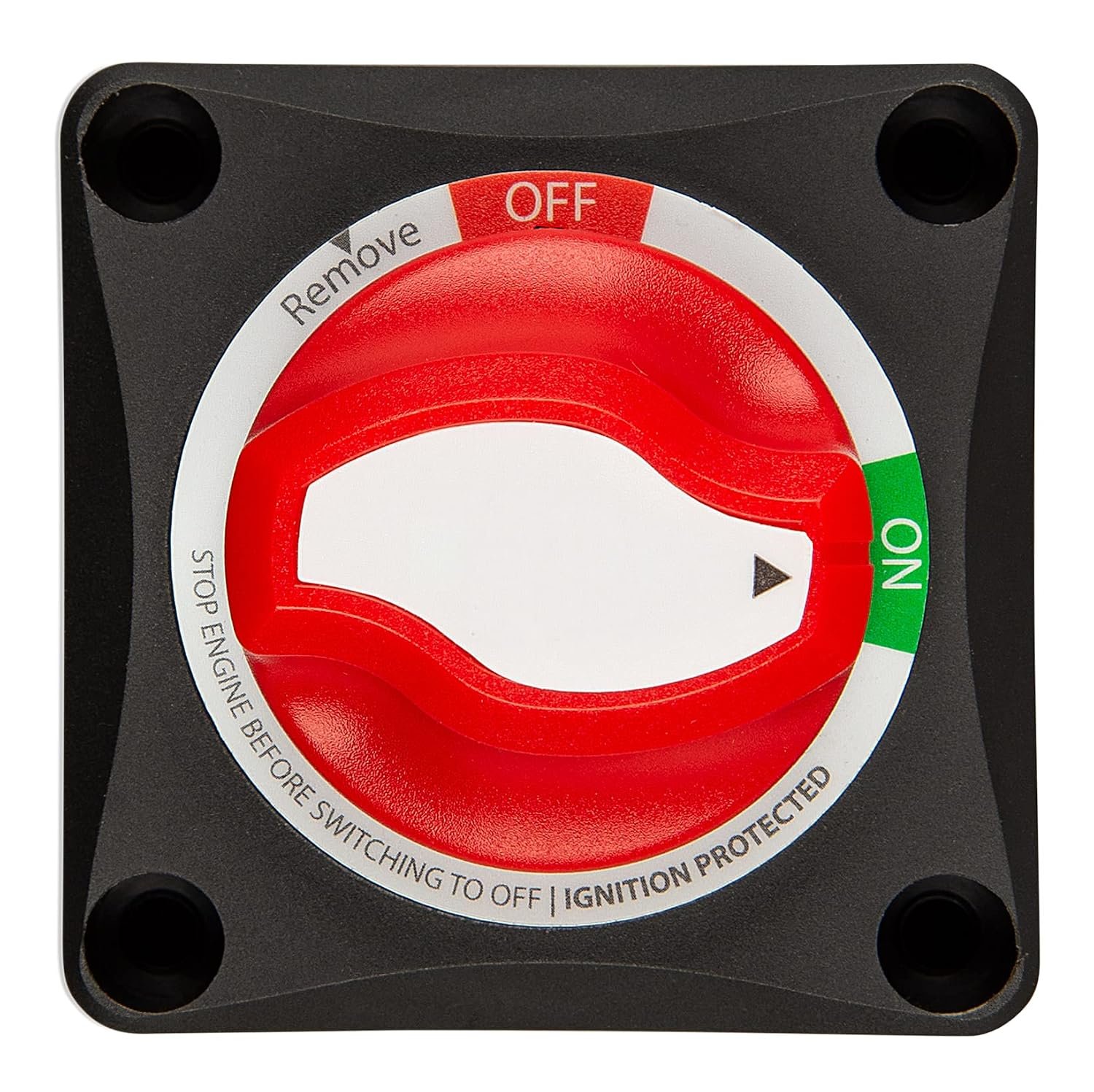
Victron Battery Switch · 275 A
Manual battery isolation for maintenance. Check rating for your application and installation; it does not replace a fuse.
Guide and selection criteria →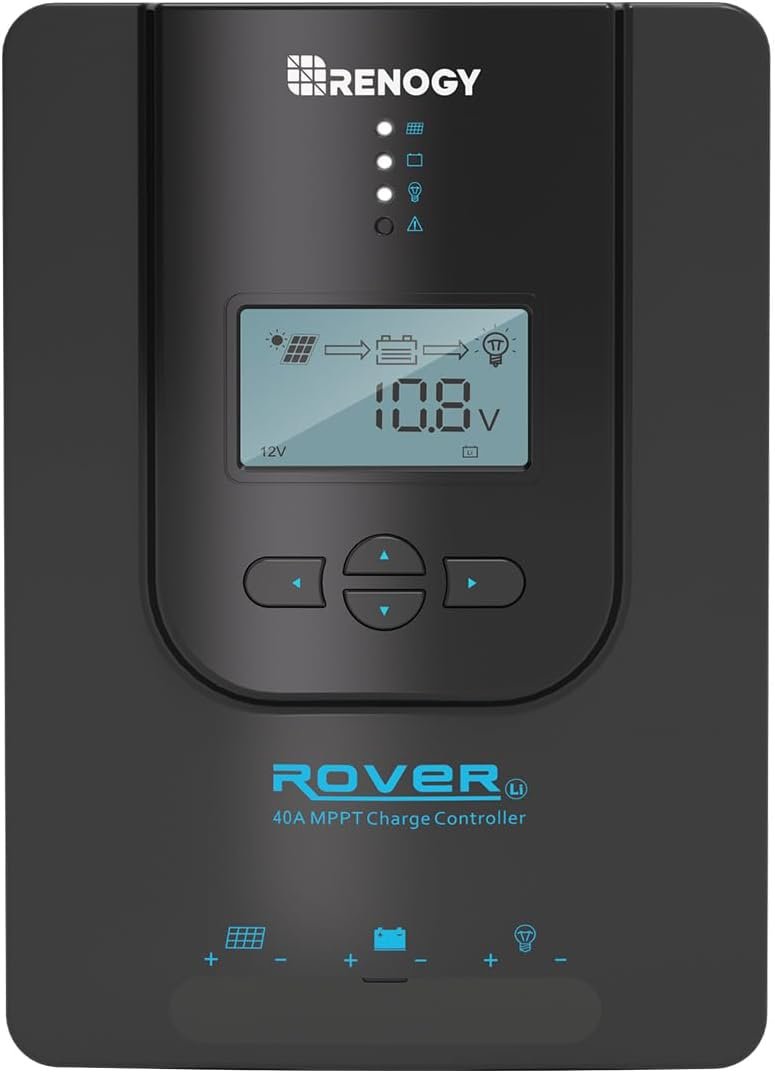
Renogy Rover Li 40A
40 A MPPT controller. Check battery voltage, panel Voc and Isc, and the limits of the exact revision.
Guide and selection criteria →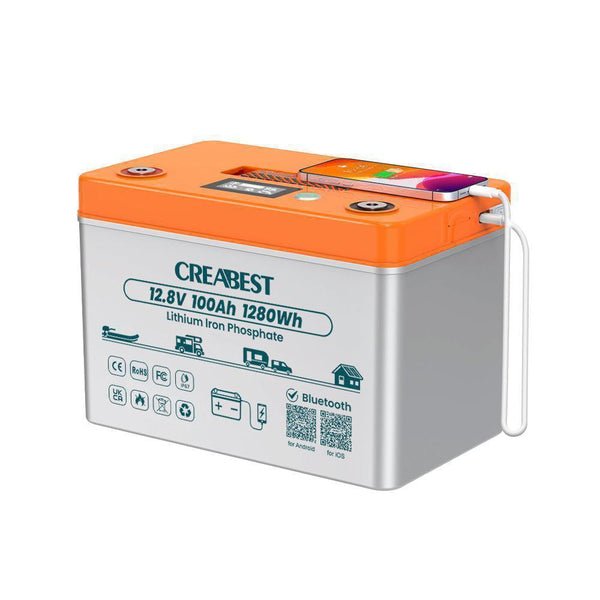
Creabest VB066 12.8 V 100 Ah
1,280 Wh rated, published maximum continuous discharge of 100 A and self-heating. Bluetooth and IP67 protection according to the manufacturer. Confirm the listing is for VB066.
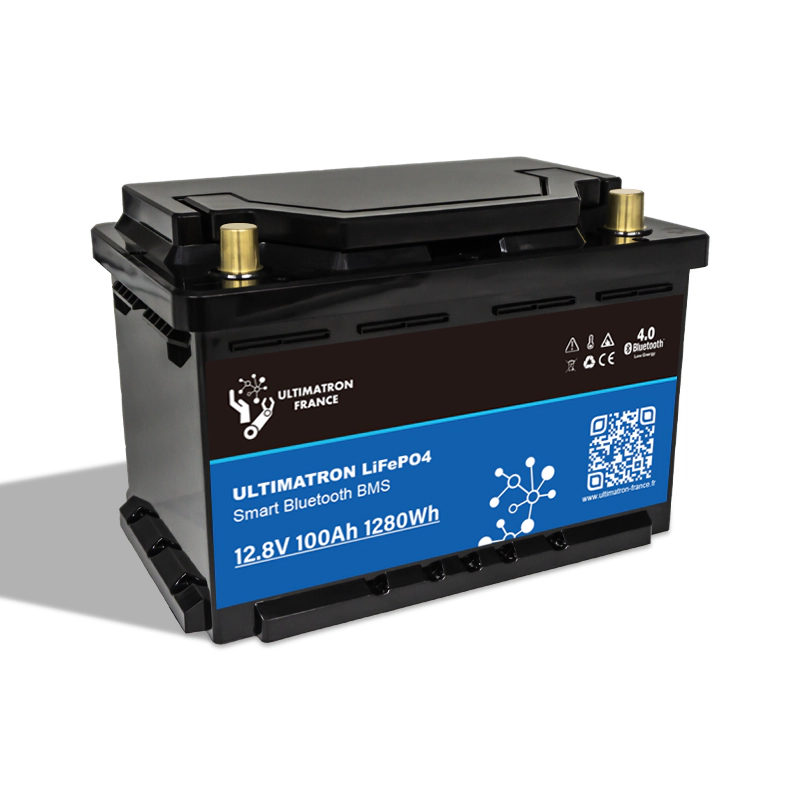
Ultimatron ULS-12-100-LN3
12.8 V and 100 Ah with Bluetooth. Published dimensions: 279 × 175 × 189 mm; maximum discharge: 100 A. The low-profile format does not guarantee universal under-seat compatibility.
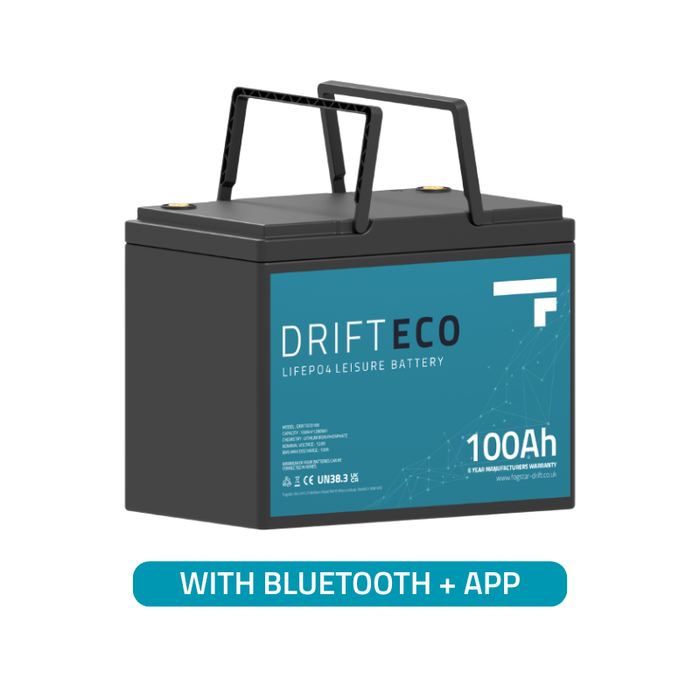
Fogstar Drift ECO 12 V 100 Ah Bluetooth
1,280 Wh rated and a 100 A BMS, with Bluetooth. British manufacturer: check shipping to Spain, taxes, after-sales support and the exact model available in the shop.
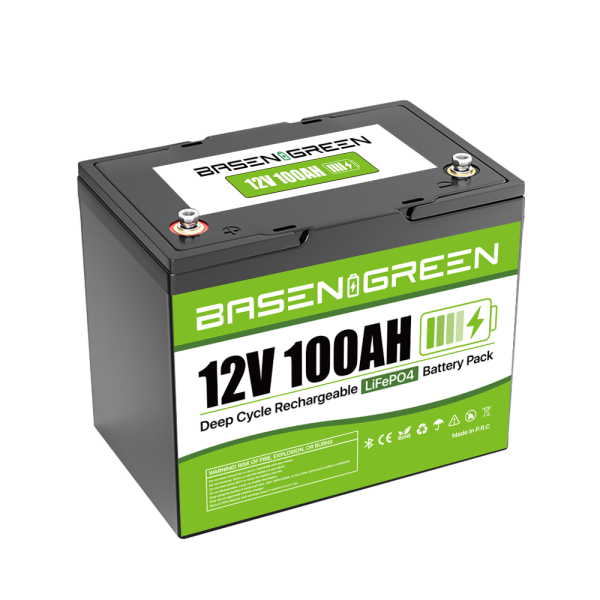
BasenGreen BG 12-100
12.8 V and 100 Ah. The manufacturer publishes maximum charge and discharge currents of 100 A, dimensions of 260 × 168 × 210 mm and a weight of 12 kg. Do not confuse this complete battery with individual cells or kits.
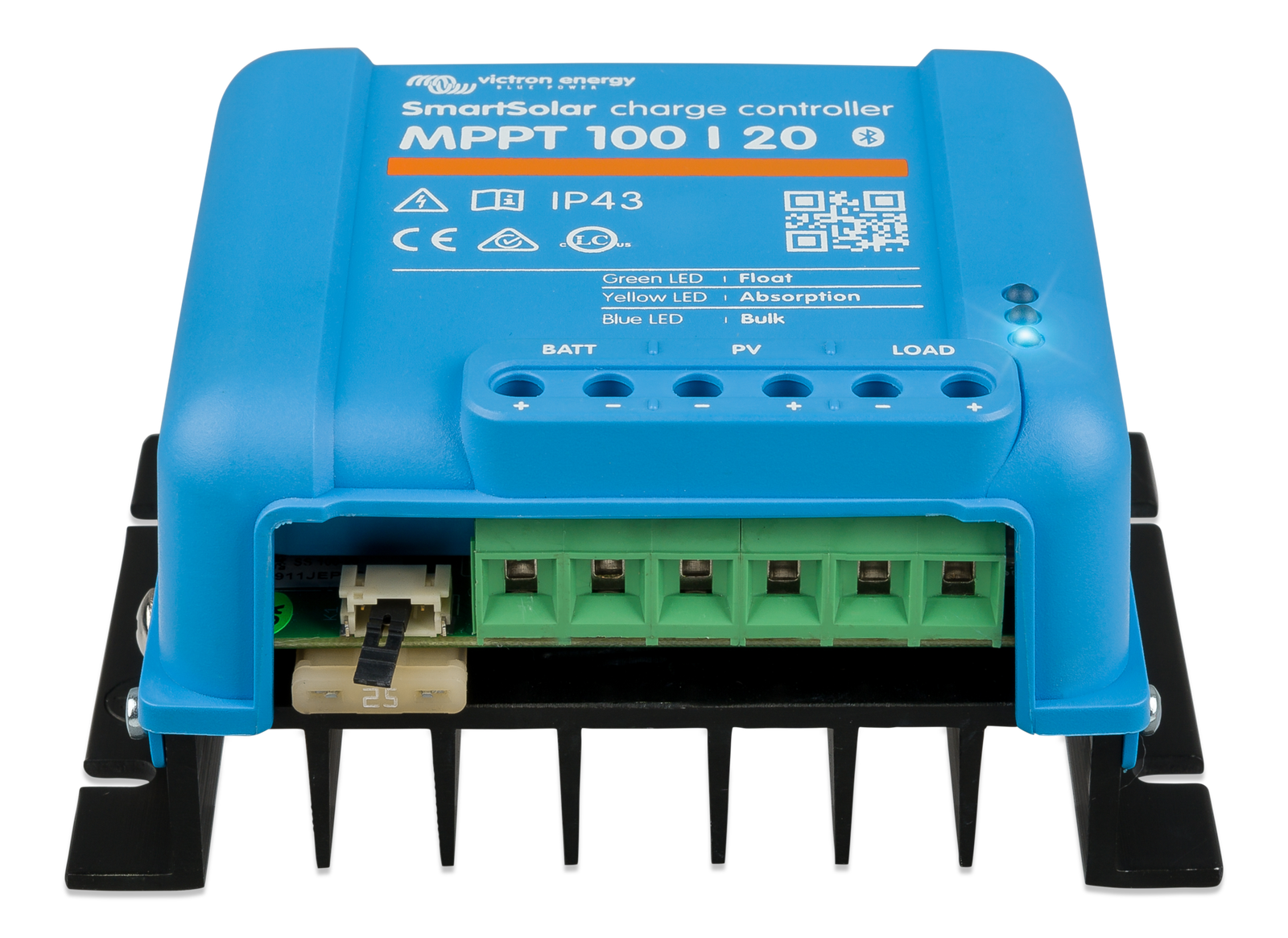
Victron SmartSolar MPPT 100/20
20 A solar MPPT controller with Bluetooth. Size the array using cold-weather Voc and current; confirm version and supported battery voltages in the manual.
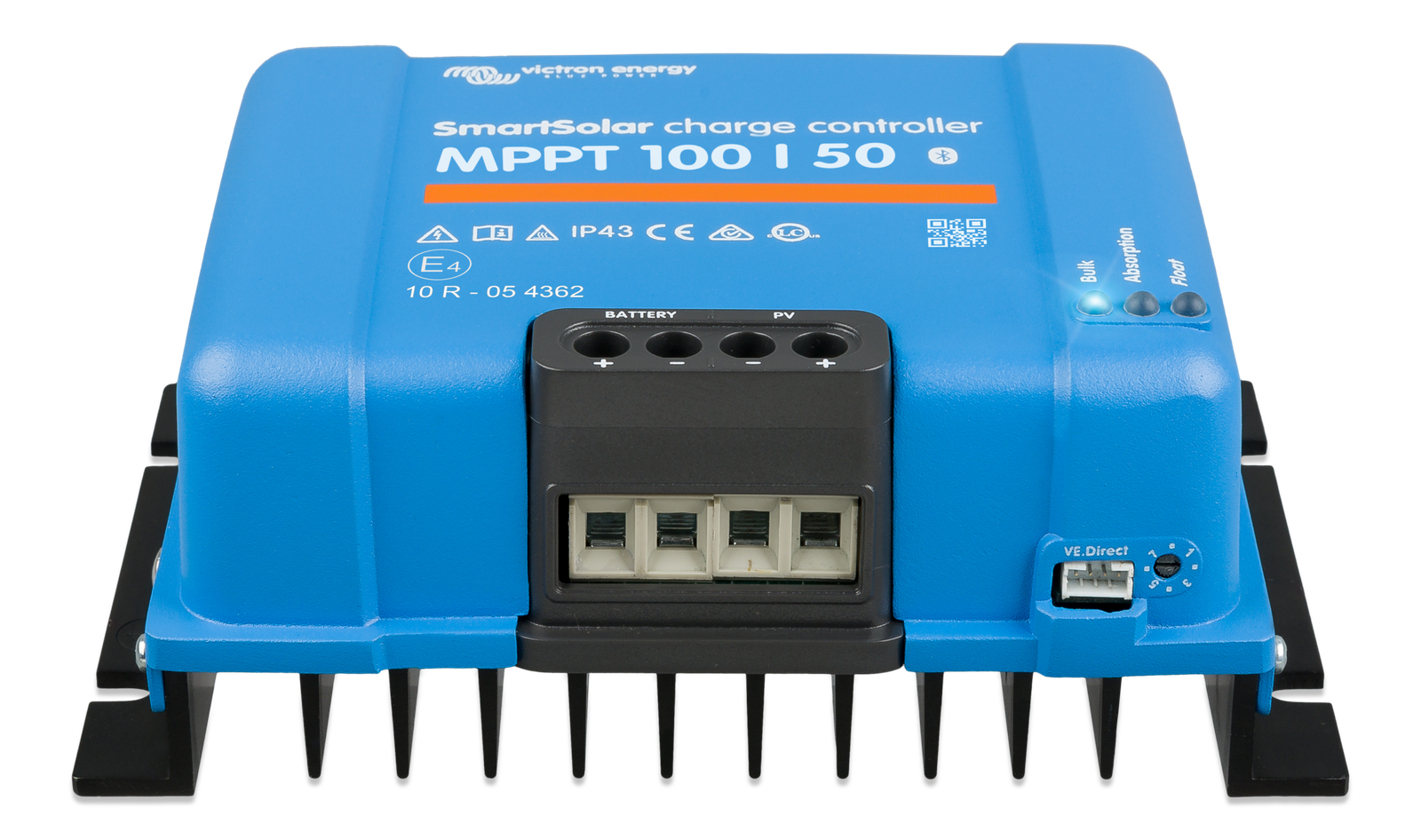
Victron SmartSolar MPPT 100/50
50 A MPPT controller with Bluetooth. The 100 V rating is the photovoltaic input limit, not the battery voltage. Check cold-weather Voc and array limits.
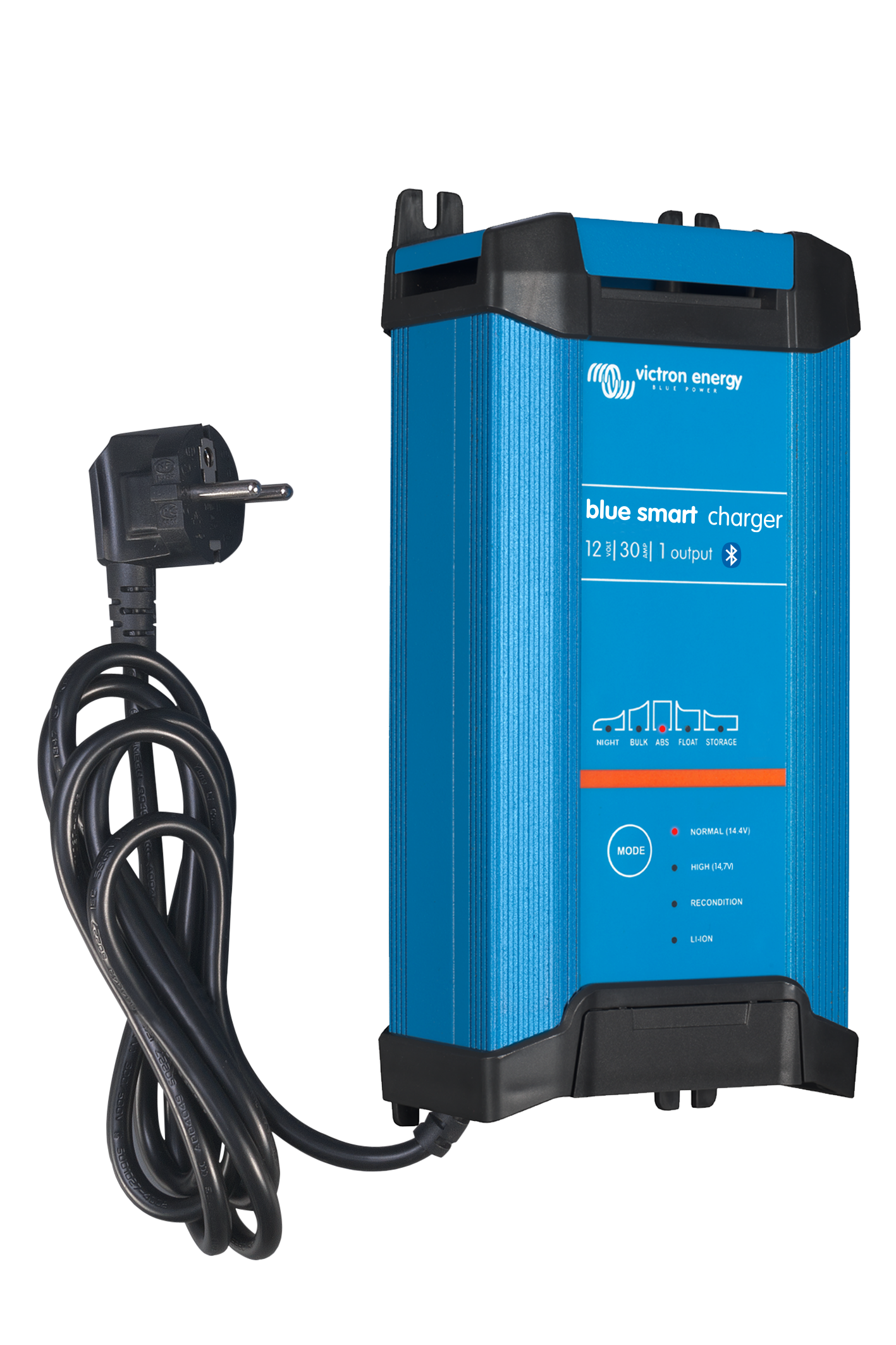
Victron Blue Smart IP22 12/30 · 230 V
230 V mains charger for a 12 V battery, up to 30 A and Bluetooth. Single-output reference: confirm plug, battery profile and the BMS's permitted charging current.
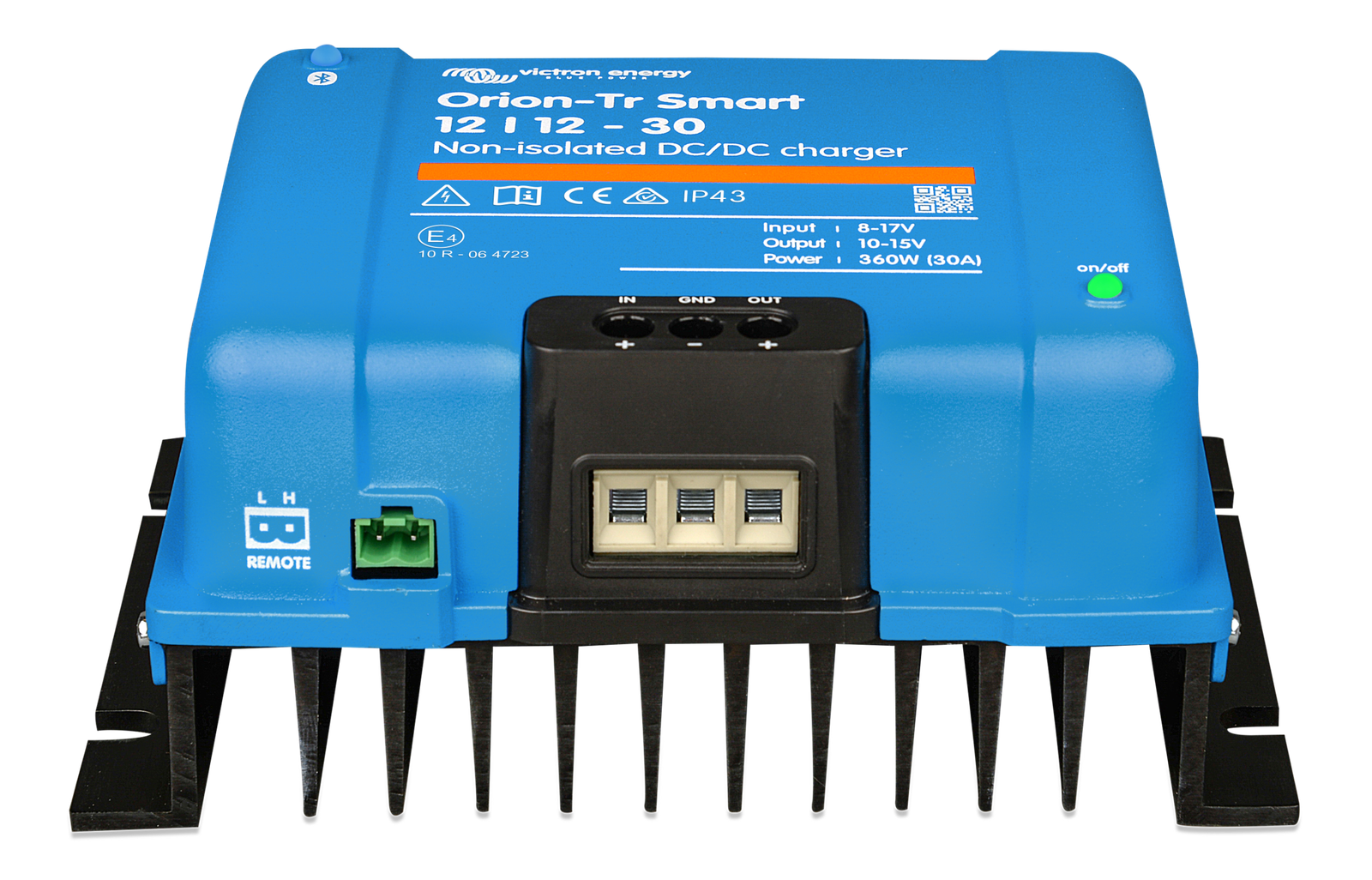
Victron Orion-Tr Smart 12/12-30 · non-isolated
12 V to 12 V, 30 A DC-DC charger. This reference is non-isolated: it shares a common negative. Do not confuse it with Orion XS or the isolated variant; check activation, heat dissipation and charging limits.
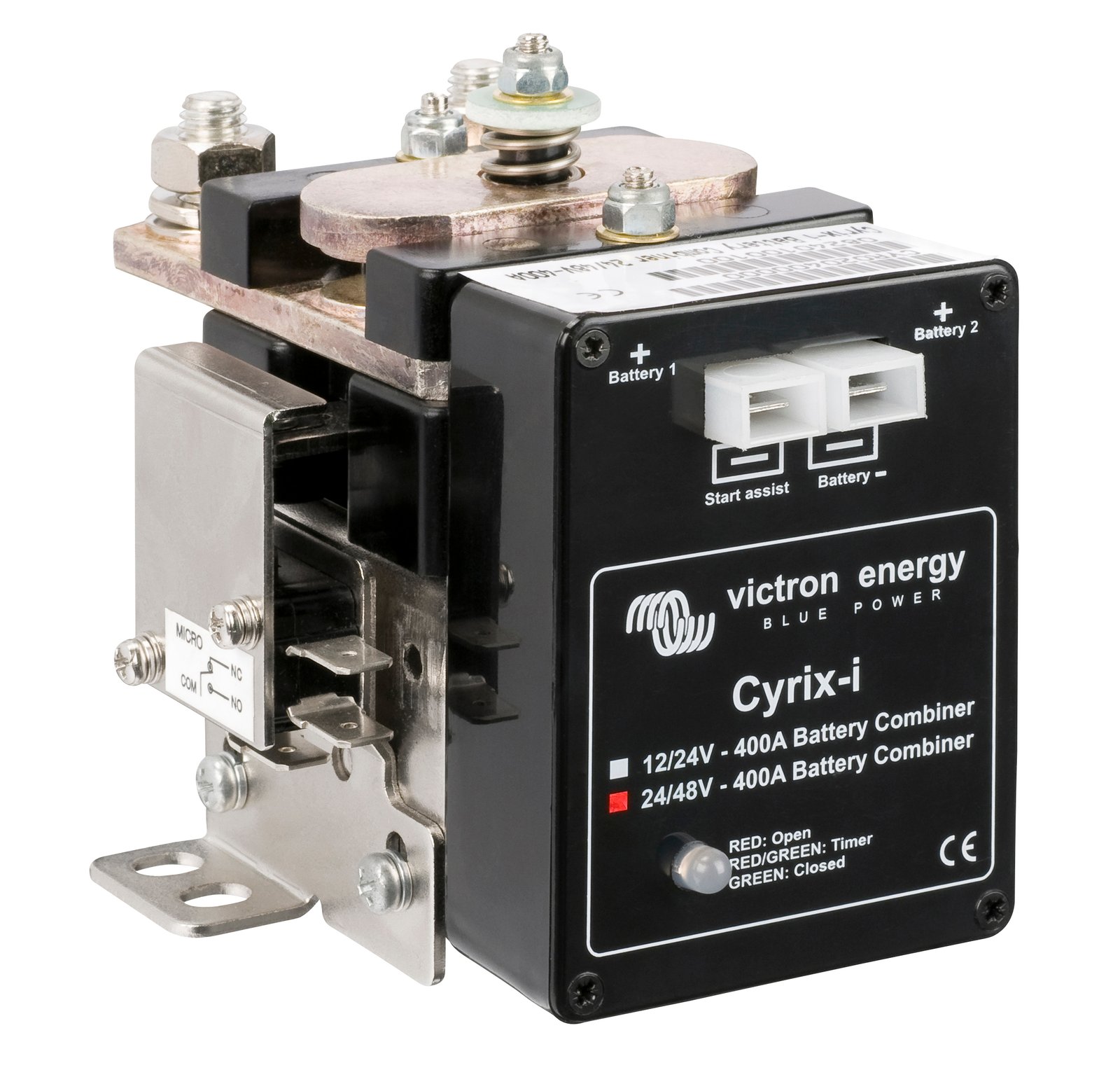
Victron Cyrix-i 24/48 V · 400 A
Automatic combiner for 24/48 V systems. Not suitable for a 12 V installation. It does not regulate charging like a DC-DC charger: check chemistry, BMS and wiring before installation.
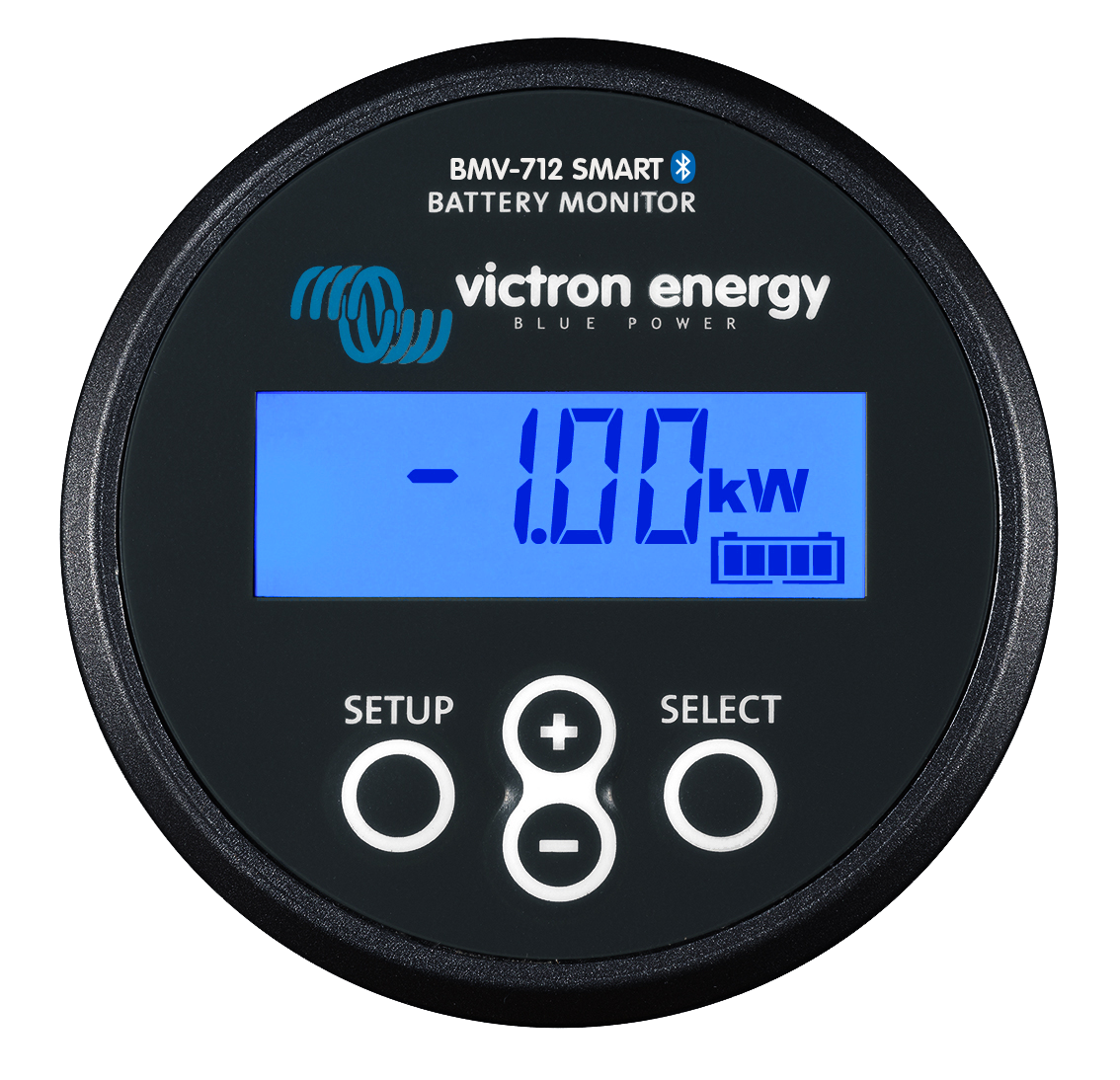
Victron BMV-712 Smart Black
Battery monitor with a physical display and Bluetooth, for checking state of charge without opening your phone. Requires a shunt in the negative connection and configuration of capacity, chemistry and synchronisation; check kit contents.
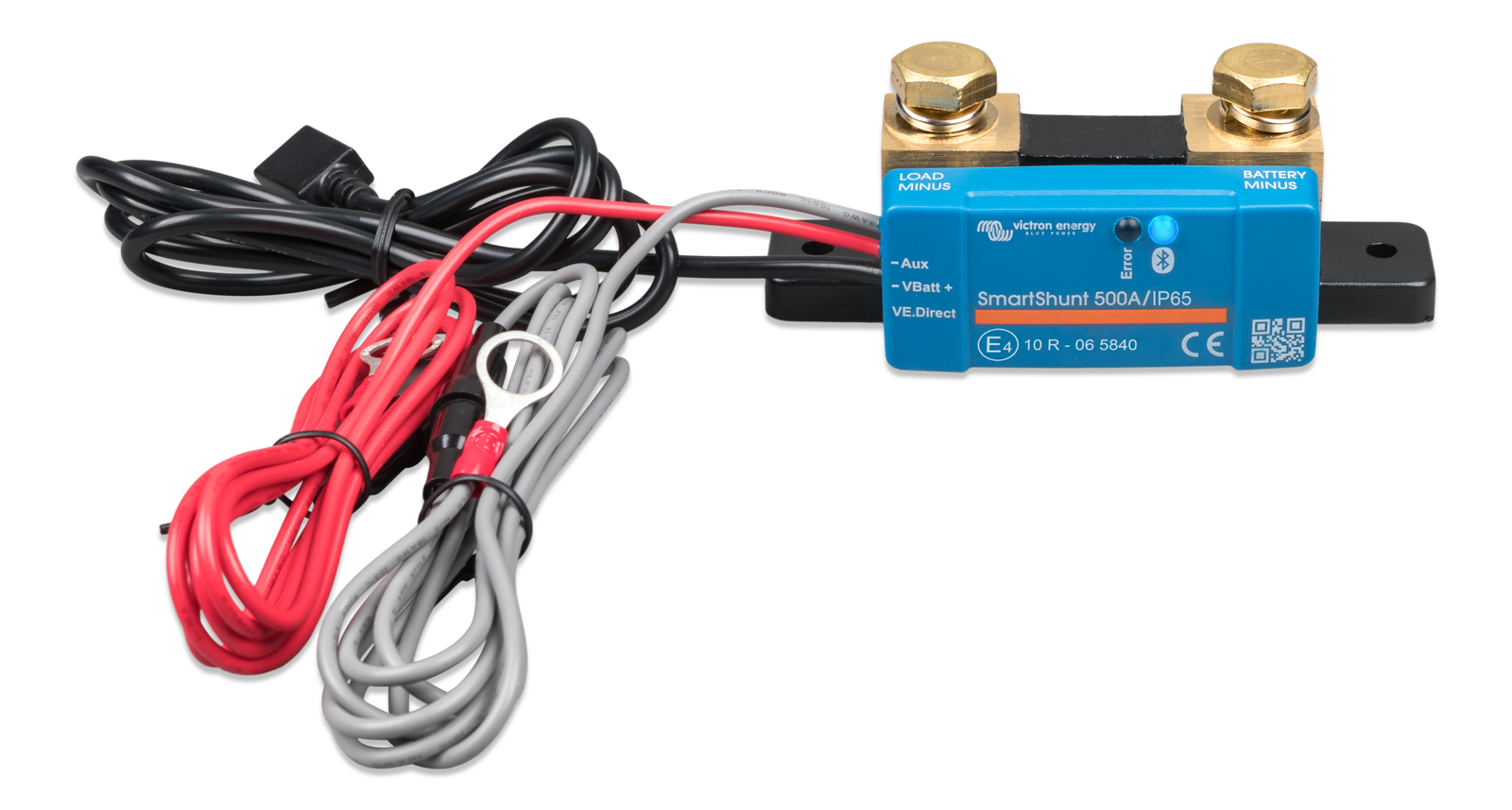
Victron SmartShunt IP65 500 A
500 A battery monitor with IP65 protection, read through VictronConnect. No dedicated display. A different variant from the standard SmartShunt; IP65 does not mean submersible. Requires wiring and battery-bank configuration.
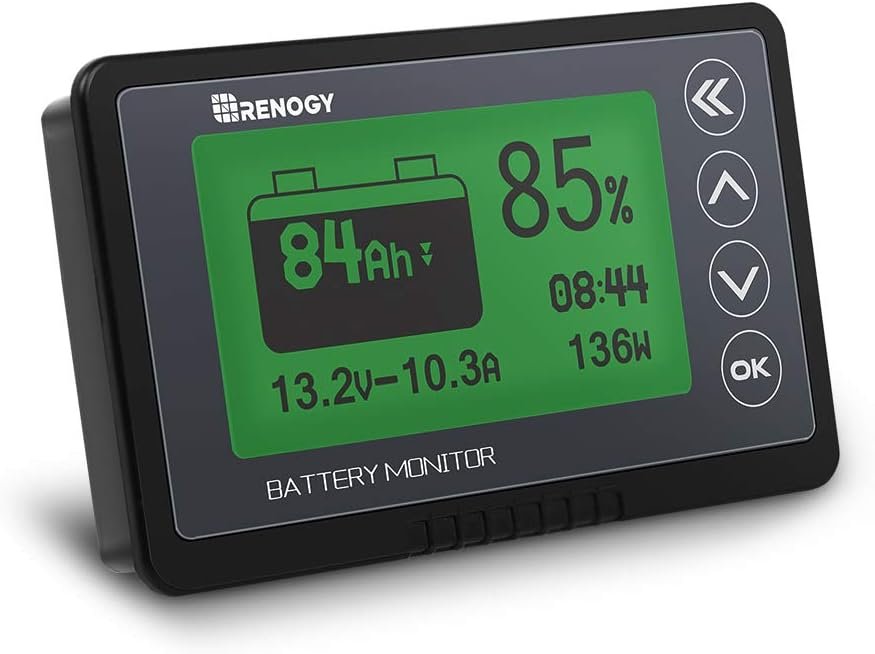
Renogy RBM500 · 500 A battery monitor
Battery monitor with display and 500 A shunt for tracking charge, discharge and bank capacity. This selection is the wired monitor: do not confuse it with the 300 A Bluetooth shunt. Check generation and kit.
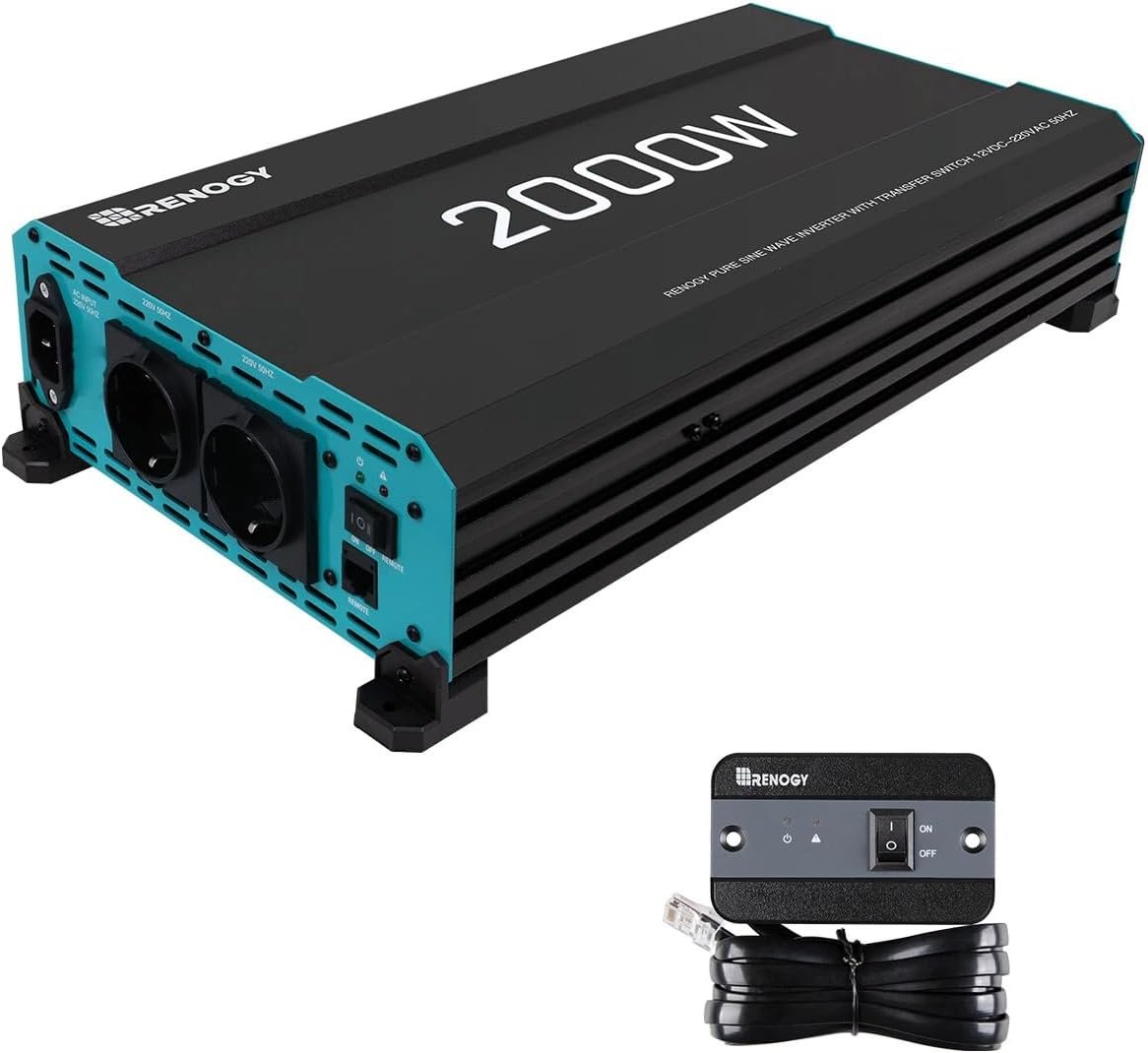
Renogy 2000 W · 12 V to 230 V inverter
Pure sine wave inverter supplying 230 V appliances from a 12 V battery. Full output demands high current: size the BMS, cables and fuses. Mains transfer switching does not mean it includes a battery charger.
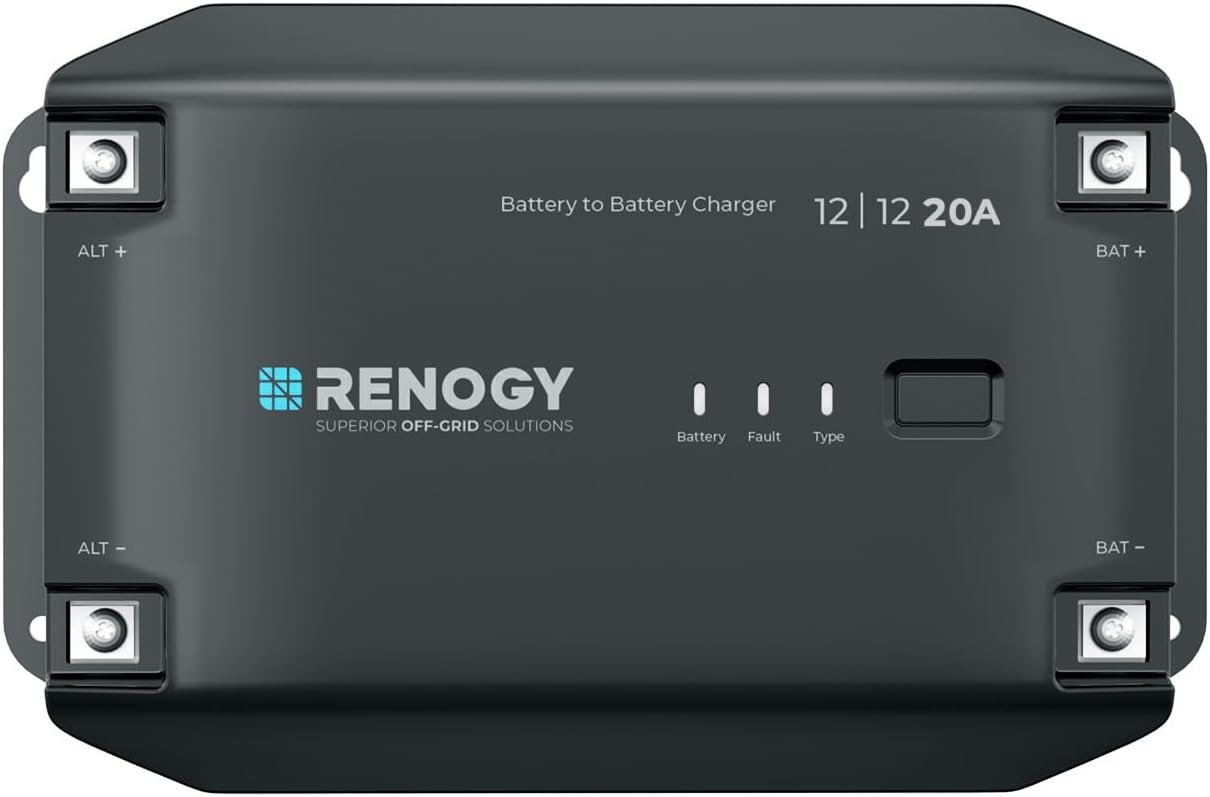
Renogy DCC1212-20 · 20 A DC-DC charger
Vehicle charging for a leisure battery, with a commercial rating of 20 A and 12 V. Check code and revision: the manufacturer offers several generations. Do not assume integrated solar MPPT or Bluetooth; check the activation signal.
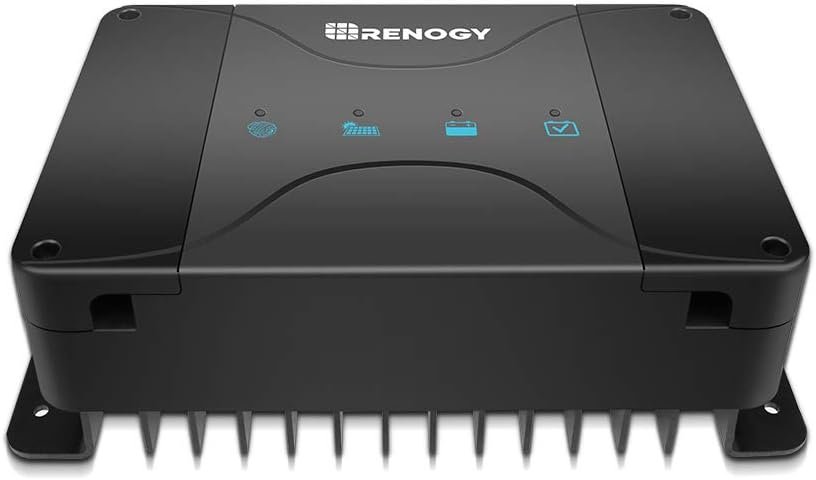
Renogy DCC30S · 30 A DC-DC with MPPT
Alternator and solar charging for a 12 V leisure battery. Select the 30 A variant. Check generation, solar input limit and IGN wire: 50 A specifications do not automatically apply to this version.
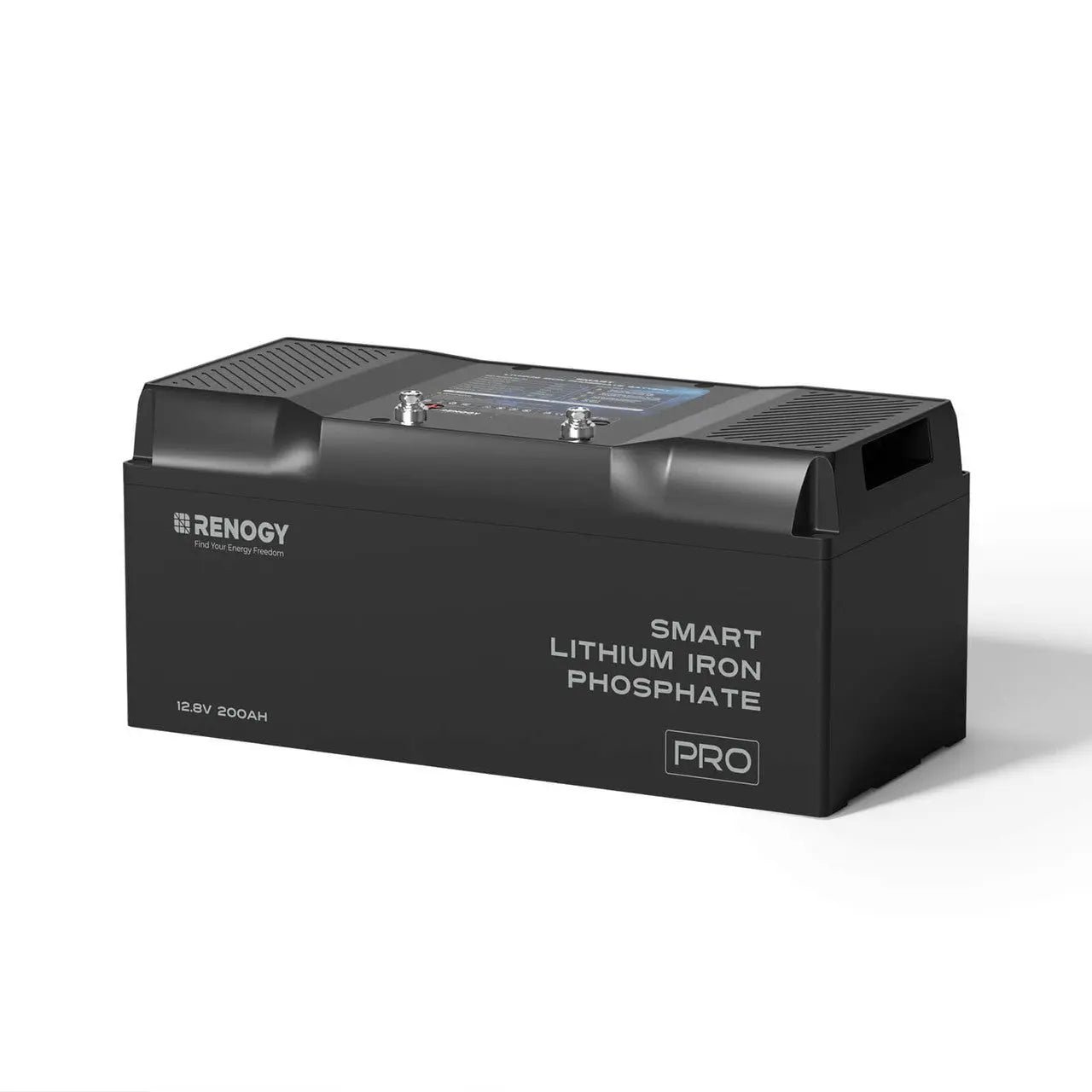
Renogy Pro 12 V 200 Ah · Bluetooth and self-heating
200 Ah LiFePO₄ battery for fixed installation, with Bluetooth and self-heating in this range. Confirm product code, BMS, dimensions and heating activation conditions before sizing an inverter and charging system.
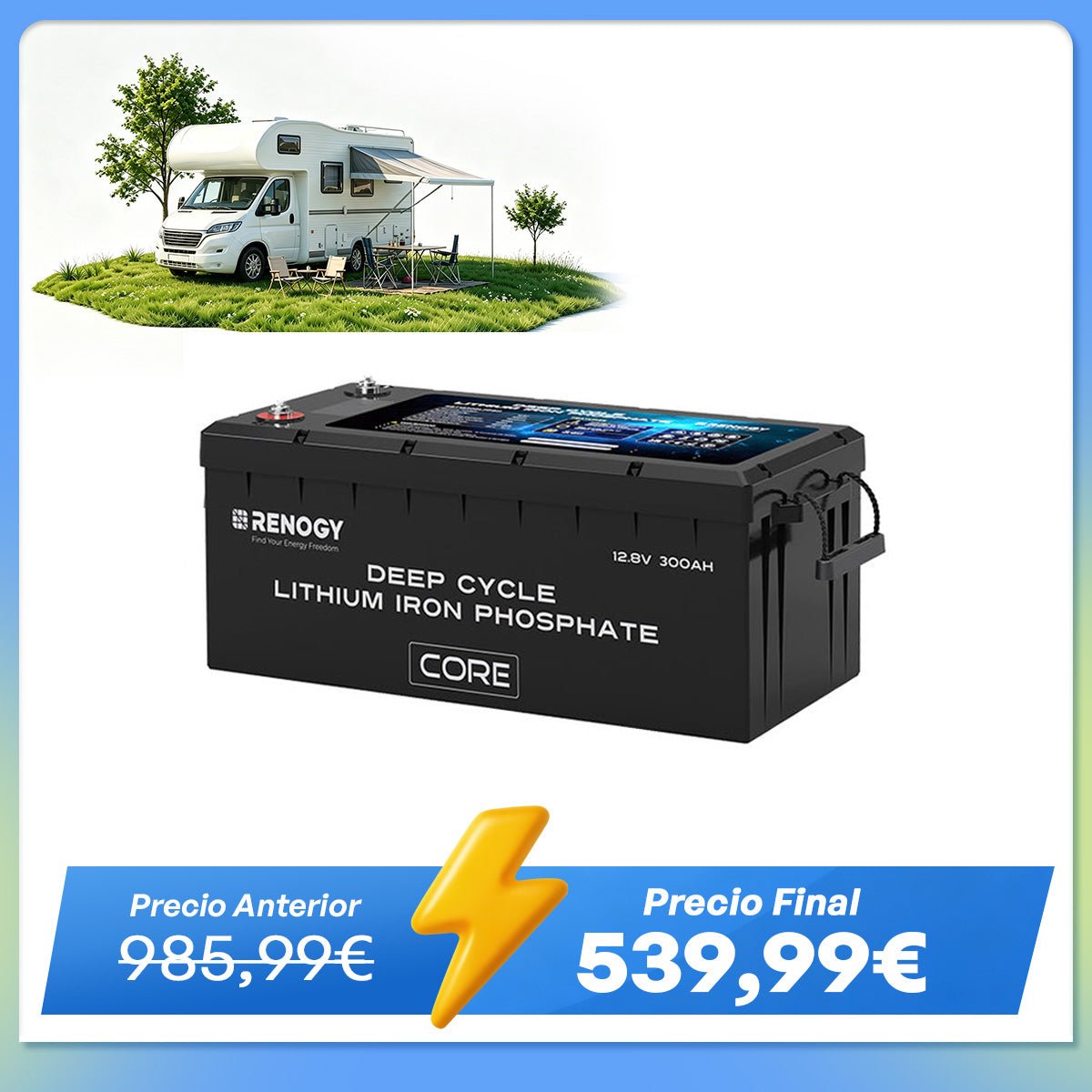
Renogy Core 12 V 300 Ah · self-heating
300 Ah Core version with self-heating, distinct from Core Mini. Check dimensions, permitted current and heating requirements: a cold battery alone is not enough; the manufacturer's stated charging conditions are required.
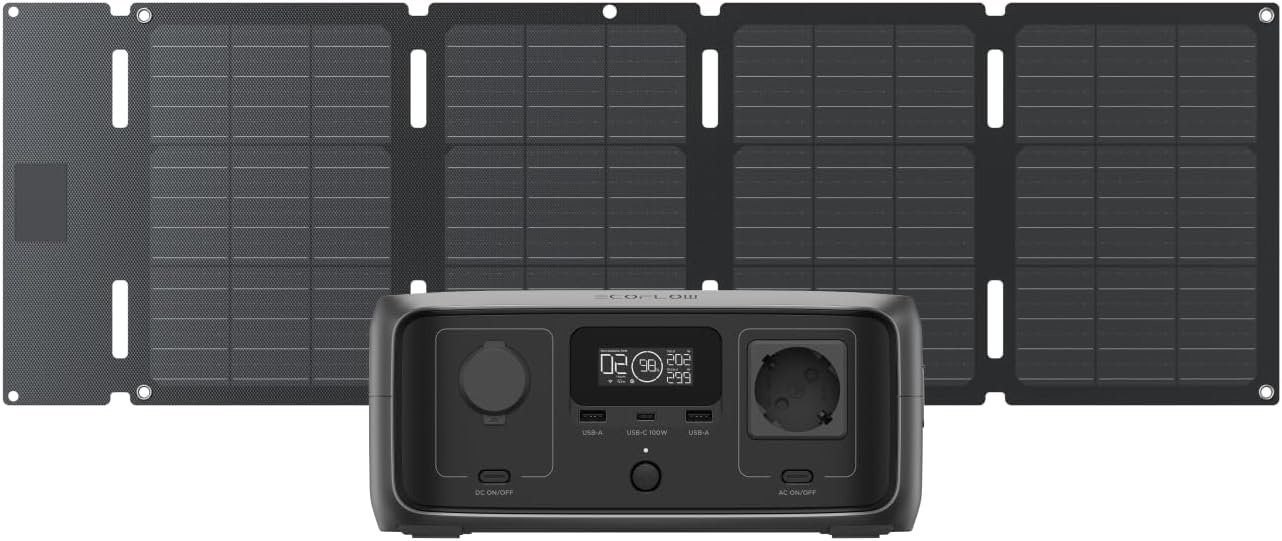
EcoFlow RIVER 3 + 45 W panel
Kit with a 245 Wh power station and 45 W solar panel. For small loads and electronics. X-Boost figures are not universally available continuous power; check connections and the European version.
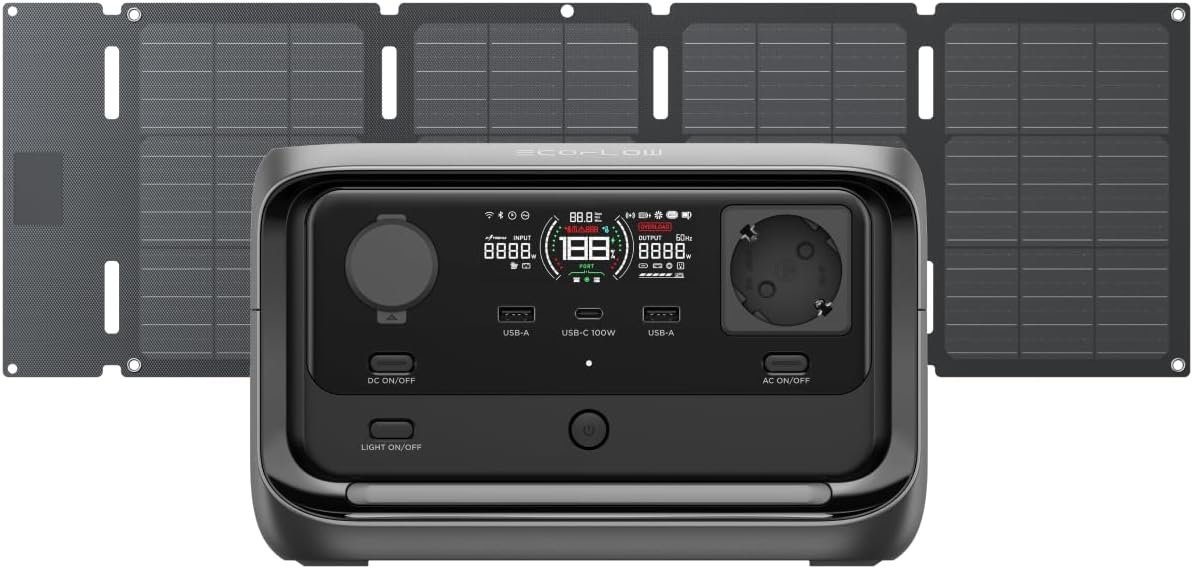
EcoFlow RIVER 3 Plus + 45 W panel
Kit with a 286 Wh power station and 45 W panel. The RIVER 3 Plus has 600 W rated AC output; its 1,200 W X-Boost figure does not mean 1,200 W continuous power for every appliance. Consider runtime and charging rate.
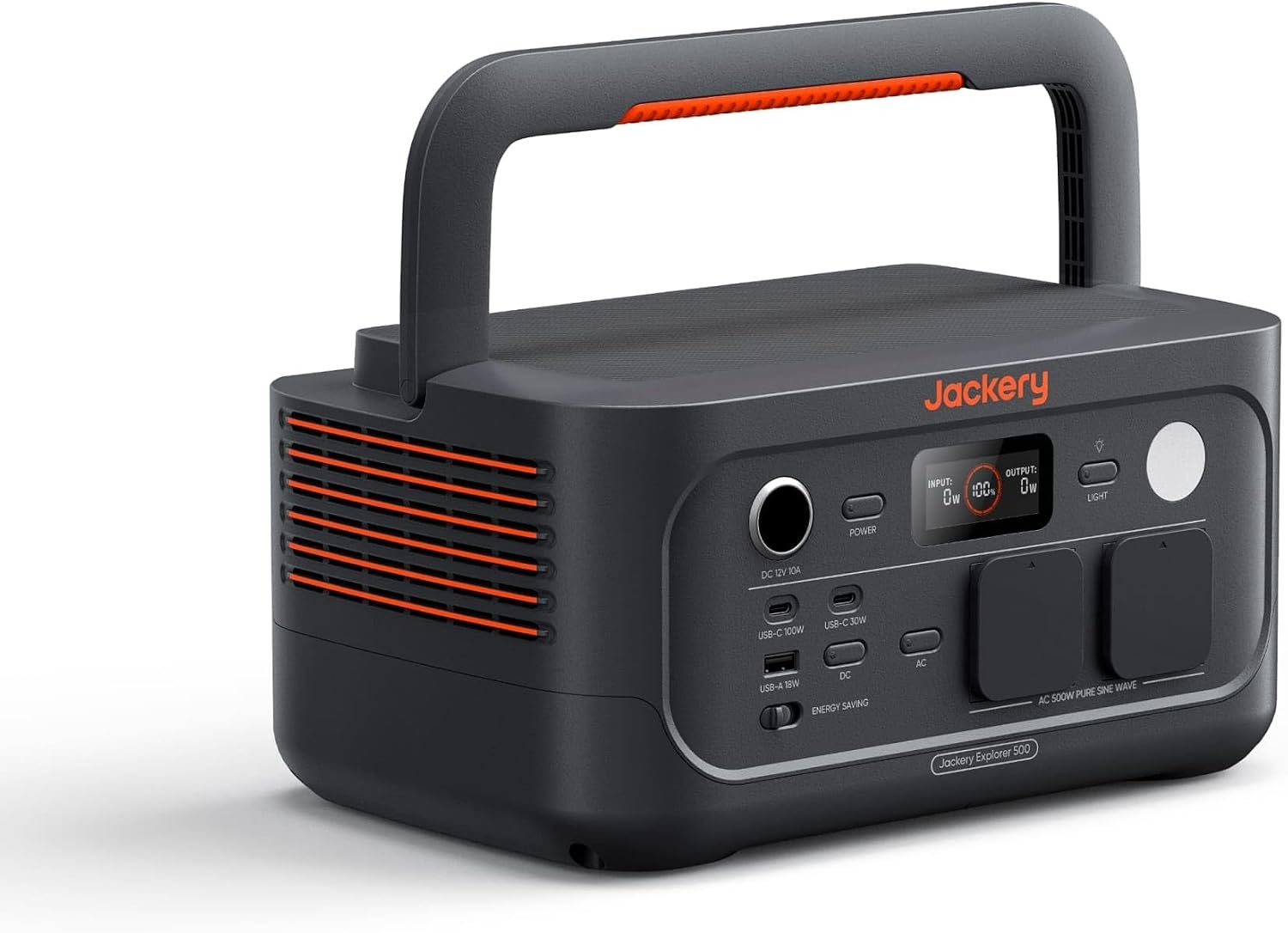
Jackery Explorer 500 v2
512 Wh and 500 W output, bridging small stations and 1 kWh models. Check starting surges and required outputs. Do not confuse it with earlier Explorer 500 generations.
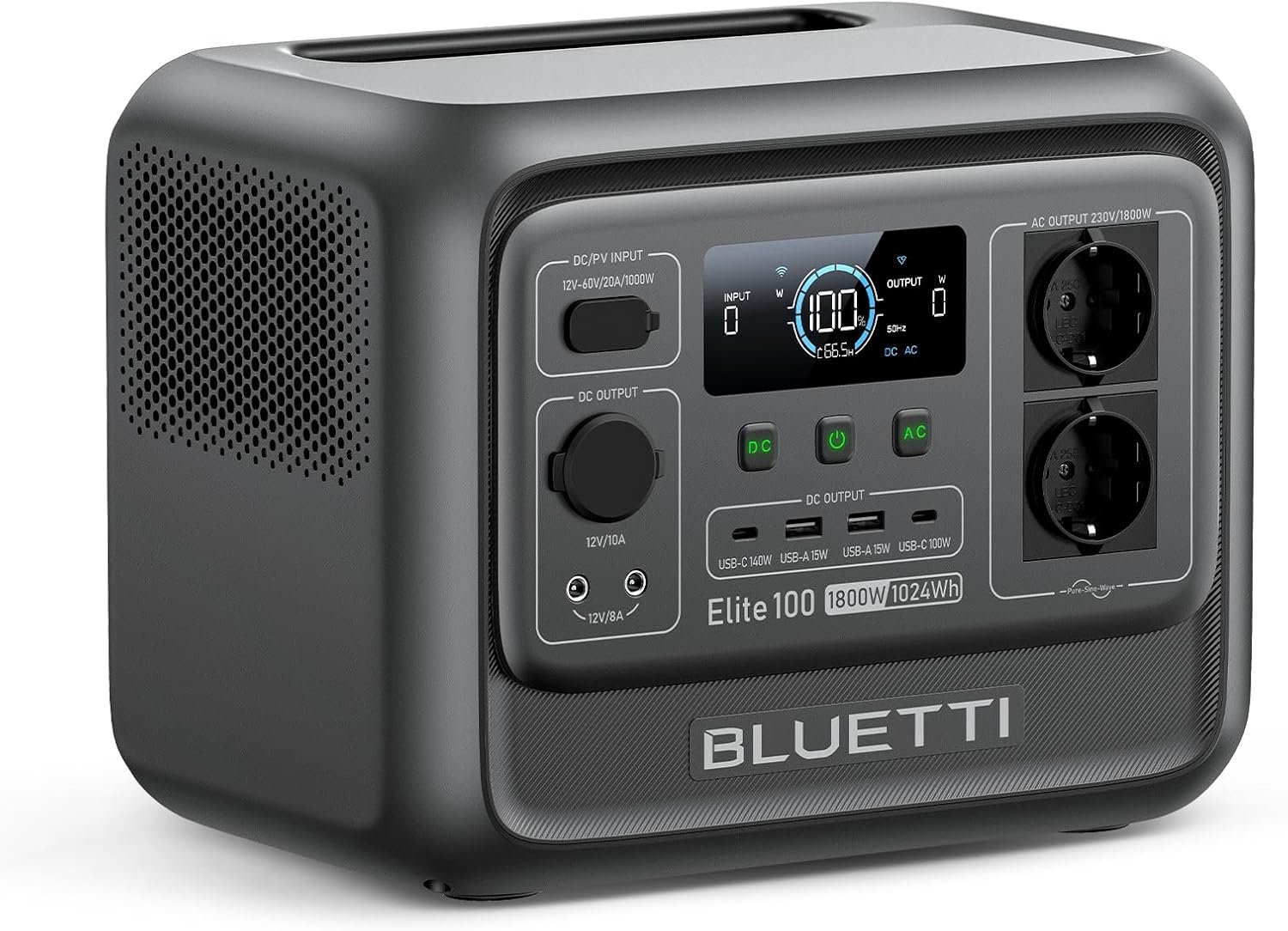
BLUETTI Elite 100 V2
1,024 Wh and 1,800 W rated AC output. For around 1 kWh of capacity with headroom for higher-power appliances. Do not confuse peaks or boosted modes with continuous operation.
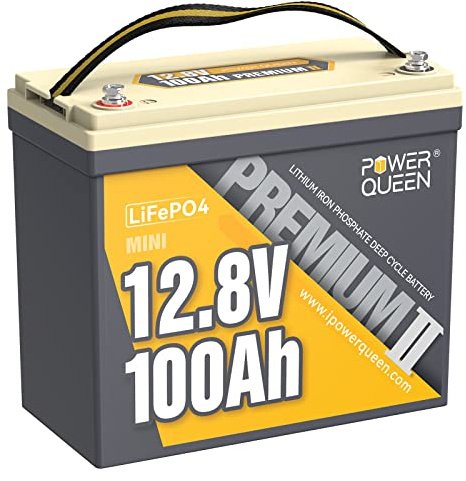
Power Queen 12 V 100 Ah Mini
Compact 100 Ah format for a fixed leisure battery. Mini does not imply Bluetooth or self-heating. Check dimensions, permitted orientation, cold protection and BMS limits on the exact variant.
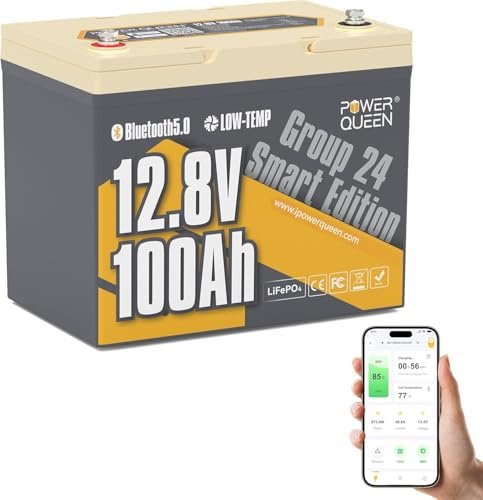
Power Queen 12 V 100 Ah Group 24 Bluetooth
Group 24 variant with Bluetooth monitoring. Not the Mini or standard battery. Confirm dimensions, low-temperature charging cutoff and continuous current before sizing an inverter.
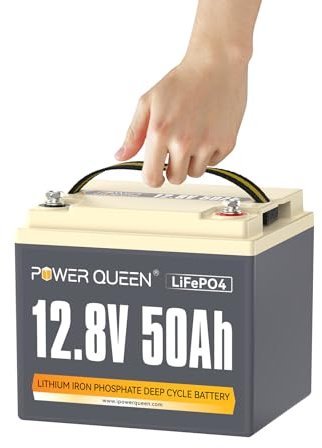
Power Queen 12 V 50 Ah
Entry-level capacity for small loads and limited space. Do not choose it for a powerful inverter just because it is 12 V: check BMS current, energy needs and charging.
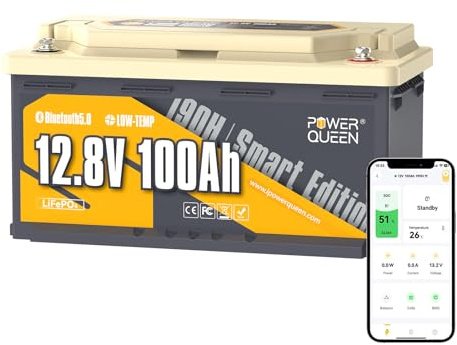
Power Queen 12 V 100 Ah H190 Bluetooth
Low-profile Bluetooth variant, distinct from Mini and Group 24. Measure space, terminals, mounts and clearances; H190 does not guarantee a fit under every seat. Check cold-charge protection on the exact model.
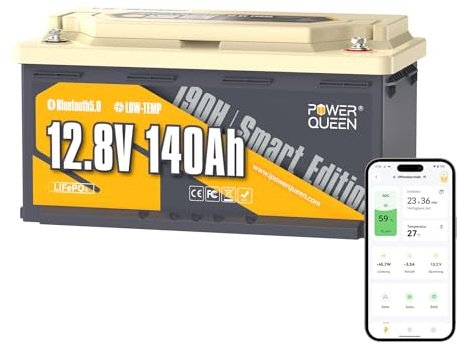
Power Queen 12 V 140 Ah H190 Bluetooth
More low-profile capacity: 1,792 Wh rated at 12.8 V and 140 Ah. Check dimensions, terminals, mounting and manual current limits; do not assume under-seat compatibility.
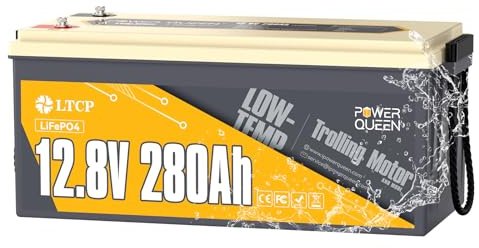
Power Queen 12 V 280 Ah · cold protection
High-capacity battery for a fixed installation. Low-temperature charging cutoff is not self-heating. Confirm model code, BMS, dimensions, permitted orientation and charging capacity before fitting.
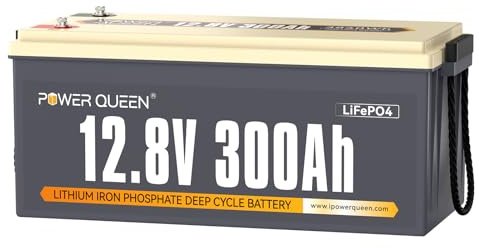
Power Queen 12 V 300 Ah
High-capacity alternative, distinct from 320 Ah Dense Smart. More Ah do not automatically allow a more powerful inverter: continuous BMS current, wiring, fuses and installation conditions determine the limits.
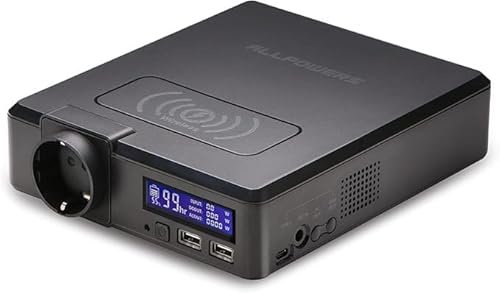
ALLPOWERS S200 · 154 Wh
A small 154 Wh, 200 W station for electronics and occasional loads. Not intended for high-power appliances or several days of fridge use. Check outputs and European version.
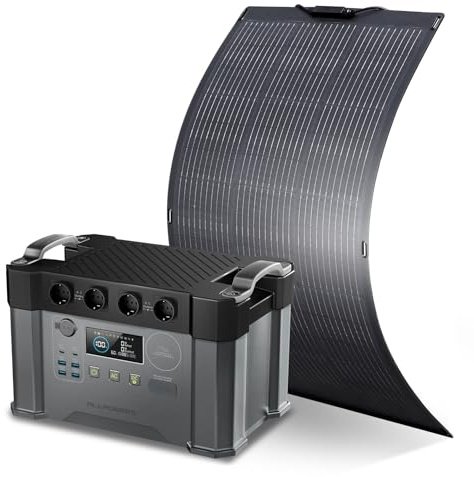
ALLPOWERS S2000 Pro + SF100 · solar kit
Indexed as an S2000 Pro kit with a 100 W SF100 flexible panel. This station range lists 1,451 Wh and 2,400 W. Confirm generation, chemistry, sockets and kit contents; do not confuse it with the R series.
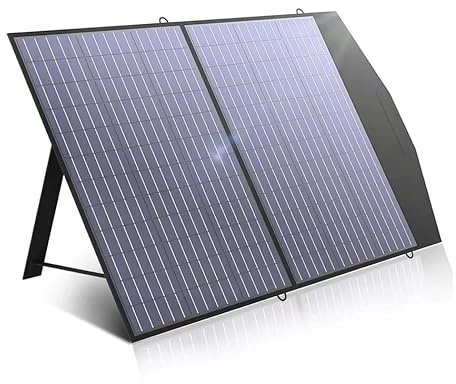
ALLPOWERS SP027 · 100 W folding panel
A folding solar panel to deploy while parked and stow before driving. The 100 W rating is measured under test conditions. Check cold-weather Voc, current, connectors and station input limits.
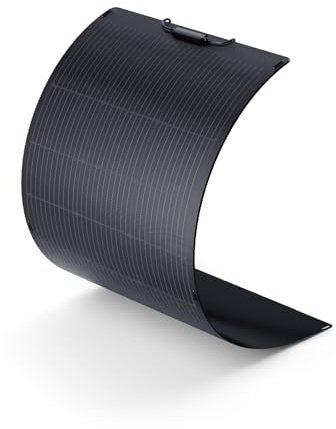
ALLPOWERS SF100 · 100 W flexible panel
A 100 W flexible panel, distinct from the folding SP027. Validate bend radius, ventilation, mounting and wiring against the manual. Do not connect directly to a battery without compatible charge regulation.
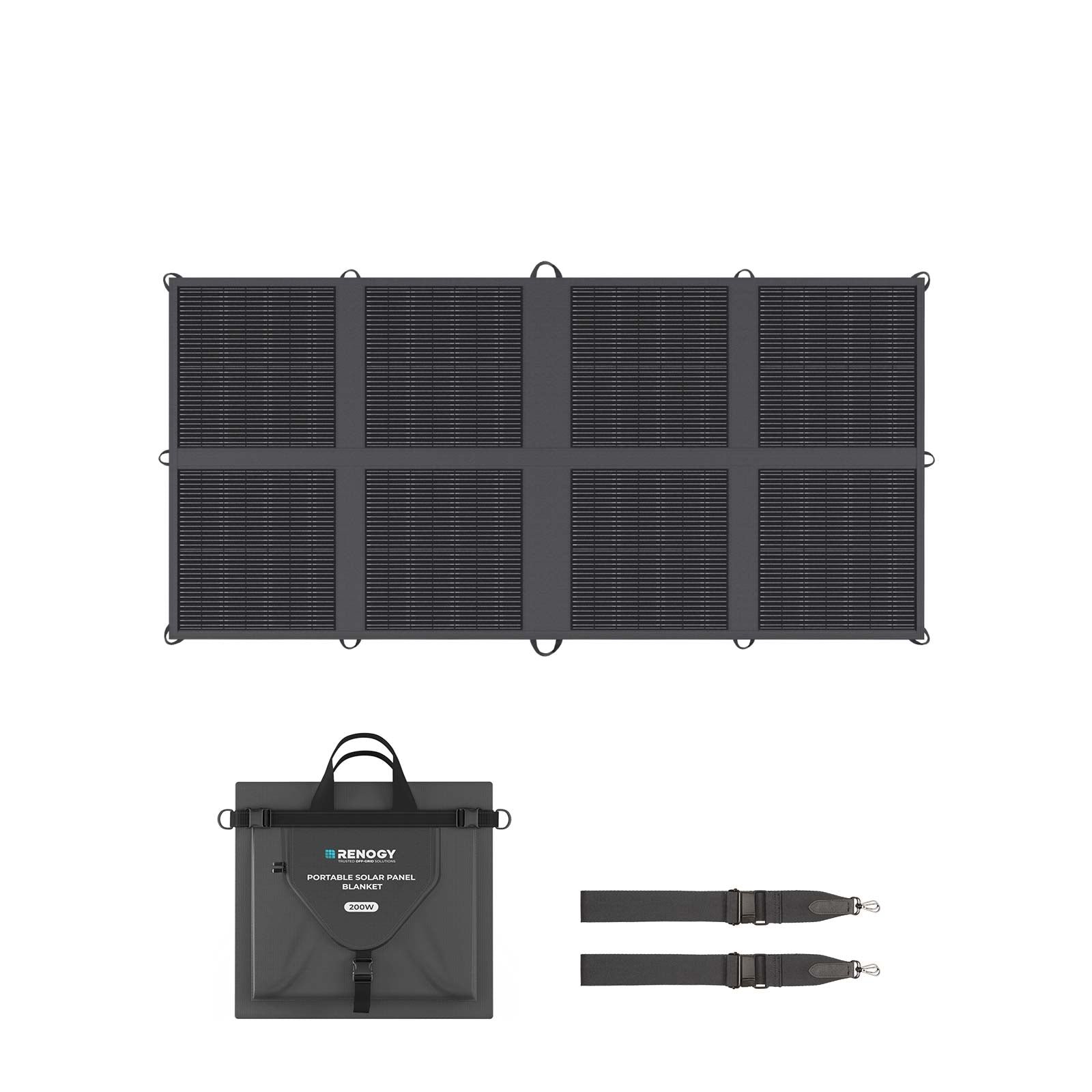
Renogy 200 W N-Type · folding solar blanket
Blanket format to unfold when parked and stow while travelling. Needs a compatible controller to charge a leisure battery; check Voc, current and connectors before connecting to a station.
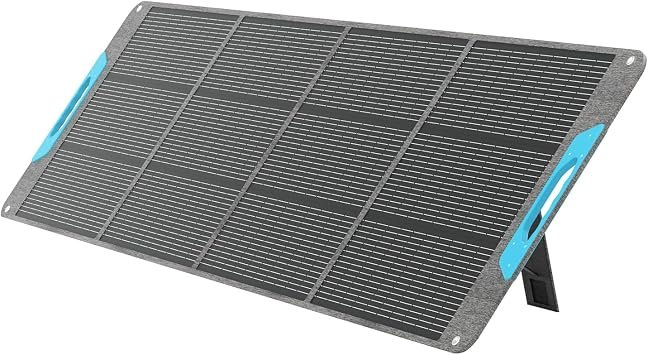
Renogy E.Flex 200 W · portable solar panel
Folding panel with stands for orientation at a campsite. This range has revisions: confirm the advertised version, outputs and included adapters.
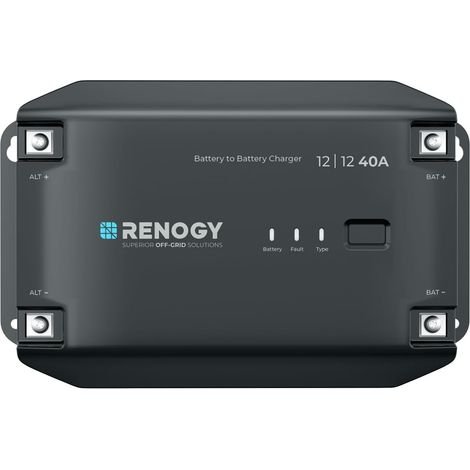
Renogy DCC1212-40 · 40 A DC-DC charger
Charges the leisure battery from the vehicle in 12 V systems. Reference RNG-DCC1212-40: check this generation's manual, battery profile and activation signal. Do not confuse it with a charger featuring solar MPPT.
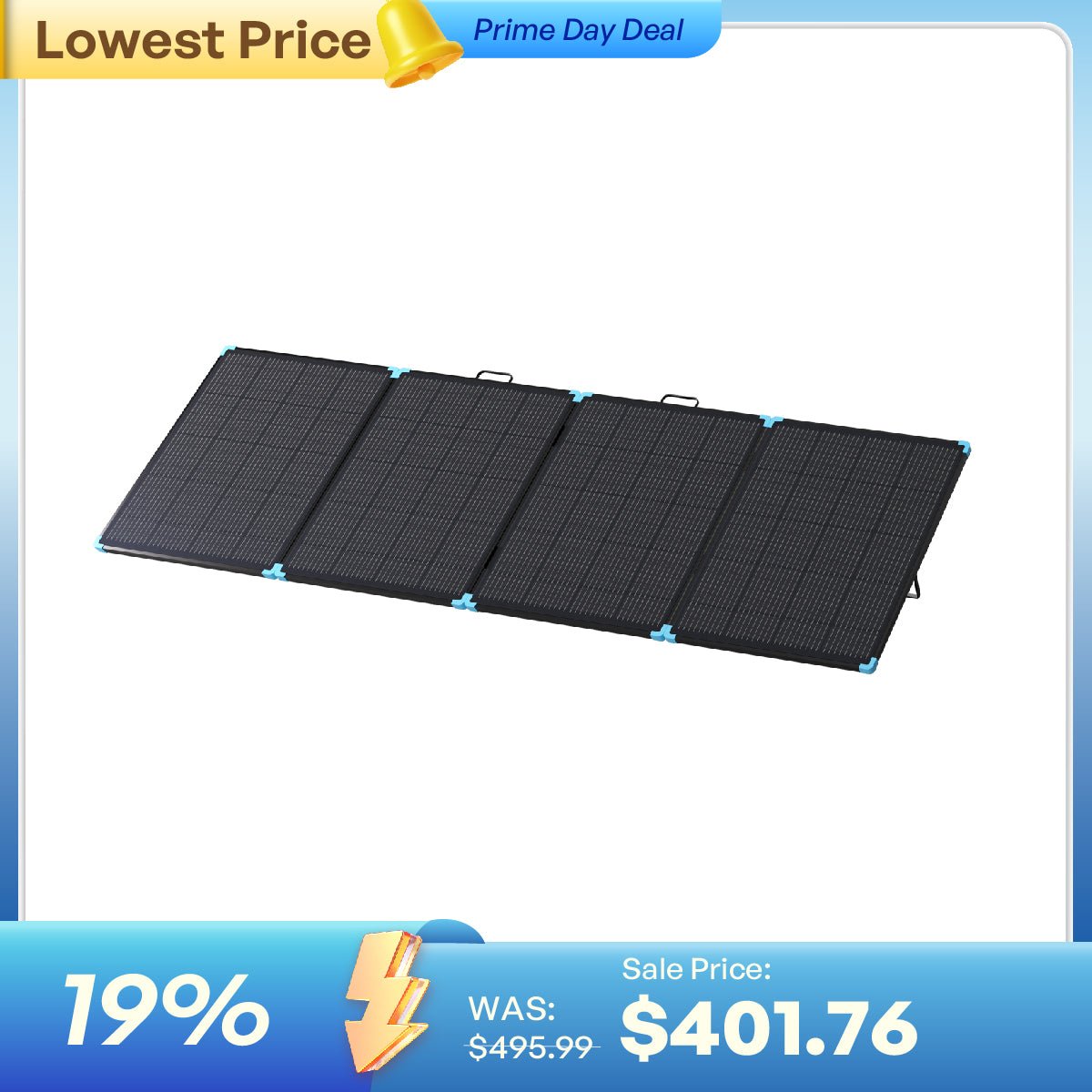
Renogy Light Suitcase 400 W · folding solar panel
Suitcase format with stands, distinct from the 400 W solar blanket. Adds solar collection while parked; confirm the controller or station accepts this model's Voc and check whether the listing includes a controller.
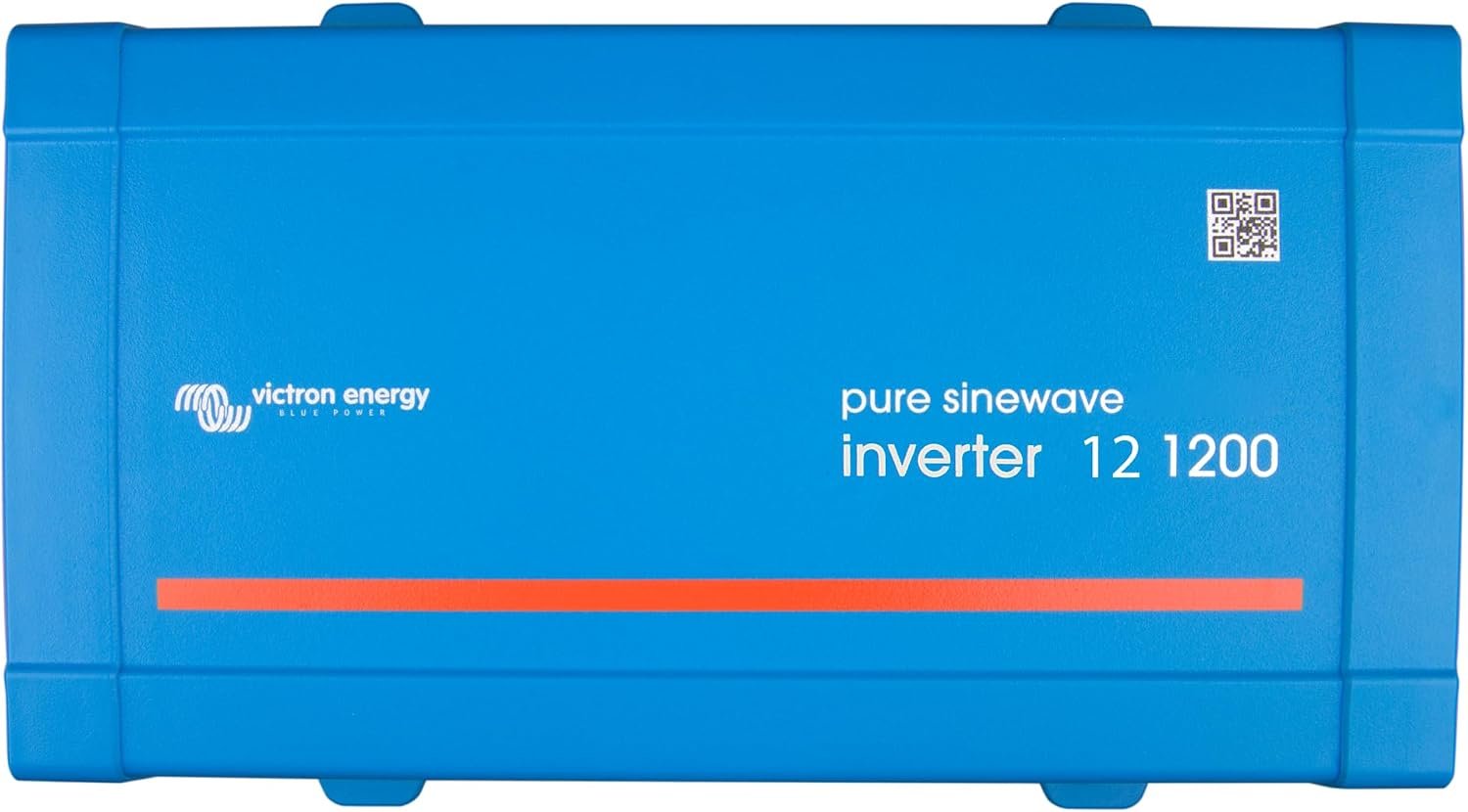
Victron Energy Phoenix 12/1200 VE.Direct · Schuko 230 V
Pure sine wave inverter from 12 V to 230 V. According to Victron, its 1,200 VA correspond to 1,000 W continuous at 25 °C and 850 W at 40 °C; it is not a battery charger. Size battery, BMS, wiring and protection as the manual requires; do not connect to a cigarette-lighter socket.
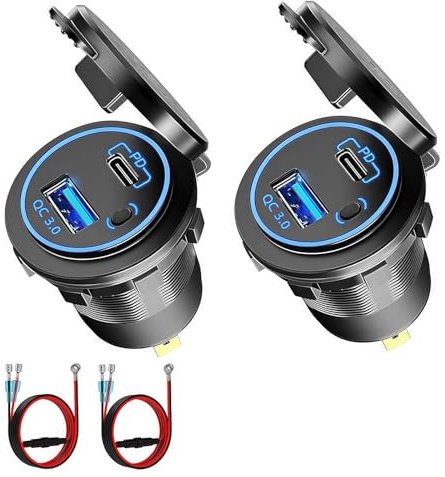
Intckwan recessed USB-C PD + USB-A socket · 2 units
Flush-mount socket set with USB-C PD, USB-A and a switch for charging devices from the DC installation. Before buying, confirm PD profiles and output per port at 12 V input, mounting diameter and circuit protection. Advertised total output is not the USB-C port's output.
Guide and selection criteria →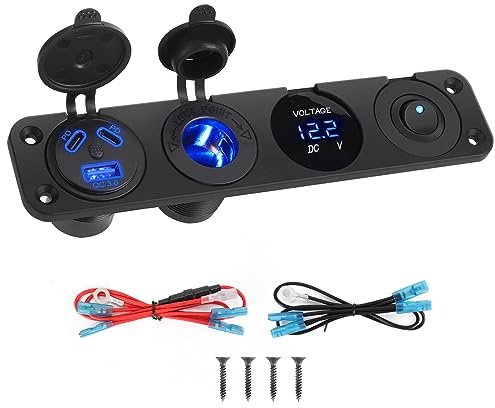
Thlevel recessed USB-C PD panel and cigarette-lighter socket
Panel combining USB-C PD, USB-A, a cigarette-lighter socket, voltmeter and switch. An option for grouping connections in cabinetry; confirm output at 12 V, maximum socket current and cut-out dimensions. The voltmeter shows voltage, not actual battery percentage.
Guide and selection criteria →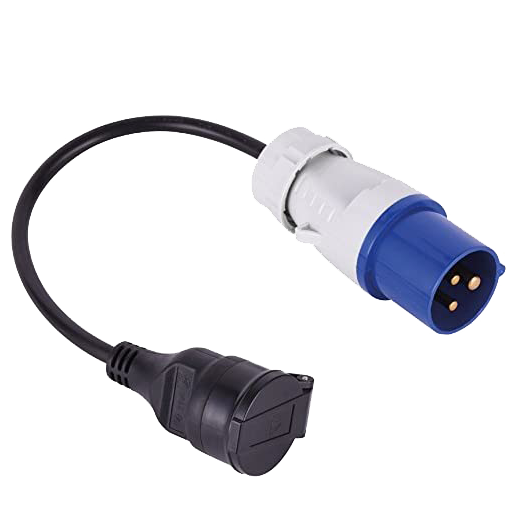
Electraline 900039 · male CEE to female Schuko
230 V adapter with a blue male CEE plug and female Schuko socket. Connects a Schuko plug to a compatible CEE supply; not the reverse adapter for the vehicle's CEE inlet. Check current rating, earth integrity, protection and supply-point conditions.
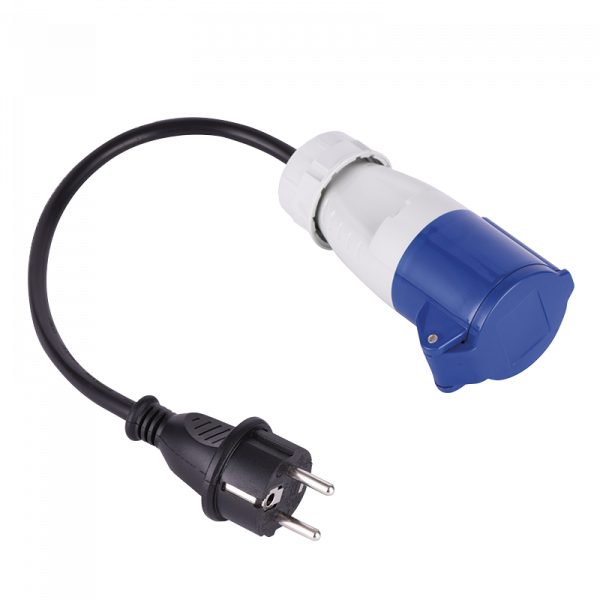
Electraline 20848043F · male Schuko to female CEE
The reverse direction: male Schuko plug and blue female CEE connector for a compatible inlet supplied from Schuko. A 230 V adapter, not a transformer or residual-current device. Confirm reference, wiring and campsite requirements before use.
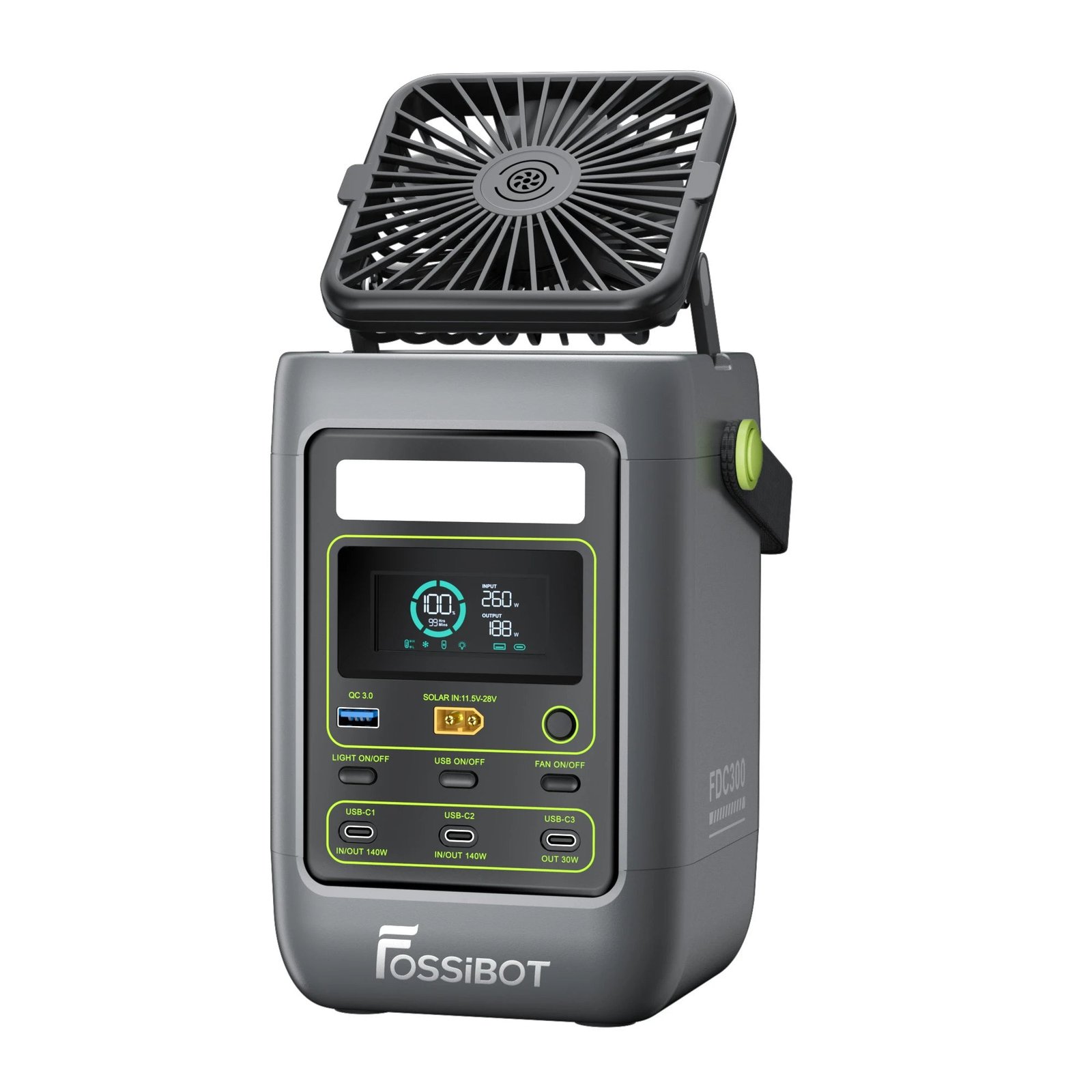
FOSSiBOT FDC300
For phones, cameras and USB-C laptops. No 230 V output socket; check your device's PD power requirement.
Guide and selection criteria →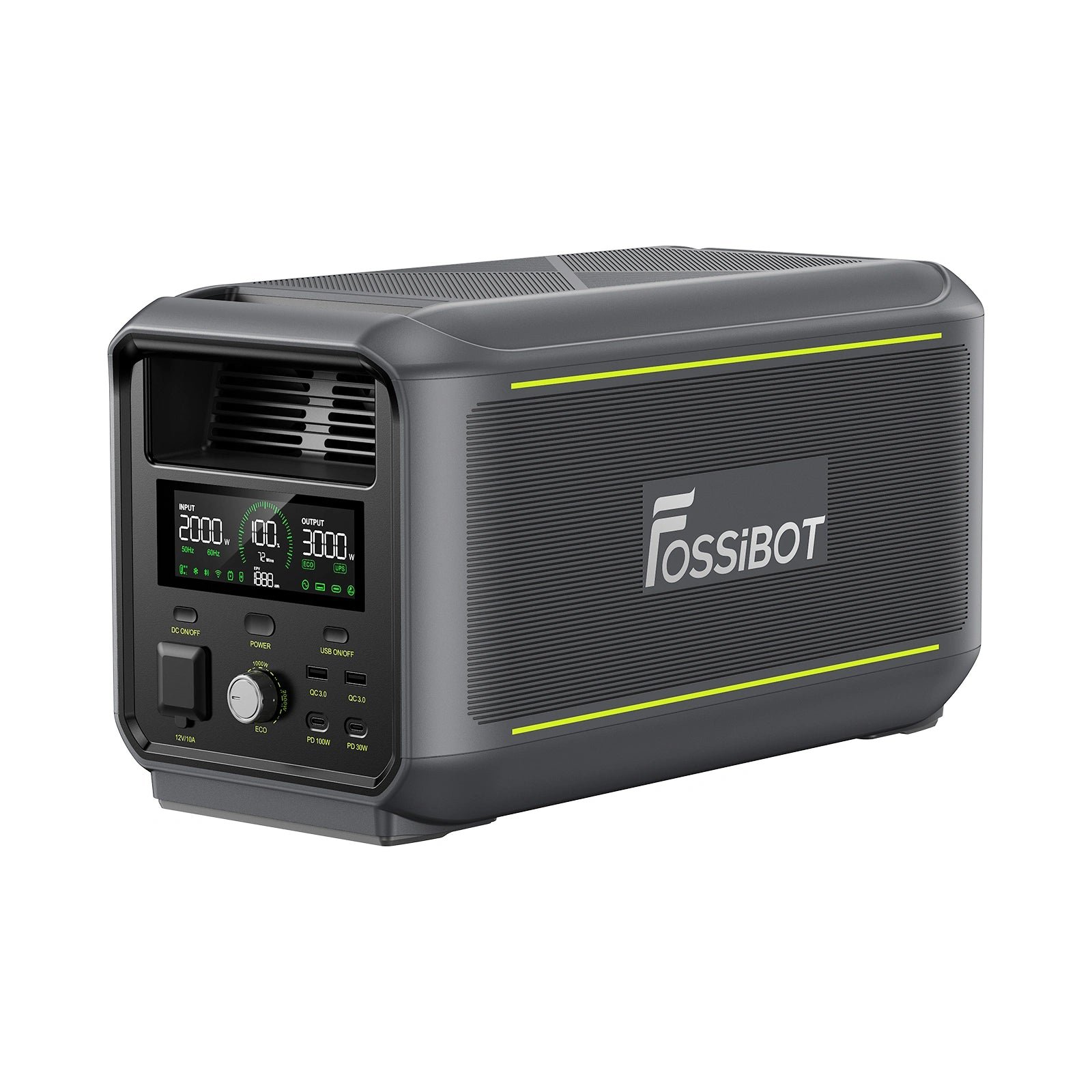
FOSSiBOT F3000
More output for demanding equipment. Calculate consumption, starting surges and ventilation space before choosing.
Guide and selection criteria →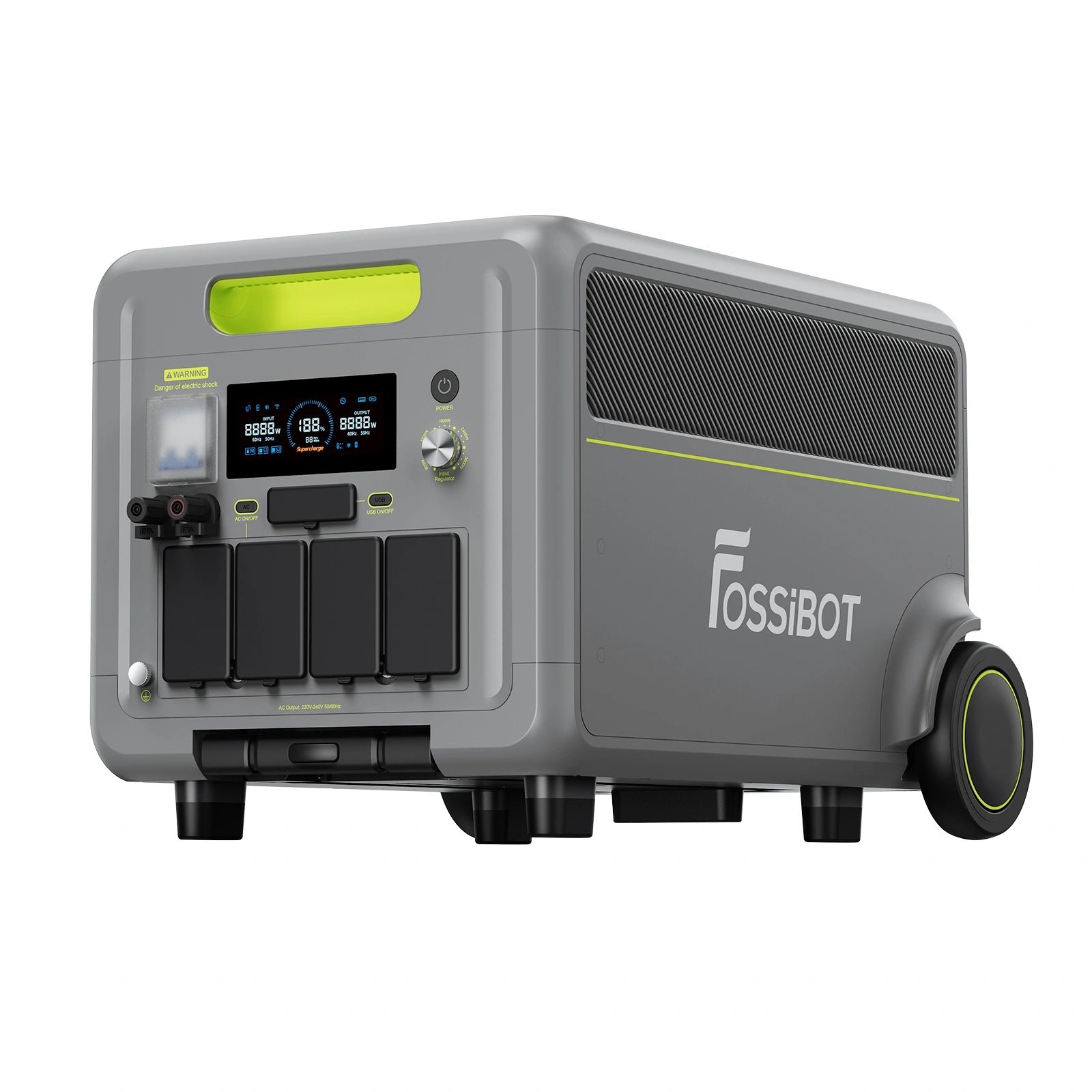
FOSSiBOT F7200
High capacity for projects with plenty of space and payload. Check weight, dimensions and European version: this is not a lightweight option.
Guide and selection criteria →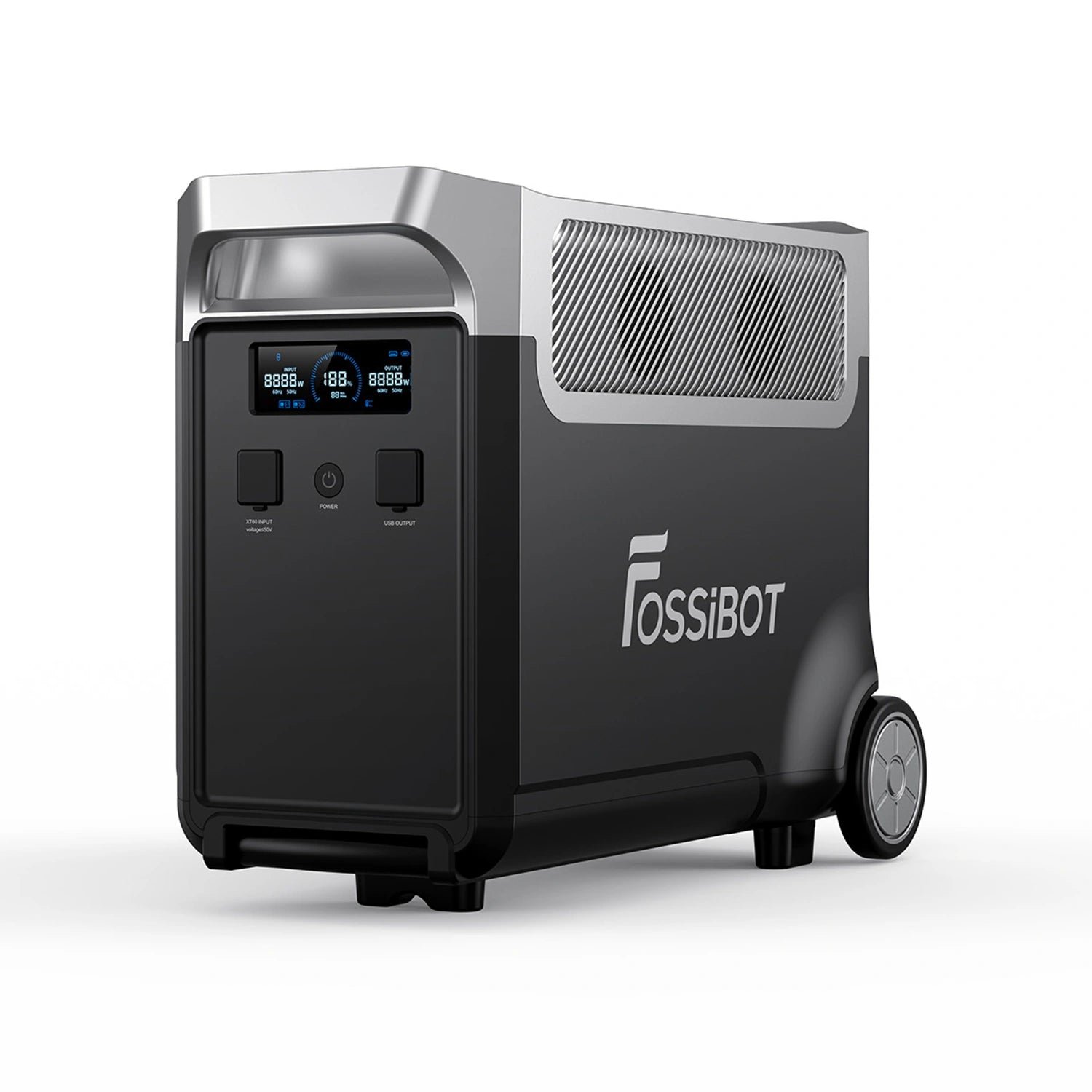
FOSSiBOT FB3840
Expansion battery for FOSSiBOT F3600 Pro. It does not replace a 12 V leisure battery or provide a 230 V inverter on its own.
Guide and selection criteria →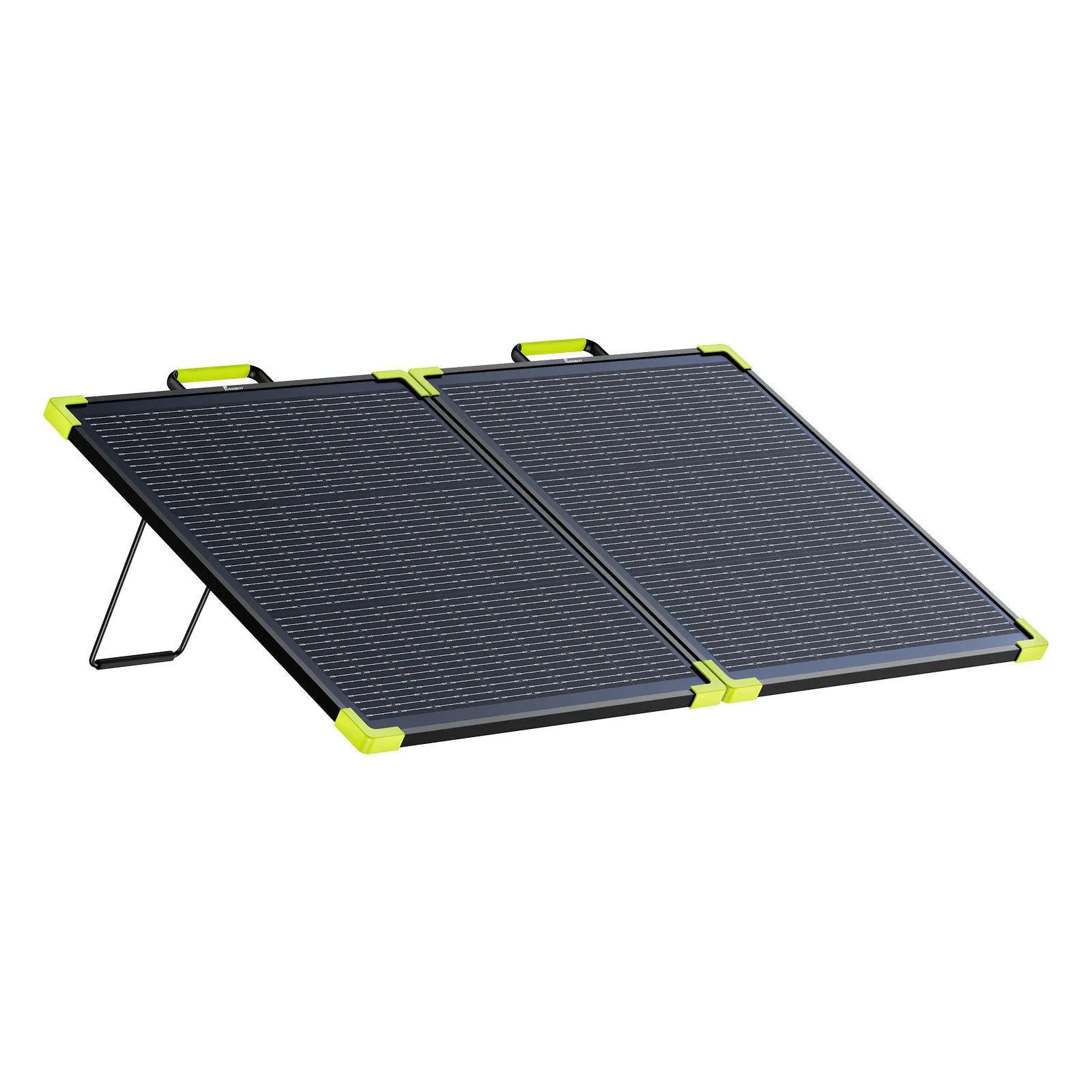
FOSSiBOT SP100 Pro
Portable panel for charging while parked. Check open-circuit voltage, current, solar input and station adapters.
Guide and selection criteria →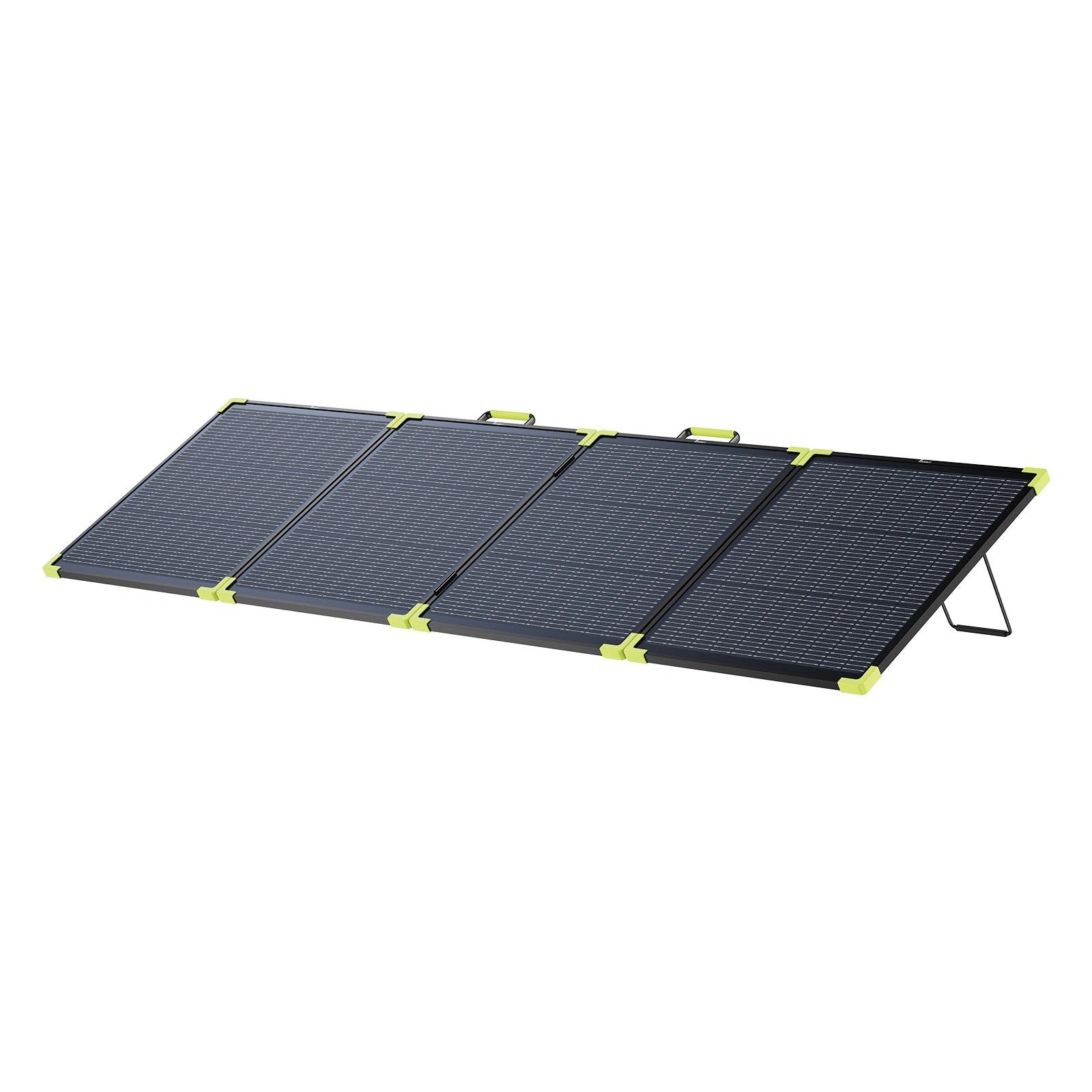
FOSSiBOT SP200 Pro
Folding format for more solar charging. Output depends on orientation, shade and actual conditions; verify electrical compatibility.
Guide and selection criteria →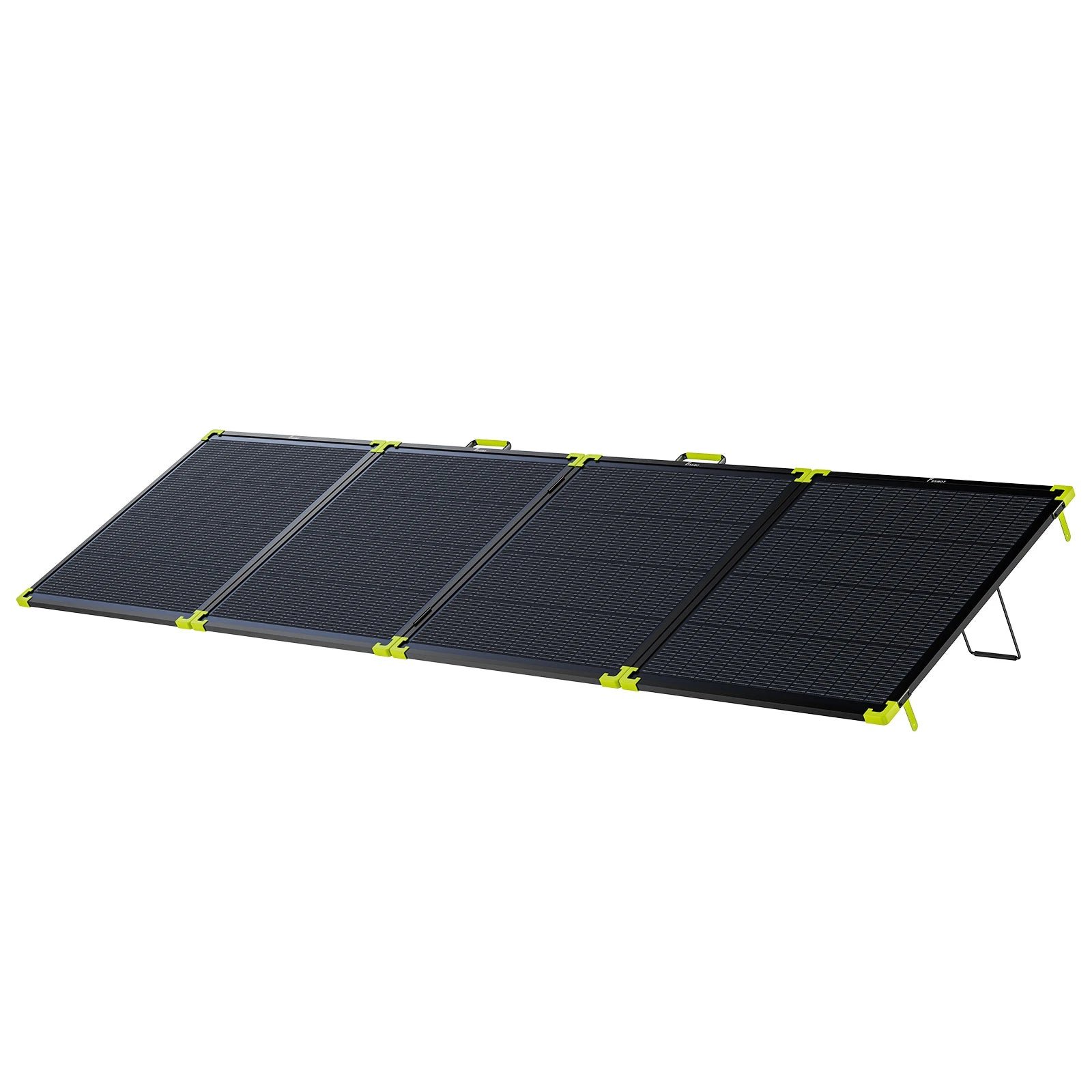
FOSSiBOT SP400 Pro
More panel area for compatible stations. Check deployed dimensions, storage and MPPT input limits.
Guide and selection criteria →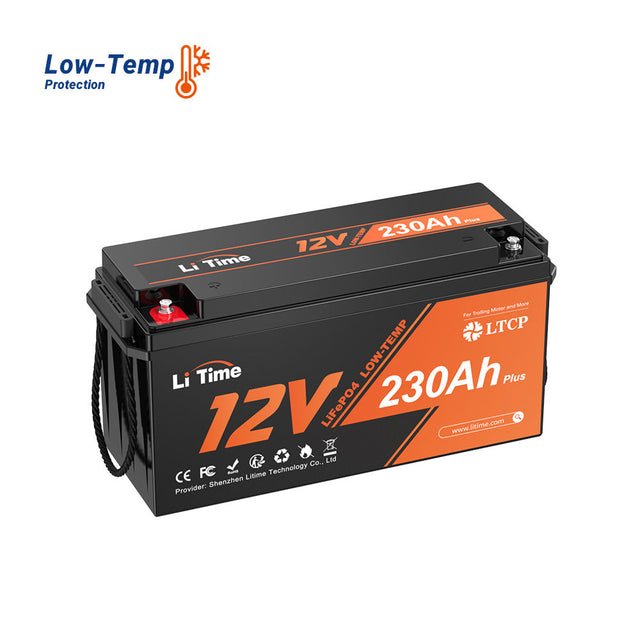
LiTime 230 Ah Plus
More reserve for a fixed installation. Size charging, fuse and wiring; this is not a starter battery.
Guide and selection criteria →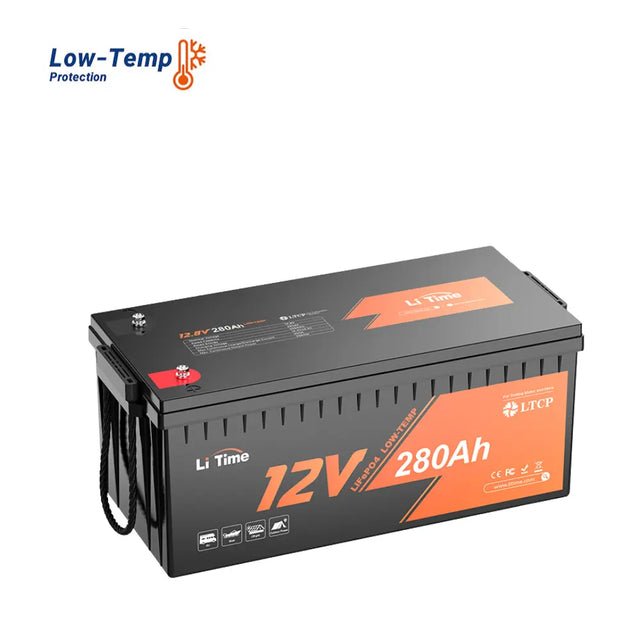
LiTime 280 Ah Plus
For higher daily consumption and longer runtime. Check available space and how to replenish the energy used.
Guide and selection criteria →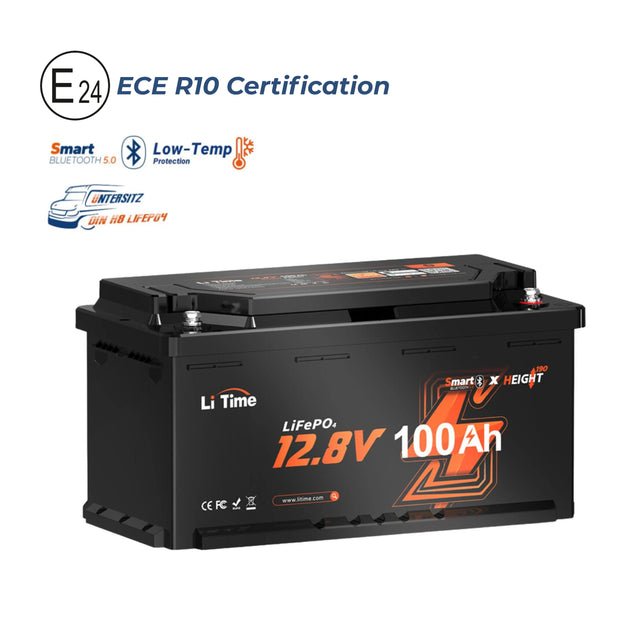
LiTime 100 Ah H190 Bluetooth
Low-profile format with Bluetooth monitoring. Measure footprint, height, terminals and mounts before considering under-seat installation.
Guide and selection criteria →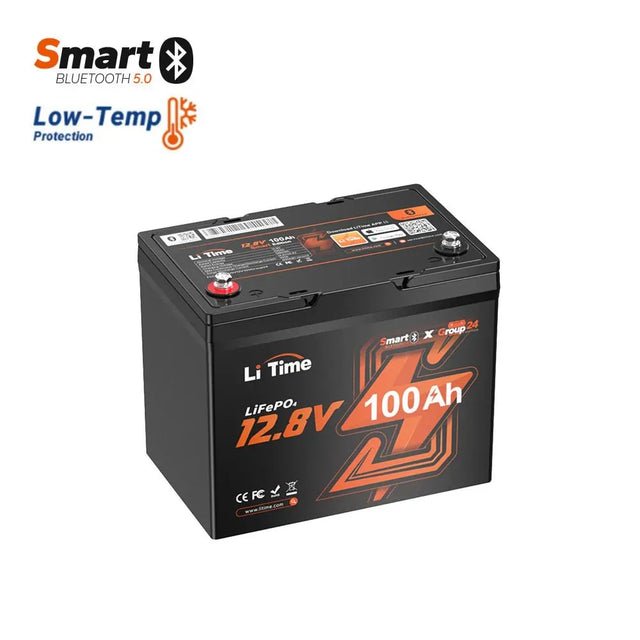
LiTime 100 Ah Group24 Bluetooth
Compact leisure-battery option. Compare dimensions and your installation's maximum current against the datasheet.
Guide and selection criteria →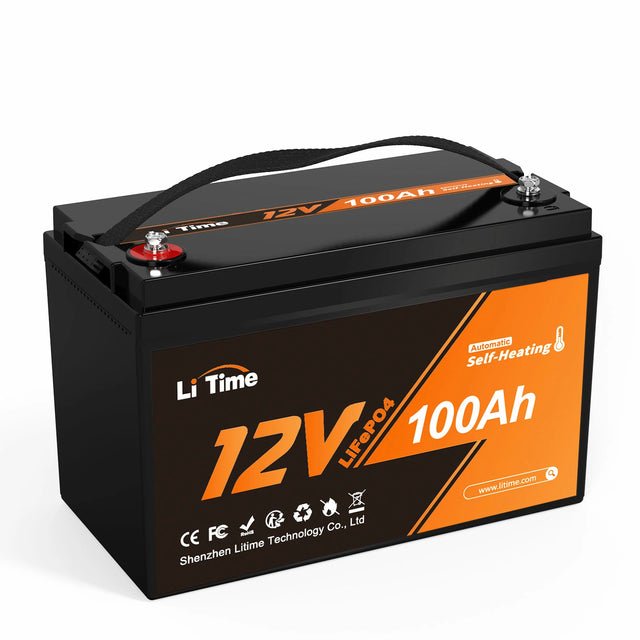
LiTime 100 Ah with self-heating
For trips in cold weather. Check power-supply and activation conditions for the internal heater.
Guide and selection criteria →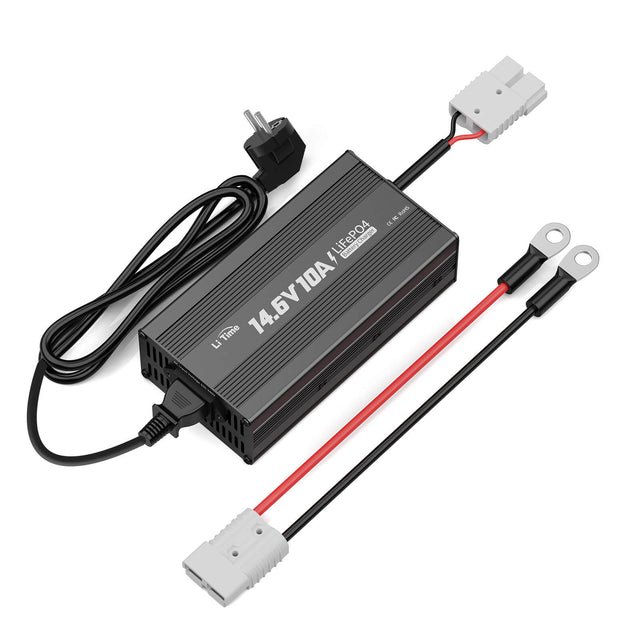
LiTime 10 A LiFePO₄ charger
Mains charging for 12 V LiFePO₄ batteries. Confirm the charging profile and current suit your battery.
Guide and selection criteria →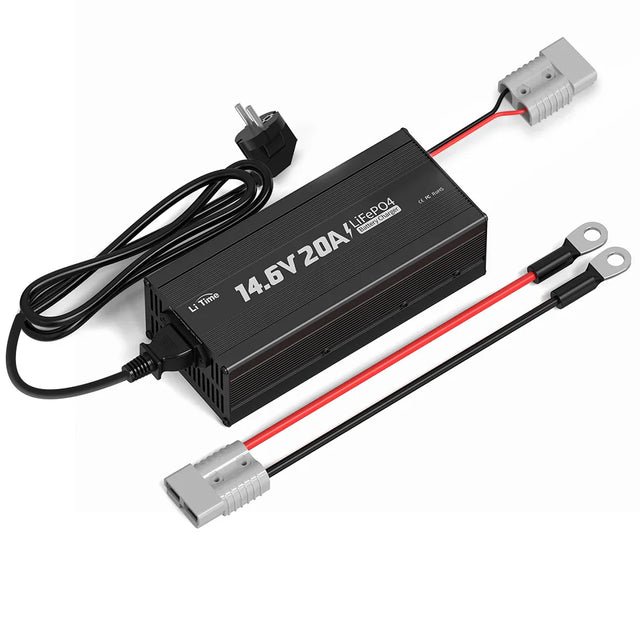
LiTime 20 A LiFePO₄ charger
Charging at a campsite or garage. Check accepted current, connectors and ventilation during use.
Guide and selection criteria →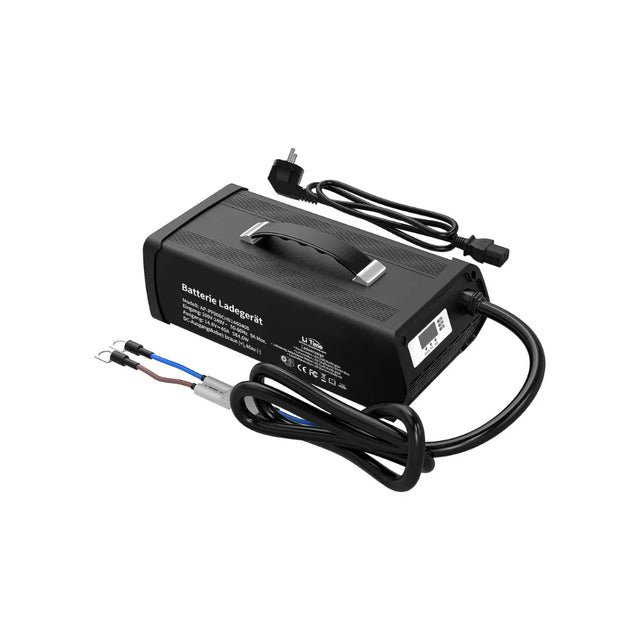
LiTime 40 A LiFePO₄ charger
For battery banks accepting this charging current. Size connections and check BMS limits.
Guide and selection criteria →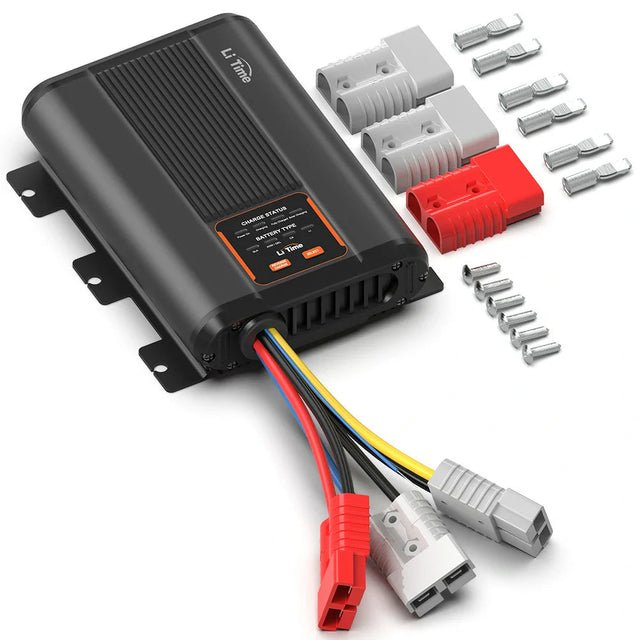
LiTime DC-DC 40 A with MPPT
Combines leisure-battery charging. Check alternator, ACC signal and solar-voltage limits before installation.
Guide and selection criteria →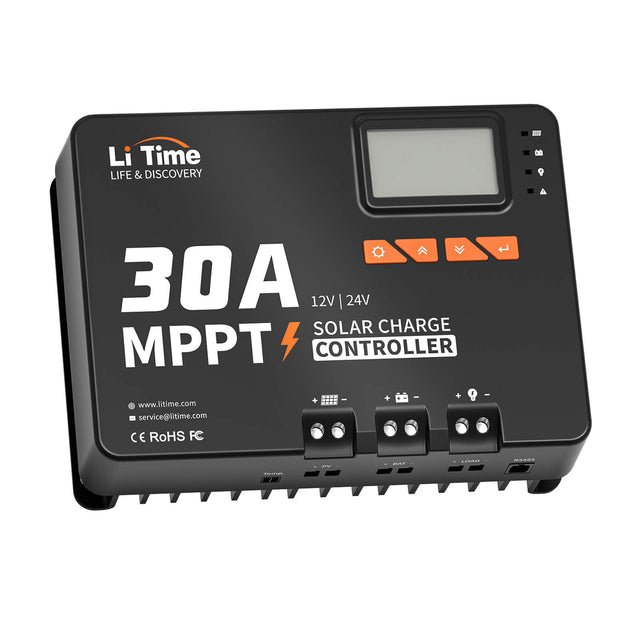
LiTime MPPT 30 A
Controller for a fixed solar installation. Check cold-weather Voc, current and permitted power for the battery-bank voltage.
Guide and selection criteria →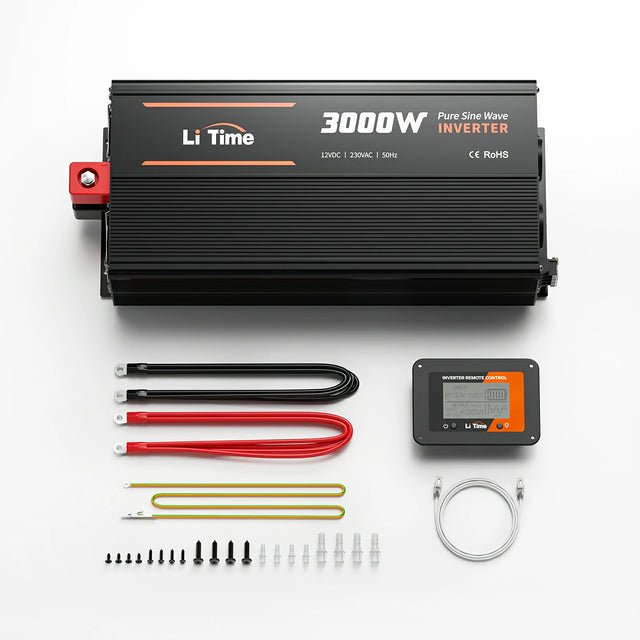
LiTime 3,000 W pure sine wave inverter
For demanding 230 V loads. Battery, BMS, fuses and wiring must be sized for high currents.
Guide and selection criteria →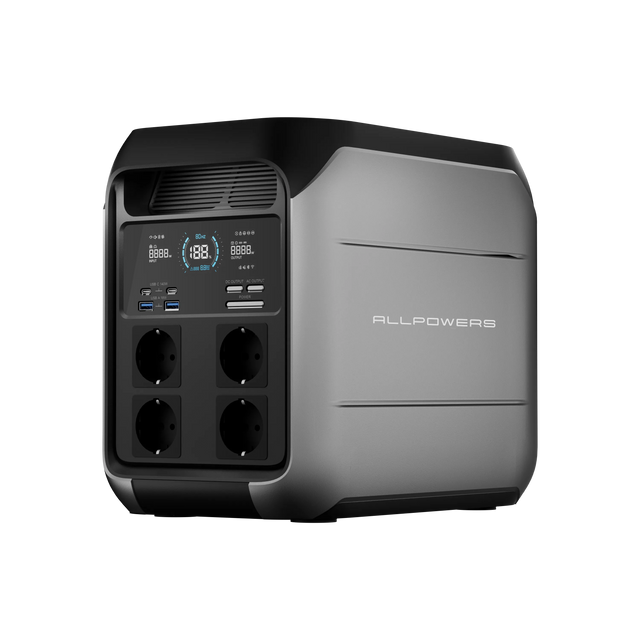
ALLPOWERS P1800
Around 1 kWh for electronics and compatible appliances. Calculate daily energy and starting surges.
Guide and selection criteria →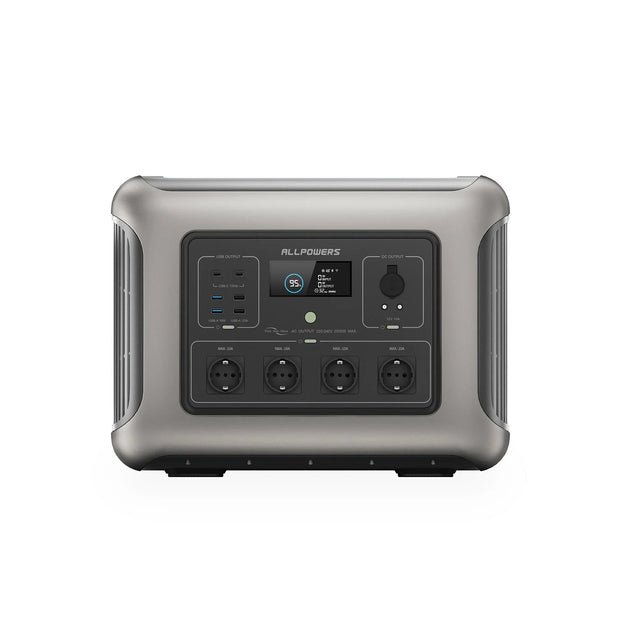
ALLPOWERS R2500 V2
More capacity and output for a campervan with enough space. Select V2 explicitly: the previous version has a different capacity.
Guide and selection criteria →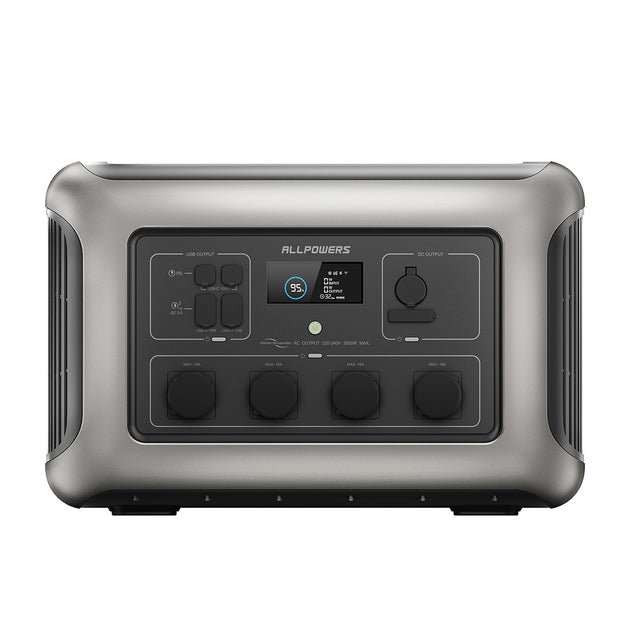
ALLPOWERS R3500 V2
For high energy needs and vehicles with enough payload. Confirm the V2 variant, weight and dimensions in the store.
Guide and selection criteria →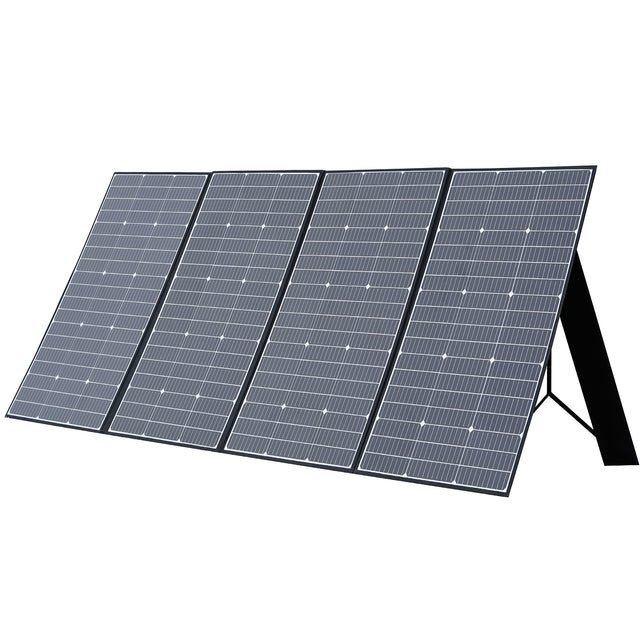
ALLPOWERS SP037
More panel area for charging while parked. Check open-circuit voltage against the station's solar input.
Guide and selection criteria →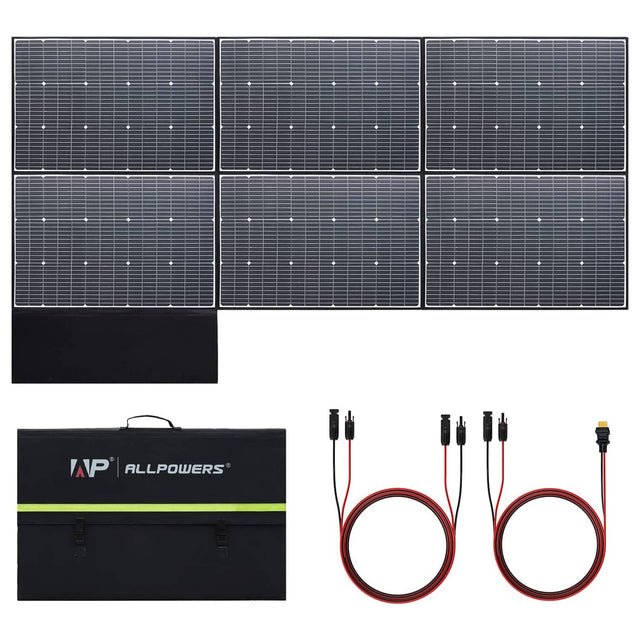
ALLPOWERS SP039
For stations with compatible solar input. Consider deployed space, weight and storage before choosing.
Guide and selection criteria →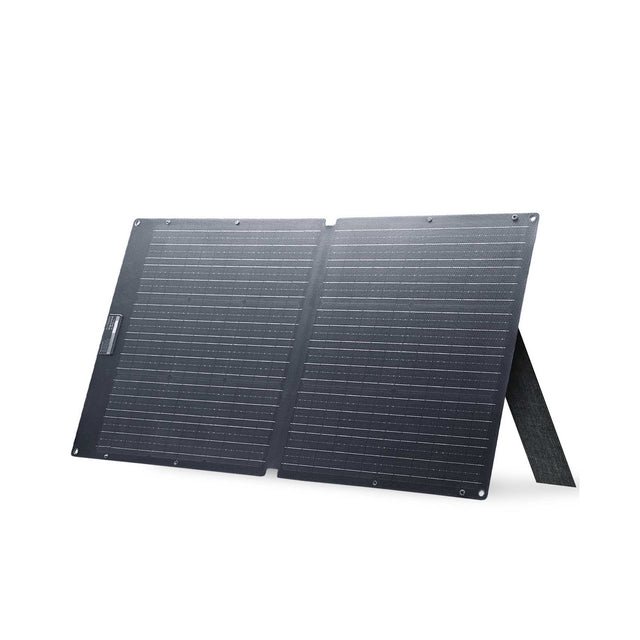
ALLPOWERS SE100
Solar charging for short trips and modest loads. Check connectors and the receiving equipment's electrical limits.
Guide and selection criteria →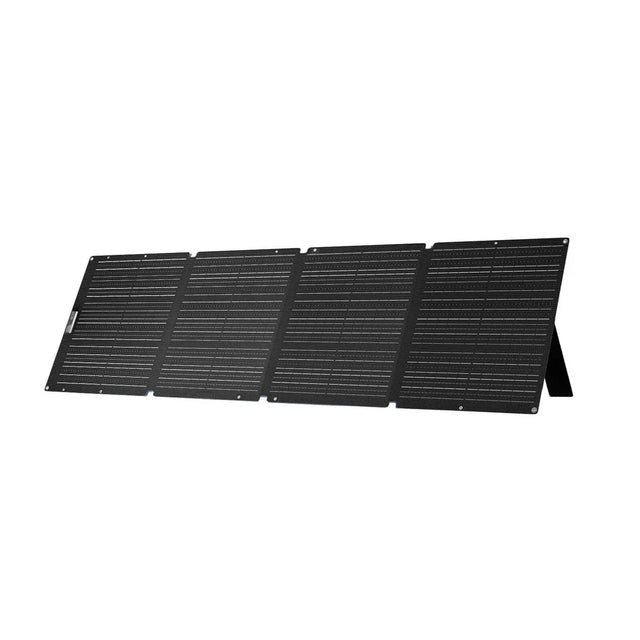
ALLPOWERS SE200
Another way to recharge while parked. Actual generation depends on orientation, shade and conditions.
Guide and selection criteria →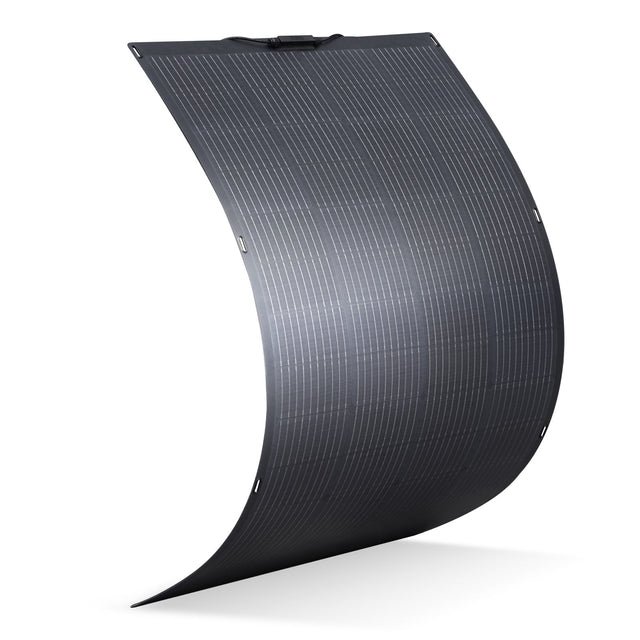
ALLPOWERS SF200
Flexible panel for specific projects. Check bend radius, ventilation and approved mounting method.
Guide and selection criteria →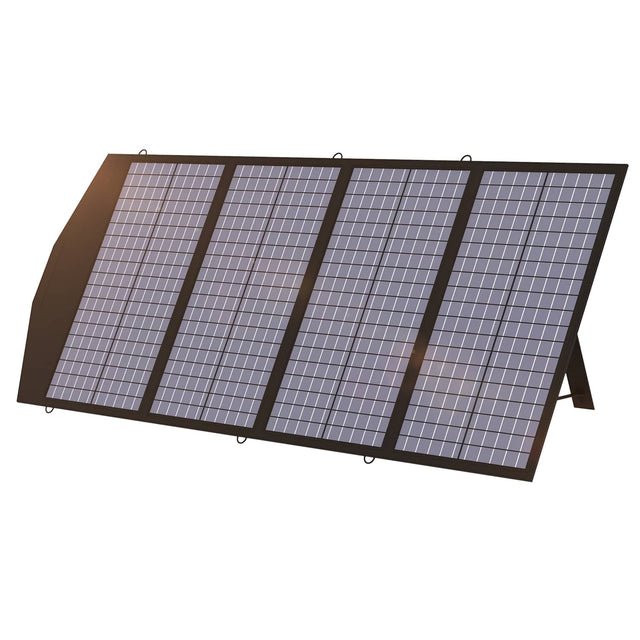
ALLPOWERS SP029
An intermediate format to compare with 100 W and 200 W panels. Confirm version, connectors and listing specifications.
Guide and selection criteria →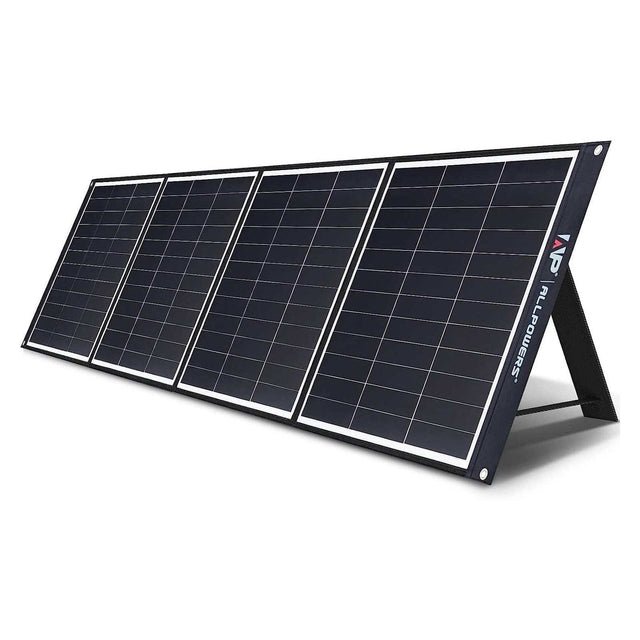
ALLPOWERS SP035
A supporting panel for charging when parked. Compare folded size, supports and included cables.
Guide and selection criteria →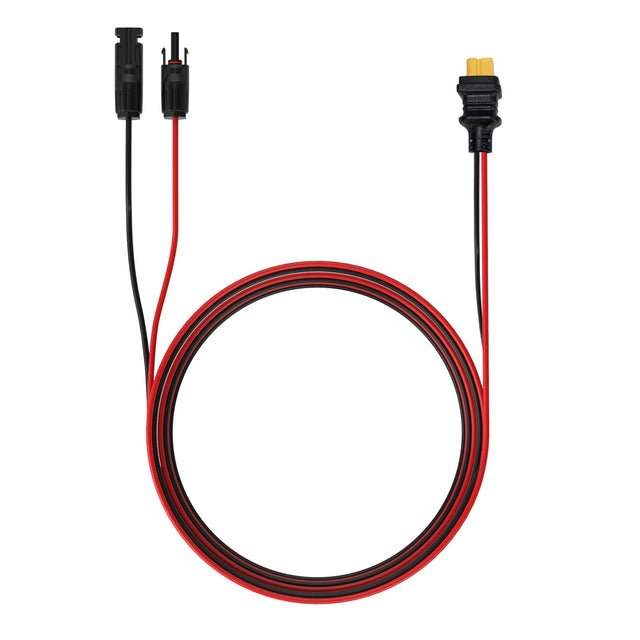
ALLPOWERS XT60 solar cable
For stations with compatible XT60 input. Check polarity, current and the exact connector before connecting.
Guide and selection criteria →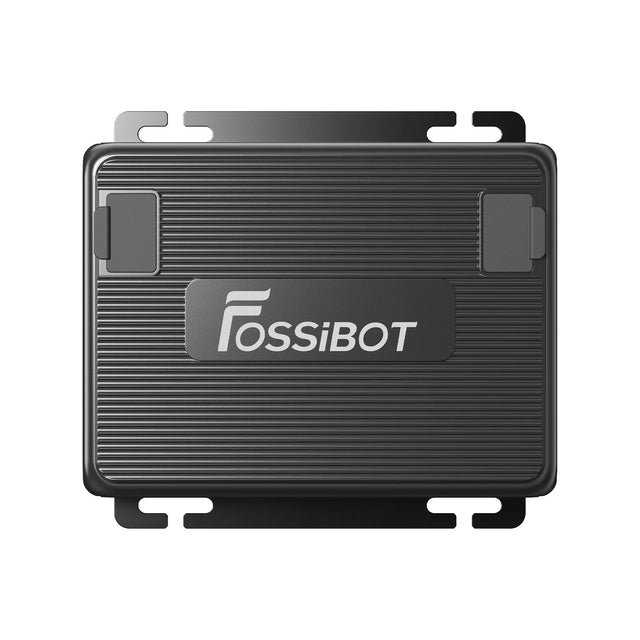
FOSSiBOT FAC580
Charges a station while driving. Each model's input limits power: the brand lists up to 500 W for F1800 and F2400.
Guide and selection criteria →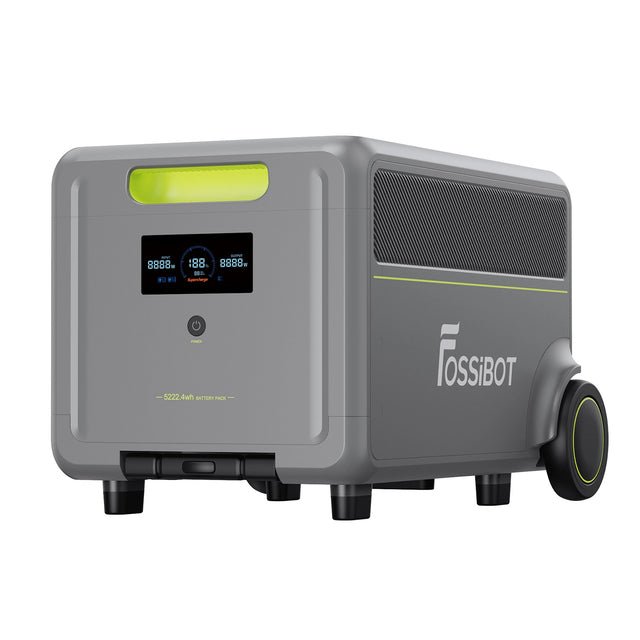
FOSSiBOT FB5222
Expansion battery exclusively for F7200. Not a standalone station or a replacement for a 12 V leisure battery.
Guide and selection criteria →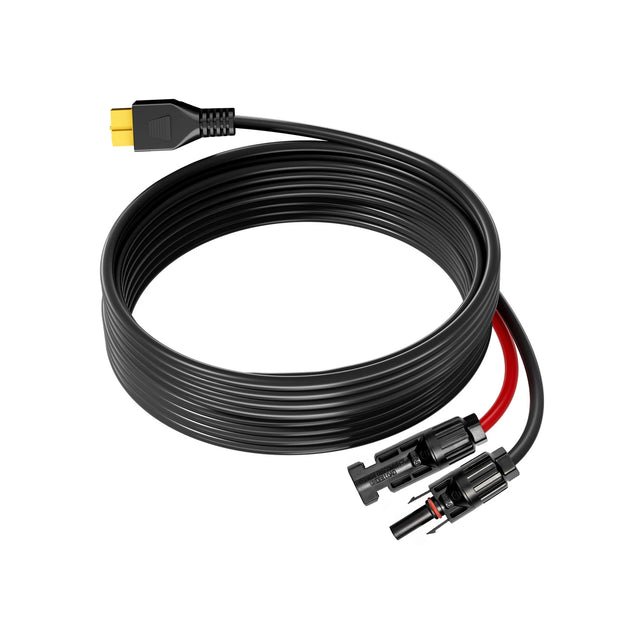
FOSSiBOT XT60 solar cable · 5 m
The brand specifies it for F3000, F1800 and FDC300. Check your station's connector, polarity and input limits.
Guide and selection criteria →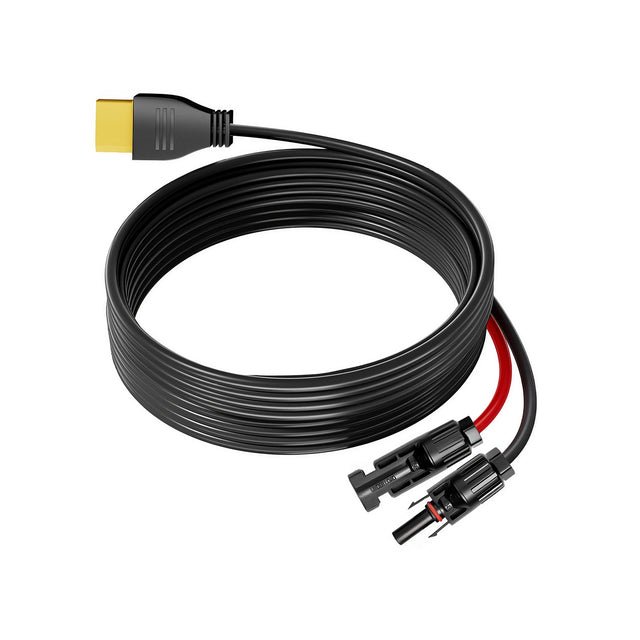
FOSSiBOT XT90 solar cable · 5 m
The brand specifies it for F2400, F3600 Pro and F7200. It differs from the XT60 cable: they are not interchangeable.
Guide and selection criteria →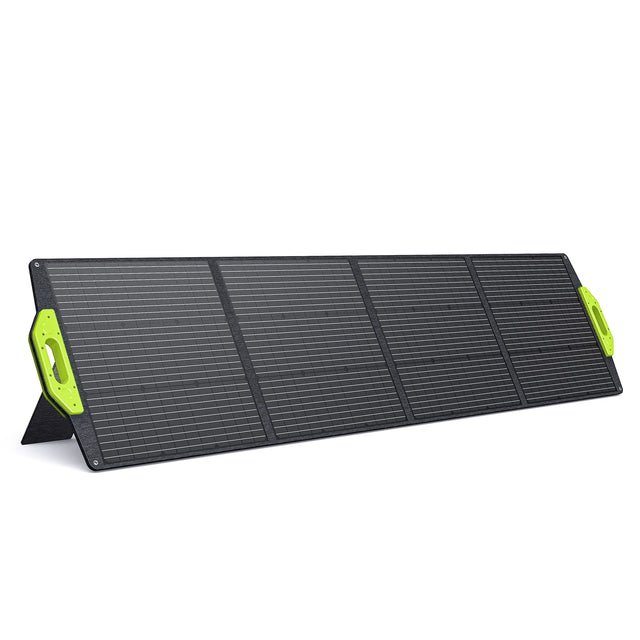
FOSSiBOT SP200
Folding panel with supports for charging while parked. Different from SP200 Pro; compare dimensions and electrical data.
Guide and selection criteria →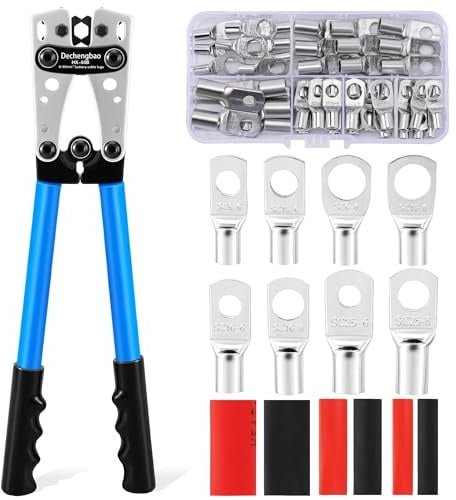
HX-50B · terminal crimper
Rated 6–50 mm². Use suitable terminals, dies and cable. The advertised cross-section alone does not guarantee a correct crimp.
Guide and selection criteria →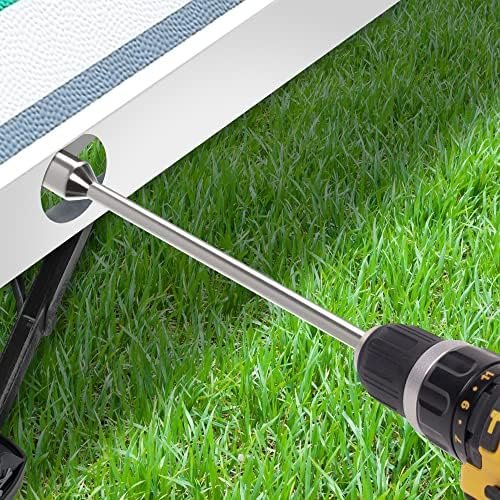
GADLANE · caravan stabiliser-leg adapter
30 cm adapter with a 19 mm socket for operating compatible corner steadies with a drill. Steadies stabilise: they must not be used to lift the caravan.
Guide and selection criteria →The Spaziou selection
8 items of equipment to build your solution.
Two stations, three batteries and three solar panels for different needs. This selection is not a mutually compatible kit: check the parameters of each component before combining them.
As an Amazon Associate, Spaziou earns from qualifying purchases that meet the applicable requirements. Buttons lead to Amazon.es with our affiliate identifier.
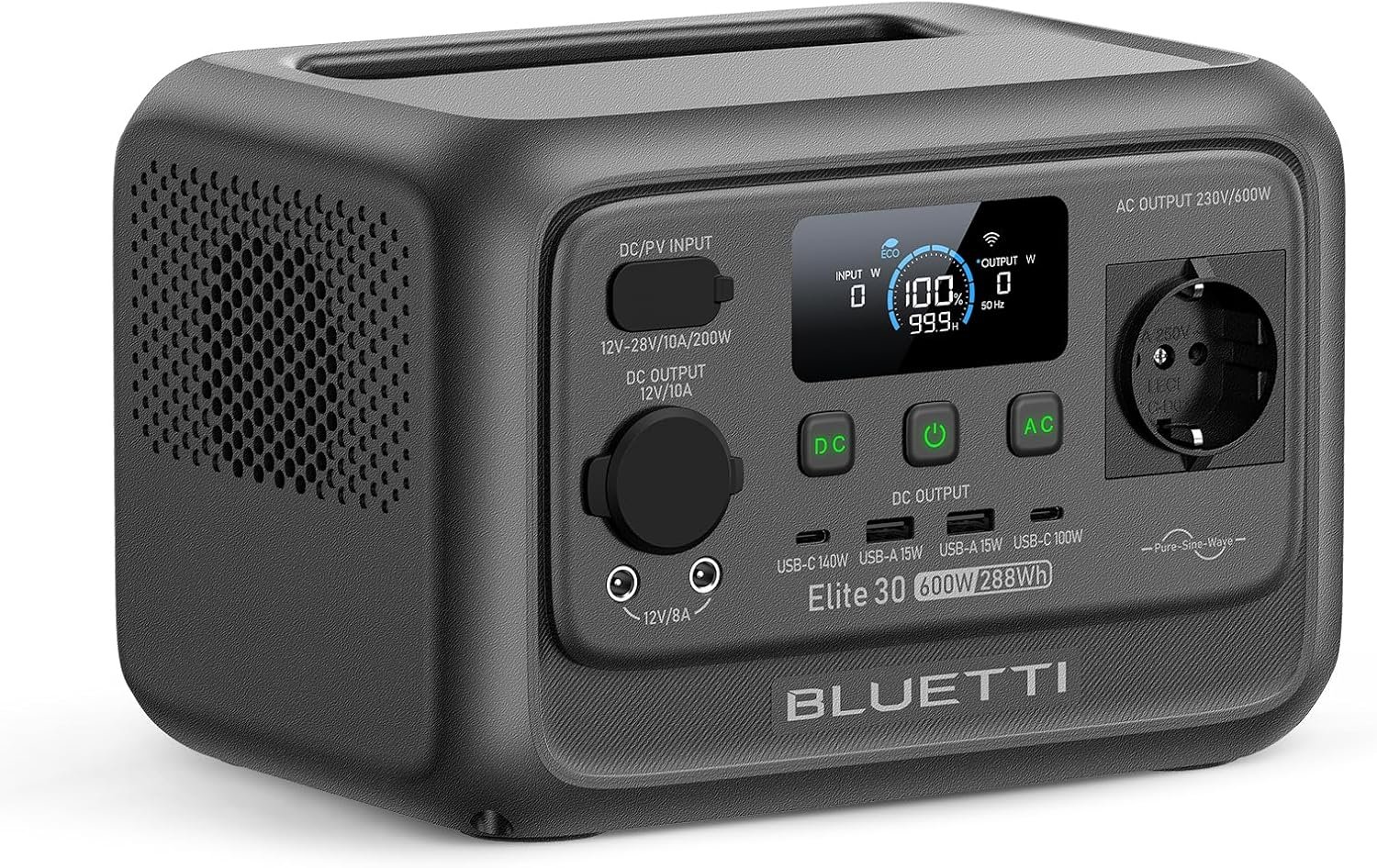
Portable station · light getaways
BLUETTI Elite 30 V2
A compact station can charge phones, cameras and computers without a fixed installation. The Elite 30 V2 combines 288 Wh capacity with AC output; assess it against the energy you need to carry and how often you can recharge.
- 288 Wh rated capacity
- 600 W continuous output
- LiFePO₄ battery
- Declared weight: 4.3 kg
Spaziou assessmentUseful for portability and small loads. Its 600 W describe power, not runtime; calculate your fridge's daily energy consumption separately.
View on Amazon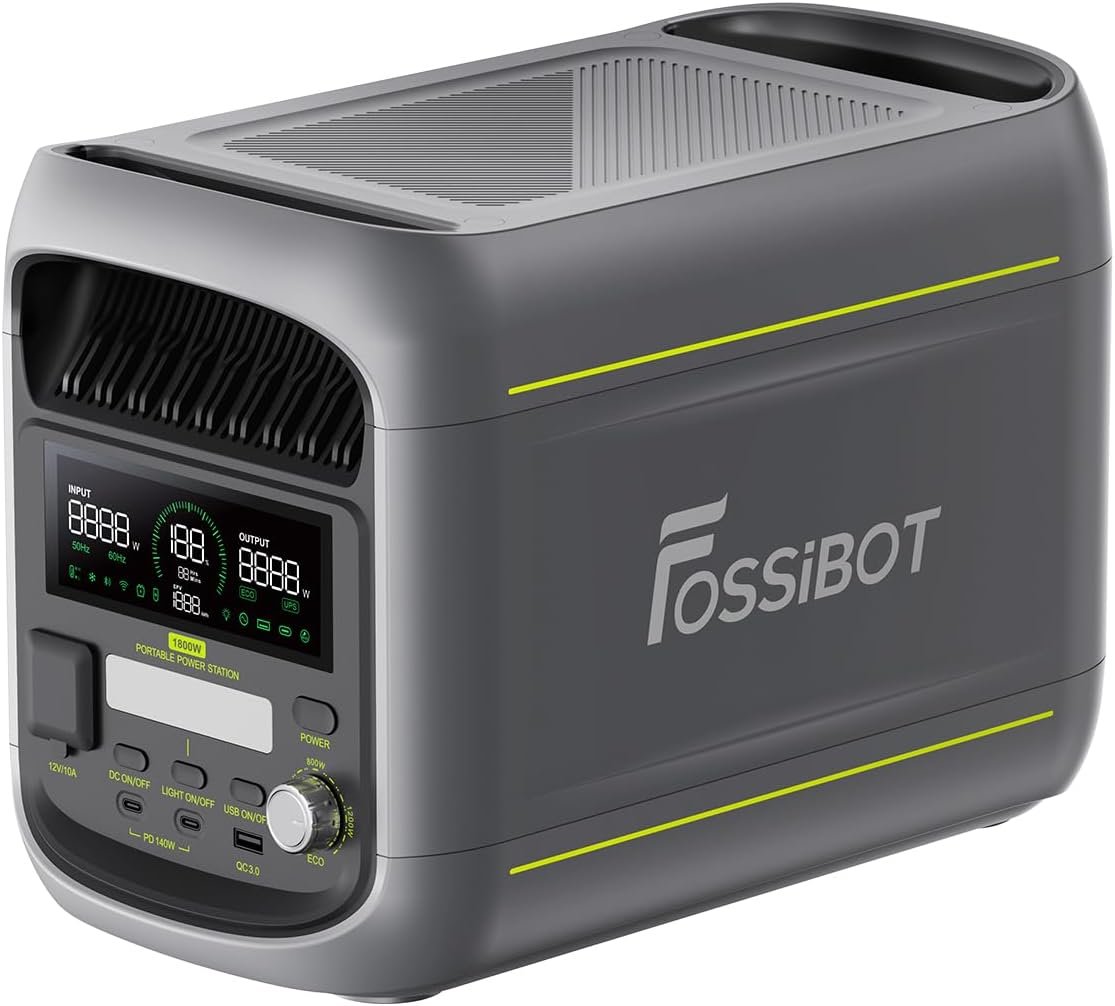
Portable station · more capacity
FOSSiBOT F1800
A higher-capacity option for several devices or longer intervals between charges. Combining battery, connections and inverter, it offers a portable alternative to compare with the cost and complexity of a fixed auxiliary battery.
- 1,024 Wh rated capacity
- 1,800 W continuous output
- LiFePO₄ battery
- App control
Spaziou assessmentAn option to assess for higher energy demand. Allow for its stated 11 kg weight and check the combined power of appliances you will use at the same time.
View on Amazon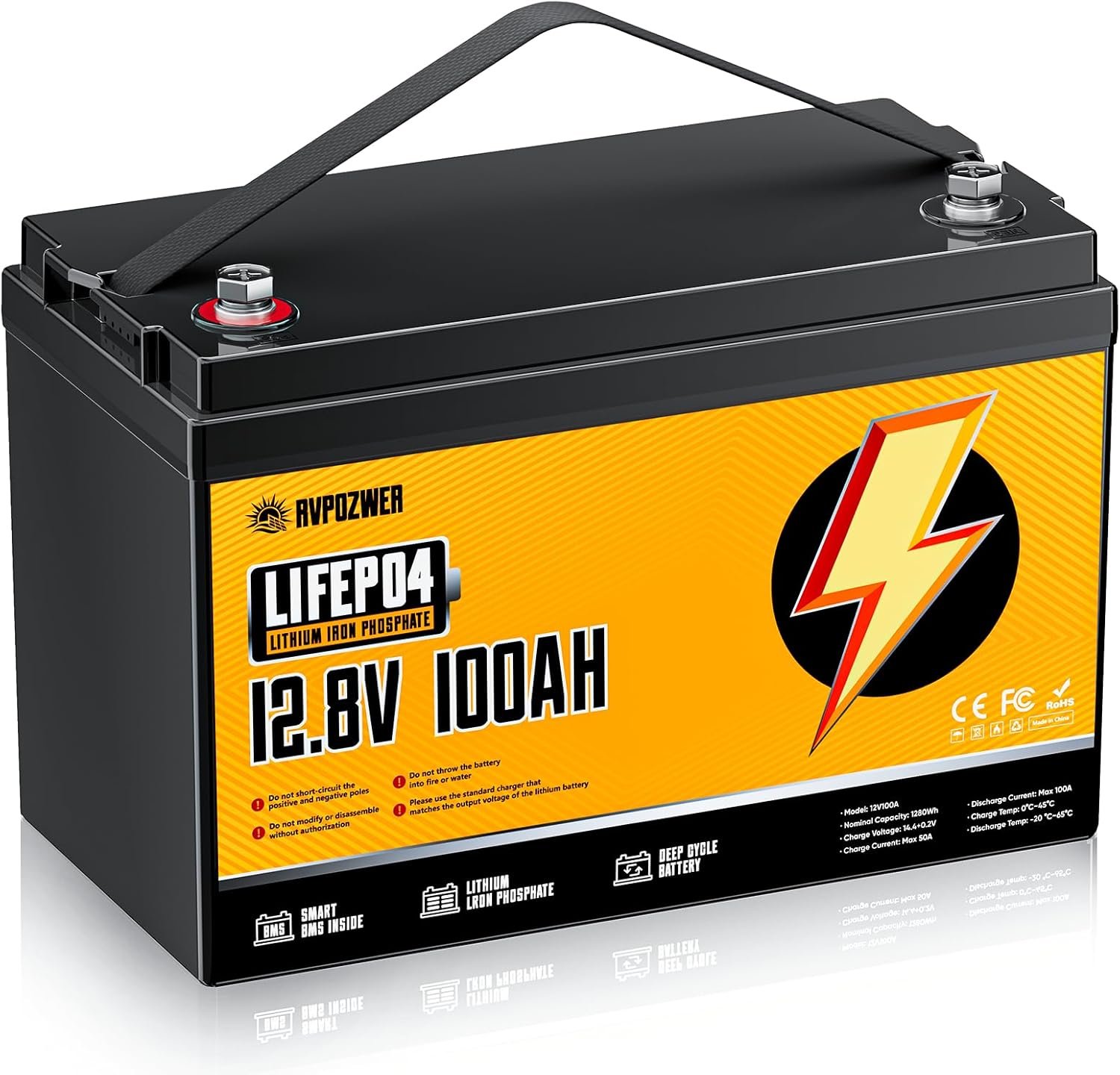
Auxiliary battery · fixed installation
Rvpozwer LiFePO4 100 Ah
A 100 Ah auxiliary battery can be a starting point for moderate loads if daily consumption and charging support it. This model states 1,280 Wh and a 100 A BMS: these figures must match the system's chargers, wiring and protection.
- 100 Ah capacity
- Stated nominal capacity: 1,280 Wh
- 100 A BMS
- Stated low-temperature protection
Spaziou assessmentAssess it within the whole installation. Confirm temperature and current thresholds in the manual; the BMS does not replace external protection.
View on Amazon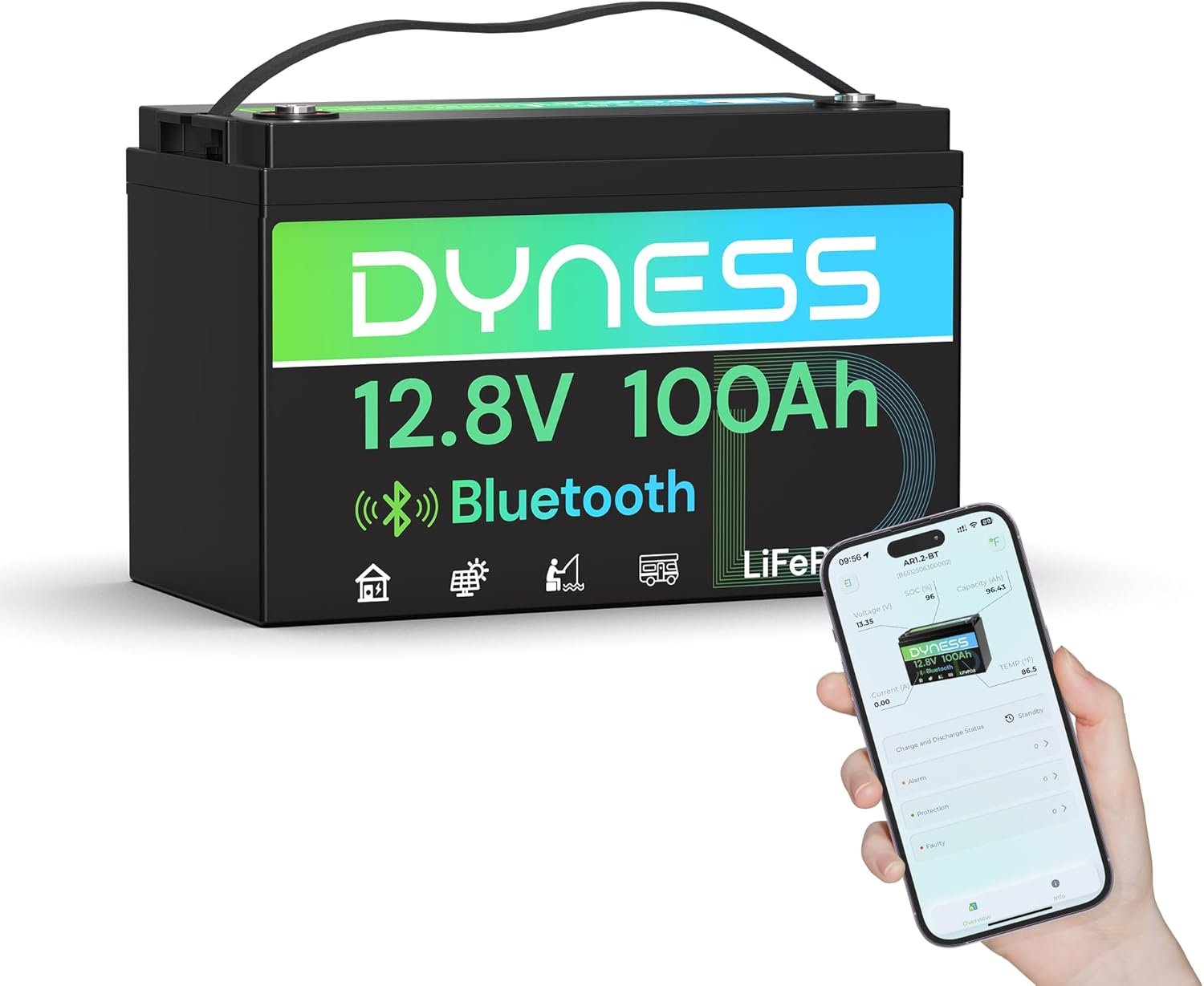
Auxiliary battery · check the status
Dyness LiFePO4 100 Ah Bluetooth
Monitoring the battery can help manage energy use while travelling. This Dyness combines a stated 100 Ah capacity with Bluetooth, useful if you want to view information on your phone and compare it with your charging and discharging habits.
- 100 Ah LiFePO₄ Battery
- Commercially designated 12 V system
- Stated 100 A BMS
- Bluetooth Connectivity
Spaziou assessmentUseful for accessing battery information. Check what the app displays and whether you also need a monitor for the complete installation.
View on Amazon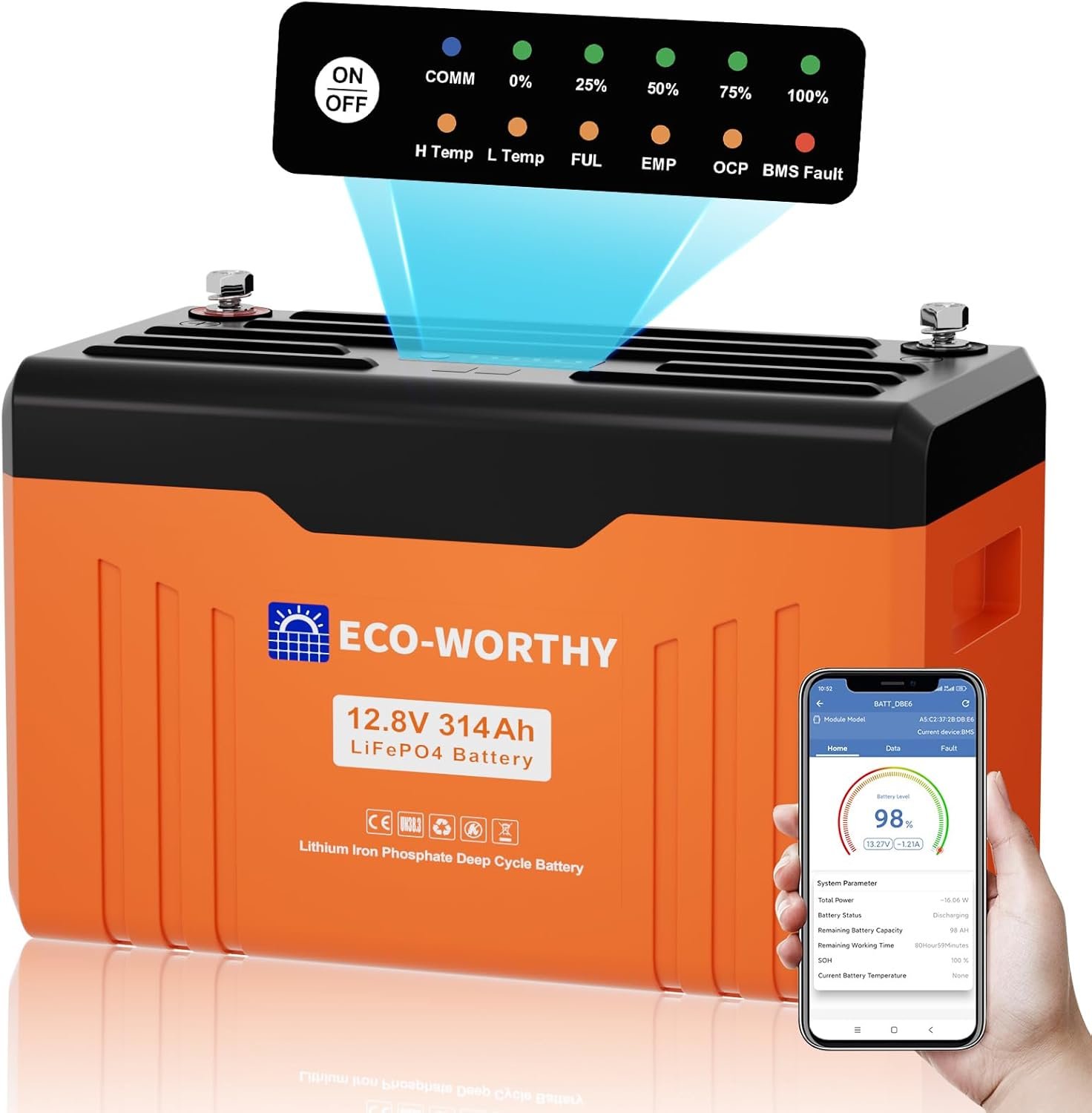
Auxiliary battery · large capacity
ECO-WORTHY EnergyTrek 314 Ah
A larger battery can extend the time between charges, but you must plan how to replace that energy. The 314 Ah EnergyTrek suits users who know their consumption and have space, restraints and charging suitable for this battery size.
- Stated capacity: 314 Ah
- LiFePO₄ technology
- Commercially designated 12 V system
- Stated Bluetooth and LED indicator
Spaziou assessmentAn option for a higher-capacity installation. Do not choose on Ah alone: check weight, dimensions, charging current and the time needed to recharge it.
View on Amazon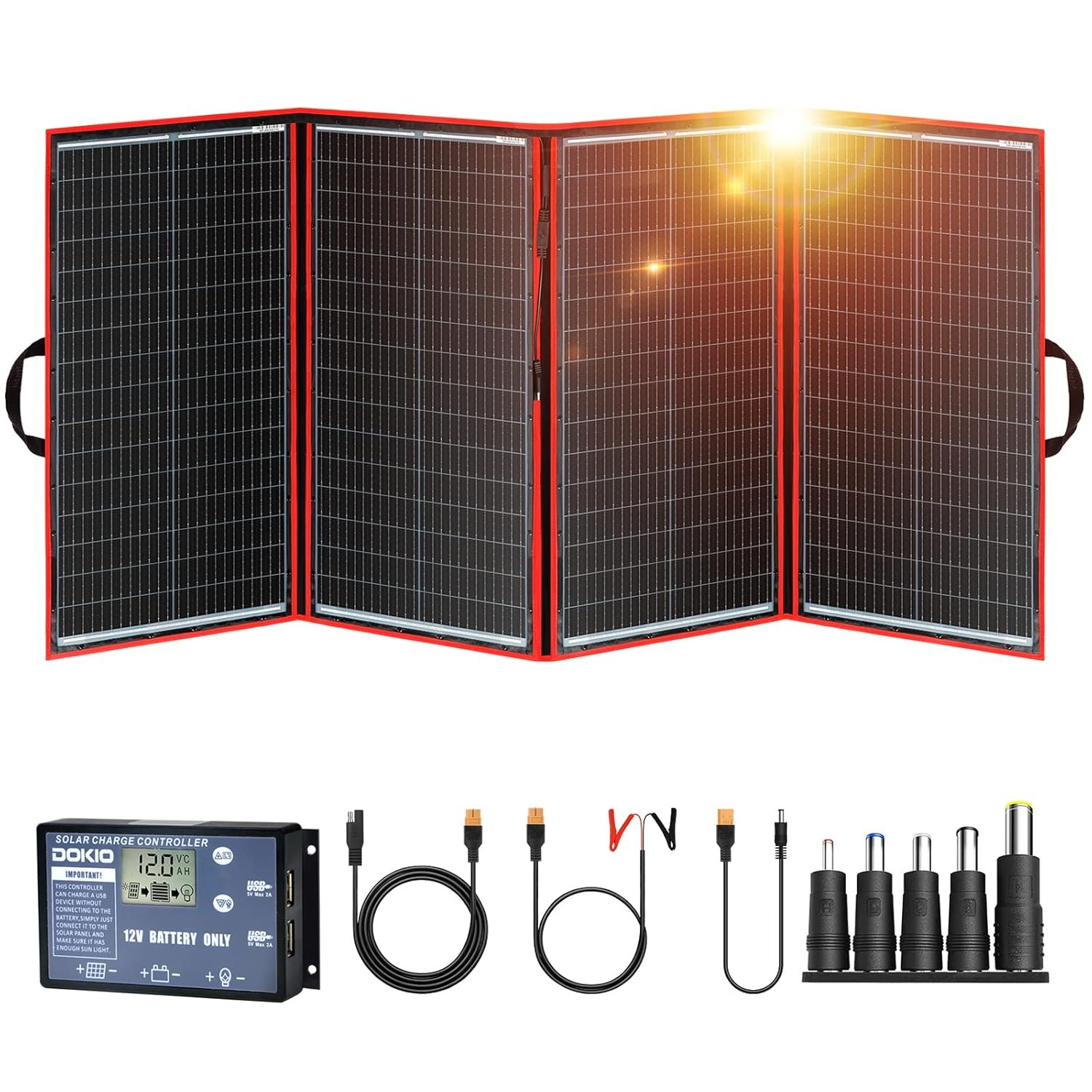
Solar · portable generation
DOKIO folding 160 W
A folding panel can face the sun independently of the campervan. This 160 W DOKIO may suit portable use if the kit's output and controller are compatible with the battery or device you intend to connect.
- Rated power: 160 W
- Folding monocrystalline panel
- Portable format
- Kit advertised for charging 12 V systems
Spaziou assessmentUseful for exploring portable solar charging. Confirm the variant's included controller and compatibility with your battery chemistry before connecting.
View on Amazon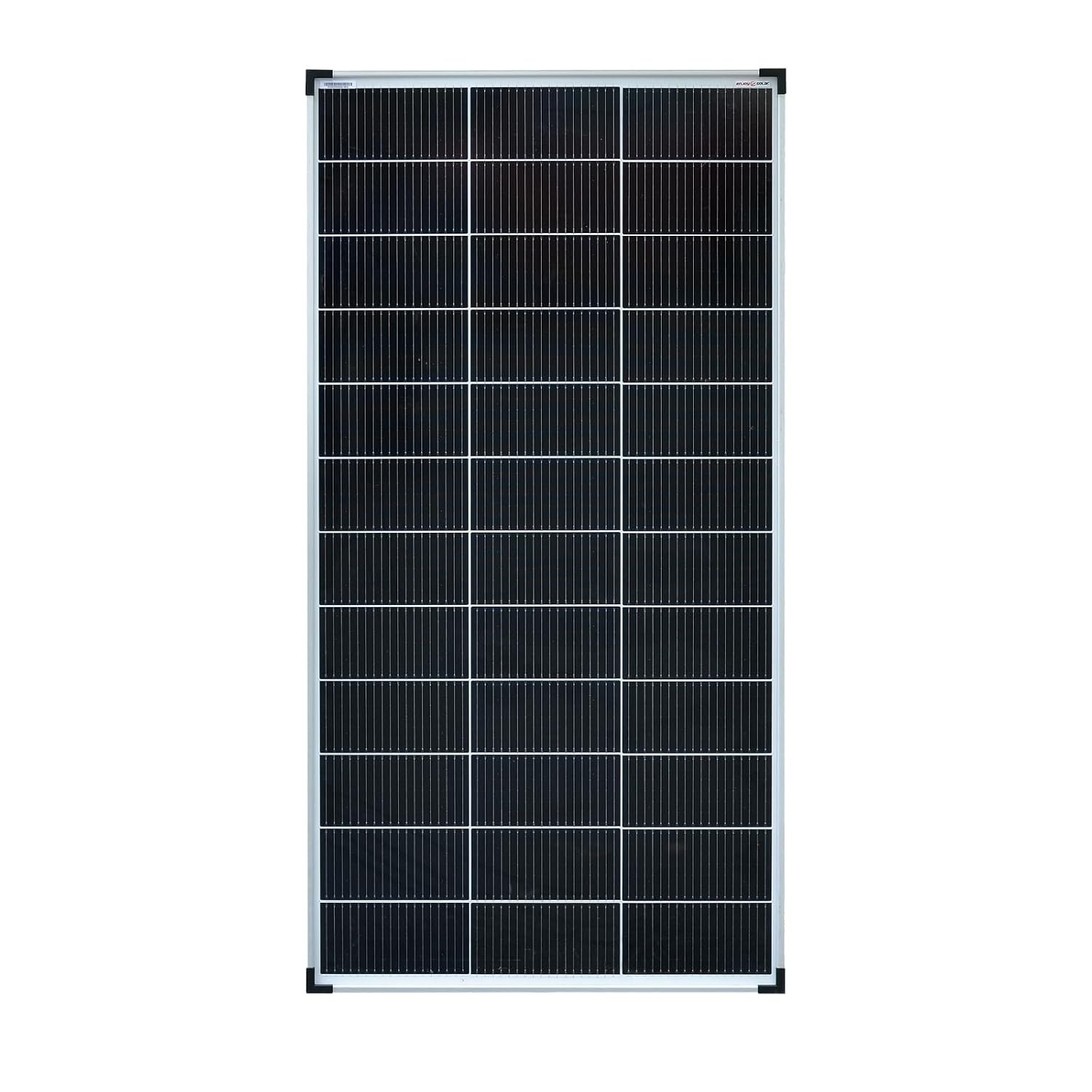
Solar · rigid panel
enjoy solar TOPCon 200 W
Rigid panels suit an installation that stays mounted and generates energy whenever sunlight is available. This 200 W TOPCon panel lets you compare roof use with other power ratings, allowing for rooflights, shade, mounts and the system's charge controller.
- Rated power: 200 W
- TOPCon monocrystalline cells
- Rigid format
- Product specified for 12 V systems
Spaziou assessmentSuitable if the roof and controller are compatible. The “12 V” label is not the panel's exact voltage: check Voc, current and the controller's input limits.
View on Amazon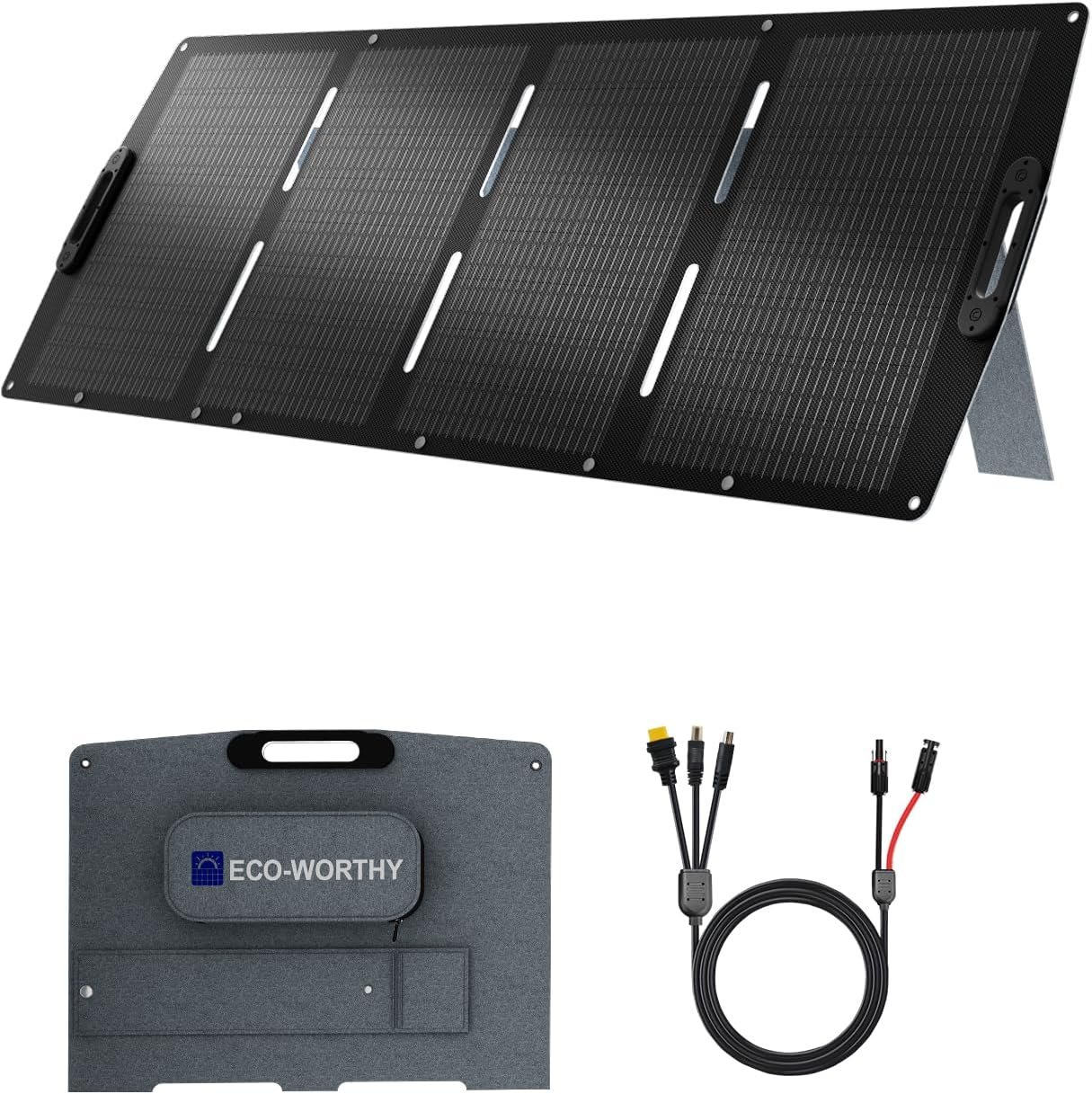
Solar · integrated stand
ECO-WORTHY portable 200 W
A portable panel with a stand can be angled during a stop and packed away before driving on. This 200 W ECO-WORTHY is worth comparing with a power station's solar input, particularly when you want charging beyond mains power.
- Rated power: 200 W
- Portable format
- Stated integrated stand
- Stated XT60 connection
Spaziou assessmentUseful for charging a compatible power station. An XT60 connector alone does not guarantee compatibility: check voltage, current, polarity and included accessories.
View on AmazonSpaziou tools
Calculate before buying.
Make an informed purchase
How to choose energy for a camper with a real calculation.
1. Calculate daily consumption
Write down the devices, their power and the time of use. As a starting point, energy in Wh = power in W × hours. For equipment that cycles on and off, such as a refrigerator, use a measured consumption or an estimate representative of the entire day. Avoid multiplying the maximum power by 24 hours without considering its operation.
2. Distinguish output power from runtime
A 600 W power station may run a device within that limit, but the rating does not tell you how long. Runtime depends on usable energy and consumption. Include conversion losses and simultaneous loads; also check startup surges and each output's limits.
3. Convert Ah to Wh correctly
To compare batteries, multiply Ah by the nominal voltage on the specification sheet. For example, 100 Ah × 12.8 V = 1,280 Wh nominal. Your appliances will not receive all of that energy: discharge allowance, losses, temperature and usage conditions affect the result.
4. Plan to recharge before expanding
A larger battery stores more energy but may take longer to charge. Consider driving time, available sunshine and external hook-ups. Choose chargers for your battery and vehicle; a solution that works for another model may not suit yours.
5. Check solar compatibility
The panel must respect the voltage range and current and power limits of the regulator or station. Check Voc, temperature, polarity and connectors, in addition to wiring. Two devices with XT60 or MC4 are not automatically compatible. You should also not connect a panel directly to a battery without the appropriate regulation system.
6. Allow for space and installation
Measure the available space, assess weight and allow the ventilation and access specified by the manufacturer. In a fixed installation, size batteries, cables, protection and charging equipment together. Use each device's instructions and qualified professional support when designing or modifying it.
An example to put the figures in order
If your loads total 500 Wh a day, two days without charging mean 1,000 Wh of planned consumption before losses and operating margin. This does not mean any 1,000 Wh battery will cover it. Nor does a 200 W panel constantly produce 200 W: output changes with sunlight, orientation and shade.
Inverter and DC-DC charger: different functions
The inverter converts battery DC into AC for compatible appliances. The DC-DC manages charging from the vehicle system to the auxiliary battery. Choose according to voltage, chemistry, alternator, currents and protection; buying both by rated power alone is not enough to design the installation.
Monitoring and control: understand your consumption
A monitor helps track inputs, outputs and state of charge. A battery or station app displays the data supported by that device, which may not cover all campervan loads. Check what you need to measure and how to install and calibrate the chosen system.
Your questions answered
Frequently asked questions
Is an auxiliary battery or a portable power station better?
A power station combines a battery, electronics and connections in a portable unit. An auxiliary battery is part of an installation requiring chargers, protection and distribution. Decide according to consumption, integration, total budget and whether you need power outside the campervan.
Is a 100 Ah battery enough?
Capacity alone cannot tell you. Calculate daily consumption, desired runtime and available charging. Compare in Wh using nominal voltage and allow for usable energy and system losses.
Can I connect any solar panel to any power station?
No. Check voltage range, Voc, current, permitted power, polarity and connection. A plug fitting does not prove compatibility. Follow the power station manufacturer's limits and accessory requirements.
Does the BMS replace installation fuses?
No. The BMS manages and protects the battery within its functions, but does not replace the protection and sizing needed for external cables and circuits. Design the installation as a whole.
How much energy does a 200 W solar panel produce per day?
The 200 W rating refers to test conditions. Daily energy production varies with location, season, orientation, shade, temperature and losses. For sizing, use a reasonable local estimate, then check actual production.
Can I charge a LiFePO4 battery with my existing charger?
Only if both charger and battery manufacturers confirm compatibility and suitable parameters. Check voltage, current, charging profile and temperature conditions. Do not assume a lead-acid charger is suitable simply because it shares the 12 V label.
Quick purchase · ASIN verified
Base components to assemble the system.
If you have already sized the battery, solar, driving charger and inverter, these products link to exact listings on Amazon.es. They are not a “universal kit”: check current, voltage, BMS, wiring and each component's compatibility before buying.
Battery · 100 Ah
LiTime LiFePO₄ 12 V 100 Ah
A common starting point for moderate systems. Before buying, check dimensions, BMS, cold-weather charging and the exact variant's continuous current.
Solar · 30 A
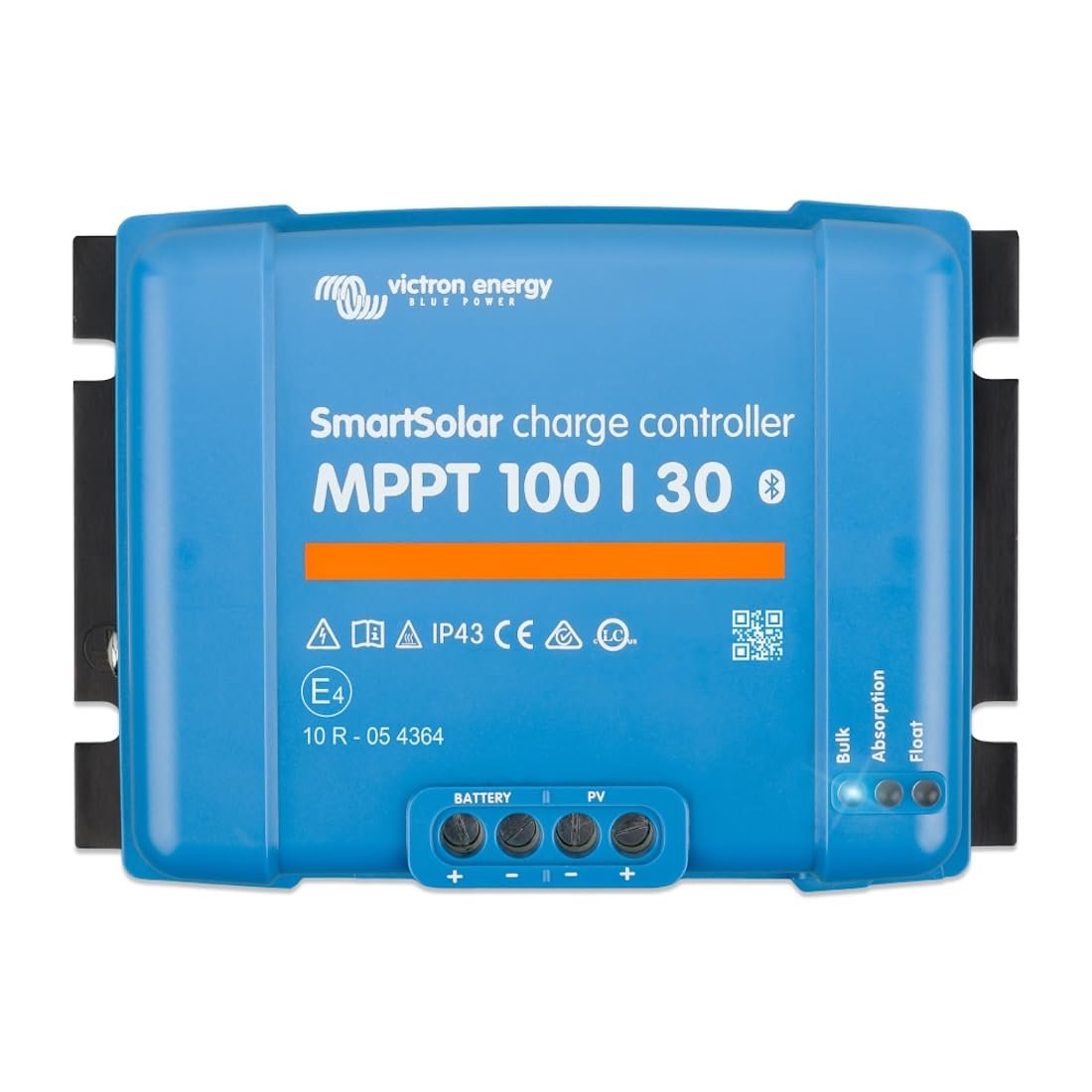
Victron SmartSolar MPPT 100/30
Controller for systems whose Voc, Isc and array power stay within its limits. Size panel → MPPT and MPPT → battery separately.
Charging while driving · 1–50 A
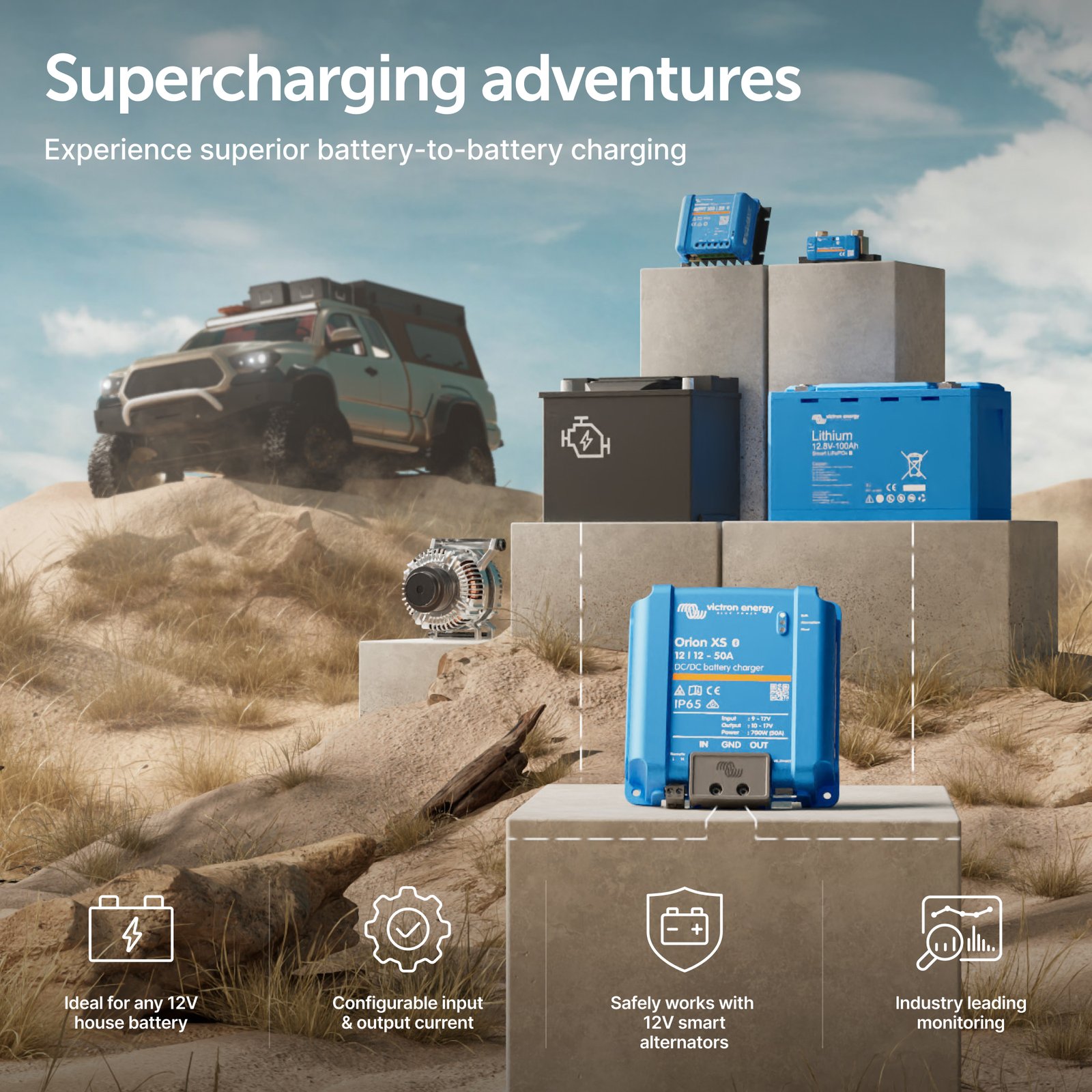
Victron Orion XS 12/12-50A
Adjustable DC-DC charger for 12 V systems. Before installation, check the alternator, configured current, cable cross-section, fuses and engine signal/detection.
Monitoring · 500 A
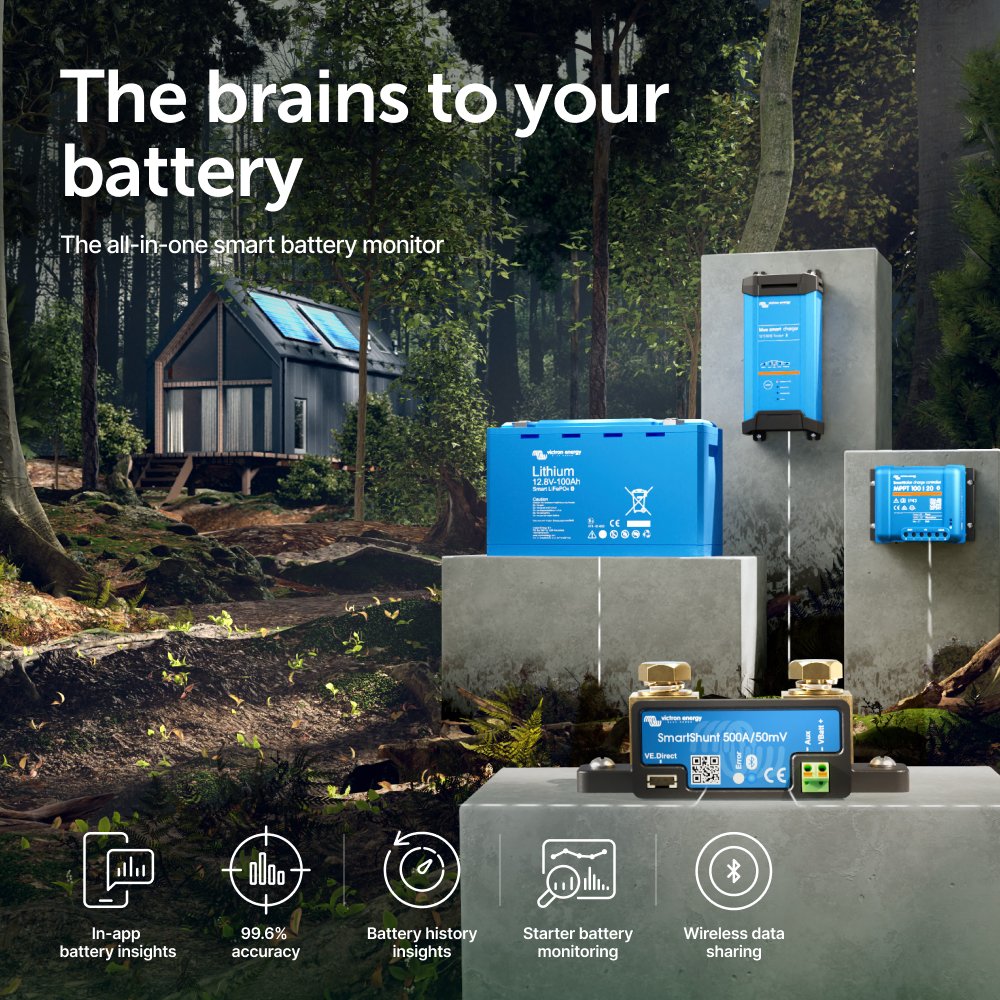
Victron SmartShunt 500A
Measures actual current, Ah and battery-bank balance when all charging and discharging passes through the shunt. Useful for checking that solar and DC-DC charging deliver what you expect.
230 V · 1,200 VA
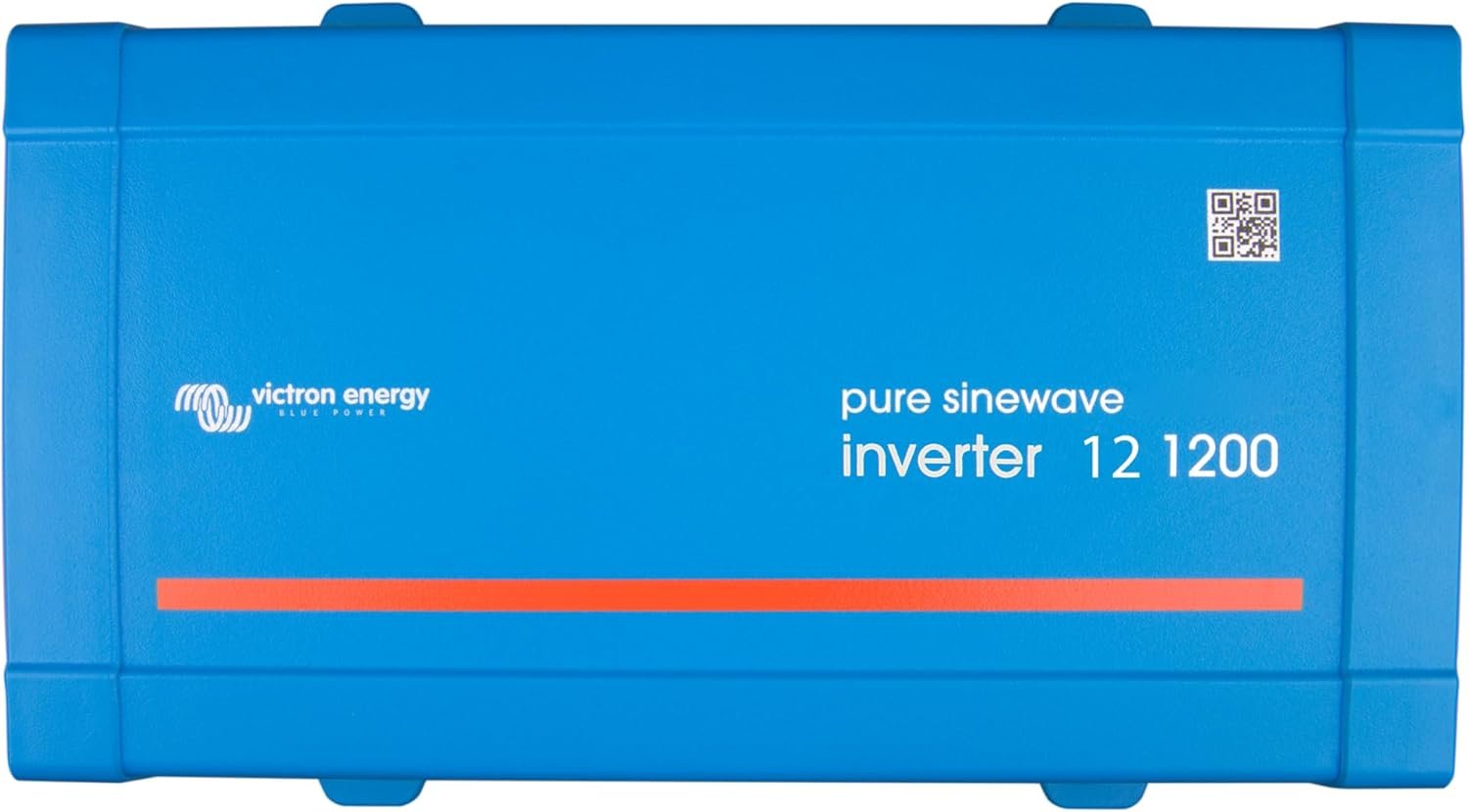
Victron Phoenix 12/1200 VE.Direct
A documented option for those who need 230 V without automatically choosing 2,000 W. Check usable power, surge ratings, battery/BMS, fuse and cable size.
As an Amazon Associate, Spaziou earns from qualifying purchases. Prices and availability may change; buttons link to specific products.
Keep preparing your campervan
Your next step.
Editorial selection: September 2026. We compare published specifications and suitability for use; we do not claim our own hands-on tests. How we choose products · Affiliate disclosure.