
12 V fridge cuts out on compressor startup: voltage drop and wiring
 Spaziou
Real problem · 12 V electrics
12 V fridge cuts out on compressor startup: how to check voltage drop
The battery may read 12.7–12.8 V at rest, yet the fridge switches off when its compressor starts. The reason may be the voltage under load and losses between battery, fuse, connectors, earth and fridge socket.
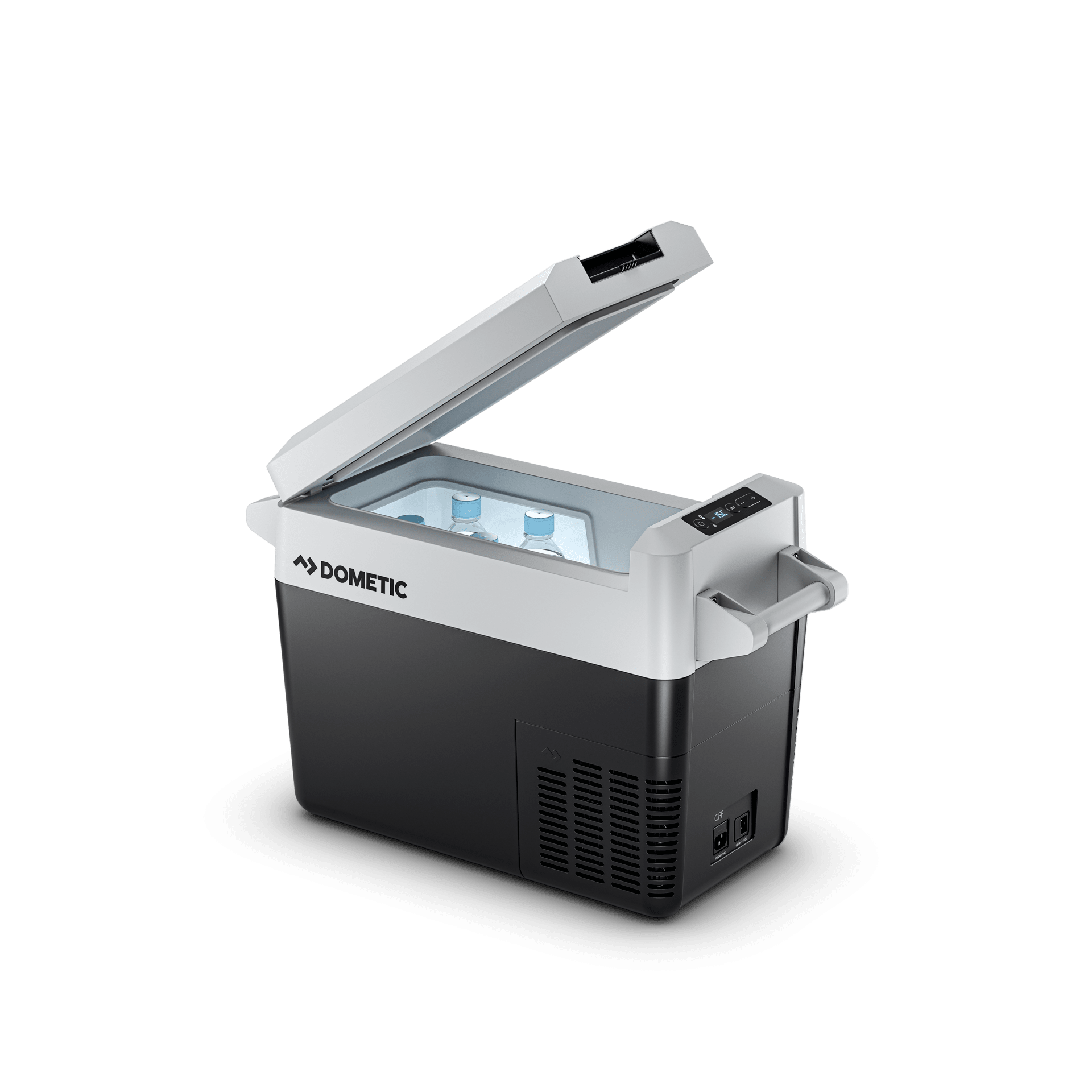
Why it happens at startup
The battery voltage drops under load
Resting voltage does not necessarily show what the equipment sees once current flows.
Cables add resistance
Longer, thinner cable runs can cause greater voltage drop. At 12 V, a few tenths matter.
Connections count too
Fuses, holders, sockets, crimps, shunts, switches and earth connections add resistance to the circuit.
Quick test: battery vs fridge
Measure while the compressor tries to start, not just at rest.
How to interpret the result
| What you see | What it means | Next check |
|---|---|---|
| Battery and fridge voltages drop by almost the same amount | The source/battery itself may drop substantially in voltage under load. | Battery condition, SOC, BMS and actual current. |
| Battery voltage holds but the fridge receives substantially less | The loss is along the supply path. | Cable, length, fuse holder, connectors, 12 V socket and earth connection. |
| Only fails with extensions/splitters | You have added contacts and cable length with extra resistance. | Try a suitable direct connection and remove intermediate accessories. |
| Voltage is correct but the fault remains | Not every startup fault is voltage drop. | Protection setting, compressor/controller, temperature and error codes. |
What to check between battery and fridge
- Cable size and length: calculate the actual positive + negative run or enter one-way length in Cable Lab.
- Fuse holder: look for heat, corrosion, loose screws or blackened terminals.
- Cigarette-lighter socket: may be a limiting point; not all plugs and sockets support continuous loads equally.
- Extension leads and splitters: Dometic advises against adding them when a low-voltage alert occurs because they increase losses.
- Earth/negative: a poor negative connection causes the same problem as a poor positive one.
- Terminals: a thick cable with a bad crimp is still a poor installation.
What cable size do I need?
There is no universal cable size for a “12 V fridge”. It depends on maximum current, cable length and acceptable voltage drop. Enter the manufacturer's specified current, or a correctly measured value, in our calculator. For sensitive circuits, a 2–3% target is often more useful than tolerating high losses simply because the fuse holds.