Campervan solar in series or parallel: Voc, Isc and MPPT limits
 Spaziou
 tools · PV configuration
Campervan solar panels in series or parallel: calculate Voc, Isc and MPPT limits
Total power can remain the same while the installation changes completely. Series adds voltage; parallel adds current. That distinction determines the MPPT, cable size, connectors and shading behaviour.
Series vs parallel at a glance
| Series | Parallel | |
|---|---|---|
| Voltage | Adds up | Remains approximately that of one string |
| Current | Remains approximately that of one string | Adds up |
| Cable voltage drop | Easier to manage because of lower current | Needs greater care because of higher current |
| Uneven shading | May affect the whole string more strongly | One string can remain more electrically independent of the other |
| Y connectors | Not needed for a single string | Common for connecting strings |
| Critical MPPT limit | Maximum Voc, especially in cold weather | Isc/total current and connector/cable capacity |
Series/parallel calculator
Check your array before buying the MPPT
Enter data per panel. The cold margin is approximate; final calculations must use the manufacturer’s Voc coefficient and design minimum temperature.
Real example: 2 × ShadowFlux 200 W
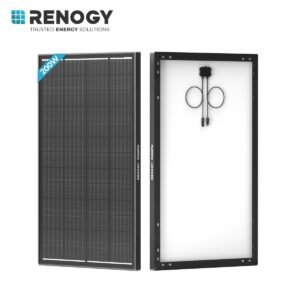
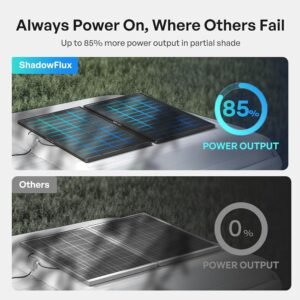
With 36.5 V Voc and 6.86 A Isc per panel, two in series give approximately 73 V Voc at STC and 6.86 A Isc. In parallel they give approximately 36.5 V Voc and 13.72 A Isc. Both may fall within the MPPT 100/30 limits for these values, but the final design must include cold-weather Voc, Vmp, wiring and total power.
MPPT · Documented model
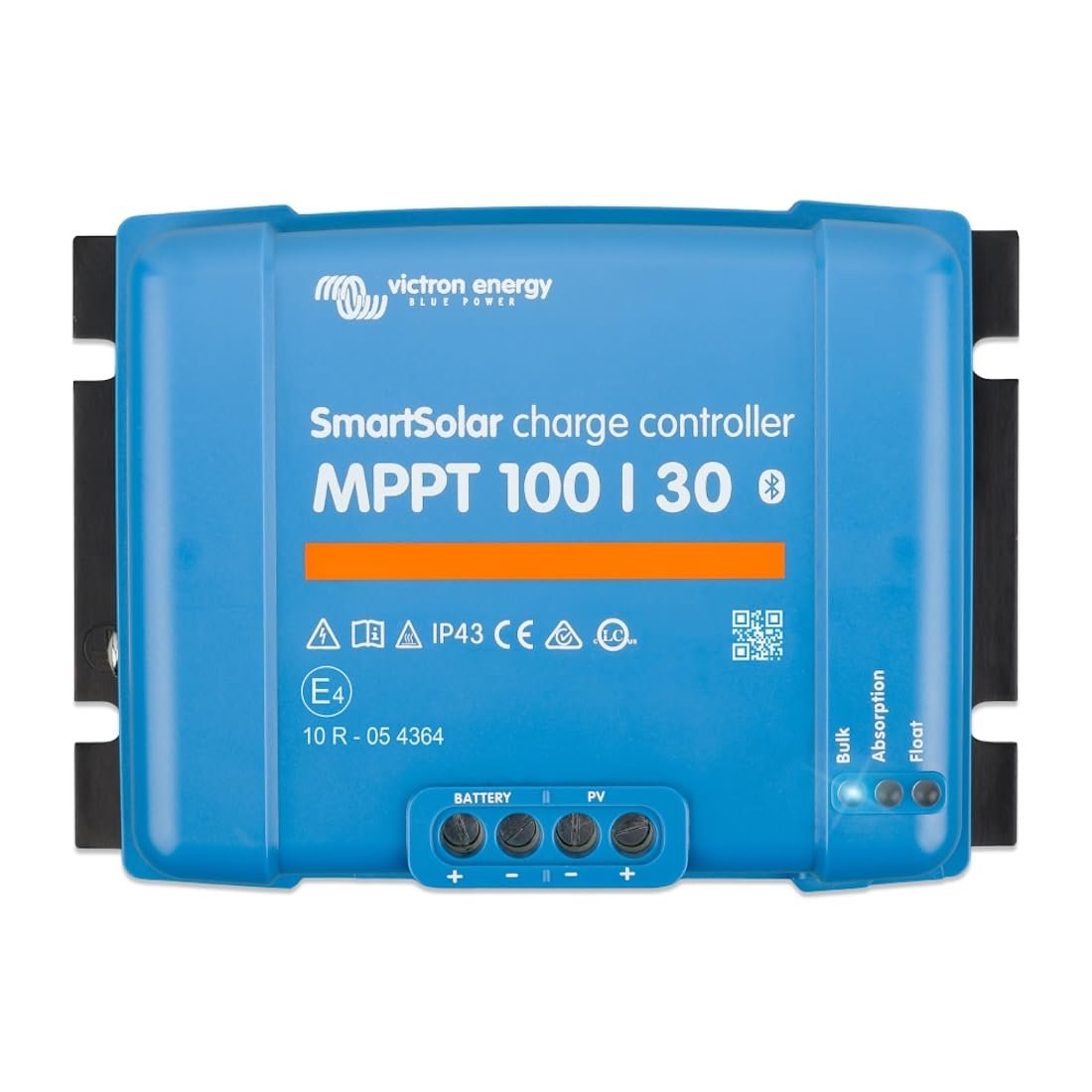
Victron SmartSolar MPPT 100/30
Victron specifies for the 100/30: 12/24 V battery, 100 V maximum Voc, 35 A maximum PV Isc and 440 W nominal PV power at 12 V. The manufacturer also states that nominal PV voltage must be at least 5 V above battery voltage to start.
The most dangerous mistake: calculating only at 25 °C
When each architecture is usually useful
Series
Longer runs, moderate current and sufficient controller Voc headroom. Useful when identical panels receive similar sun exposure.
Parallel
Roofs where panels have different shading or locations. Add currents and check branches, cable size and protection.
Series/parallel
Larger arrays. Requires electrically consistent strings and simultaneous checks of maximum voltage, total current and string protection.