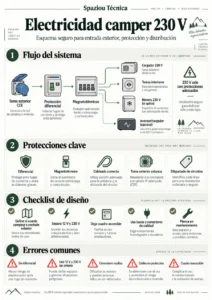
12 V campervan electrics: wiring, fuses and system design
 Spaziou
 Technical · 12 V electrics
12 V campervan electrics: design the system before buying components
A reliable installation starts with consumption and peak currents, rather than choosing a big battery first. Size battery, alternator charging, solar, fuses, cable sizes and distribution as one system.

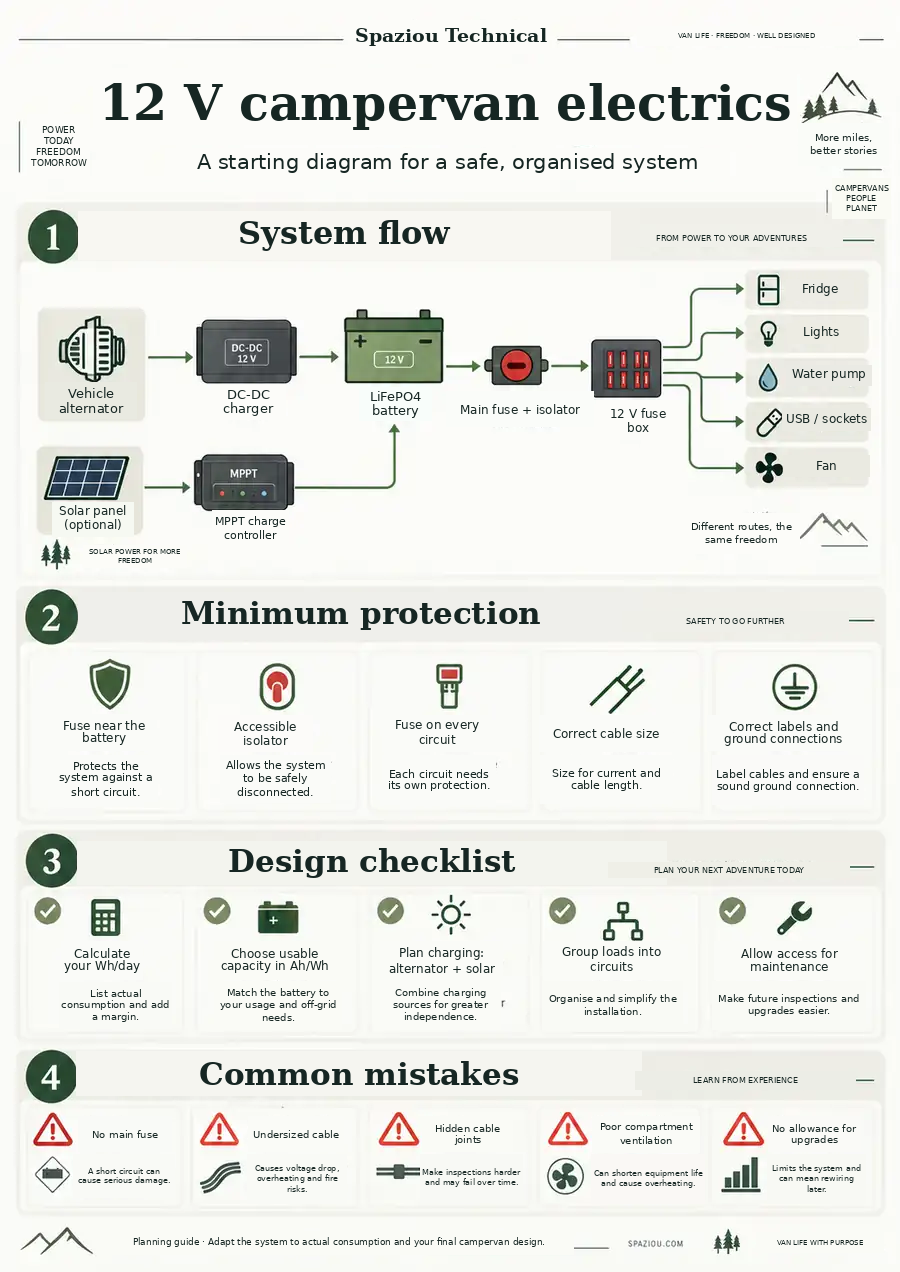
Basic architecture
Storage
Leisure battery, BMS and main isolator.
Power inputs
Alternator DC-DC charger, solar controller and mains charger if fitted.
Layout
Positive/negative busbars, fuse box and independent circuits.
Loads
Fridge, lights, pumps, USB, heating, fans and inverter.
Correct calculation order
1. Wh per day
Calculate daily energy per appliance, rather than just instantaneous power.
2. Battery capacity
Define autonomy days and reserve without excessive battery discharge.
3. Maximum currents
Especially inverters, DC-DC chargers and high-power loads.
4. Wiring
Cable size depends on current, round-trip length, allowable voltage drop and installation conditions.
5. Fuse
Protects the conductor and is fitted near the power source where appropriate.
| Problem | What to calculate | Tool |
|---|---|---|
| 12 V inverter | DC current + cable run + voltage drop + equipment manual | Cable Lab |
| Fridge switches off when starting | Measured battery → fridge voltage drop under load | Fridge diagnosis |
| Solar | Panel → MPPT and MPPT → battery separately | MPPT guide |
Monitoring: the shunt completes the energy balance
A battery app shows what its BMS knows; a shunt-based monitor can measure the whole battery bank’s flow when all loads and sources pass through the measurement point. That lets you compare predicted and actual use, especially with inverter, solar and DC-DC charging.
Protection and distribution: work from the source towards each branch
Main protection
Coordinate protection with the conductor and source capability. No single current rating suits all batteries and cable lengths.
Isolation
An accessible isolation point simplifies maintenance; its rated current must suit the installation.
Busbar / distribution
Organise positive and negative connections to avoid uncontrolled terminal stacking and give each circuit its own protection.
String fuses
Size each circuit by load, cable, route and installation conditions. The primary aim is to protect the conductor.
Fuses: what they actually protect
A fuse is not selected to protect the fridge in the abstract: its primary job is to prevent dangerous wiring current. Coordinate it with cable size and equipment.
DC-DC chargers, relays and modern alternators
In modern vehicles, alternator charging must respect the actual vehicle system. A DC-DC charger controls current and charge profile; a voltage-sensitive relay simply connects/disconnects batteries according to its activation logic.
| Situation | Practical interpretation |
|---|---|
| Conventional alternator + compatible battery | A VSR/relay may remain suitable if voltage is stable and the system correctly sized. |
| Smart alternator / variable voltage | A VSR can disconnect when the ECU lowers voltage even with the engine running. A compatible DC-DC charger is usually more controllable. |
| LiFePO₄ | Do not connect directly by habit: check charge profile, BMS maximum current and alternator demand. |
| Smart alternator + Orion XS | Can use configurable automatic detection or an external engine signal; D+ is not mandatory. |
| Smart alternator + Renogy DCC30S/50S | Renogy requires the IGN port and ignition signal in this architecture. |
LiFePO4
Before fitting lithium, check the BMS, minimum charging temperature, maximum current, compatible chargers and wiring capacity. Replacing AGM with LiFePO4 is not always a simple swap.
Buy by function · Amazon
Six products for an organised 12 V system.
Choose after calculating. These products serve different system functions; not every campervan needs all of them.
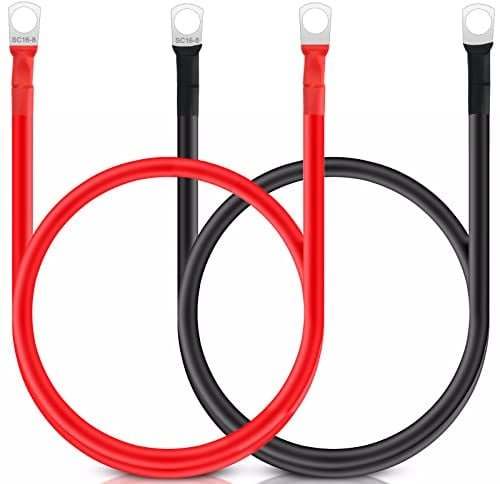
JatilEr · 16 mm² · 50 cm · M8
For very short runs where Cable Lab and the equipment manual permit 16 mm².
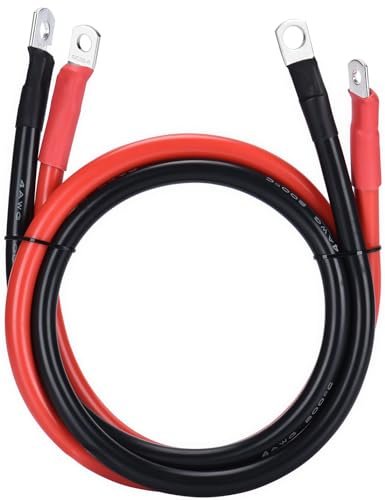
DIHOOL · 25 mm² · 50 cm · M8
An intermediate option for high current. Check length, terminal and thermal rating.

DIHOOL · 35 mm² · 50 cm · M8
For circuits requiring 35 mm² by calculation. Do not buy simply because thicker seems better.
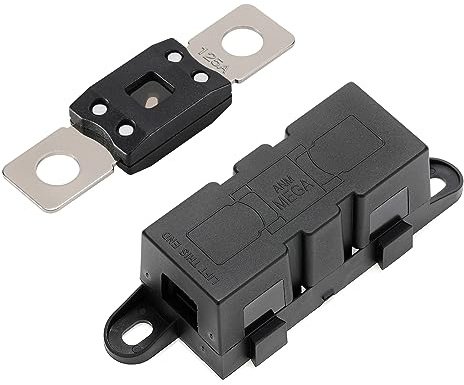
VEXUNGA · MEGA/ANM · 125 A
Example of high-current protection. 125 A is not a universal value; it must be based on the cable and equipment.
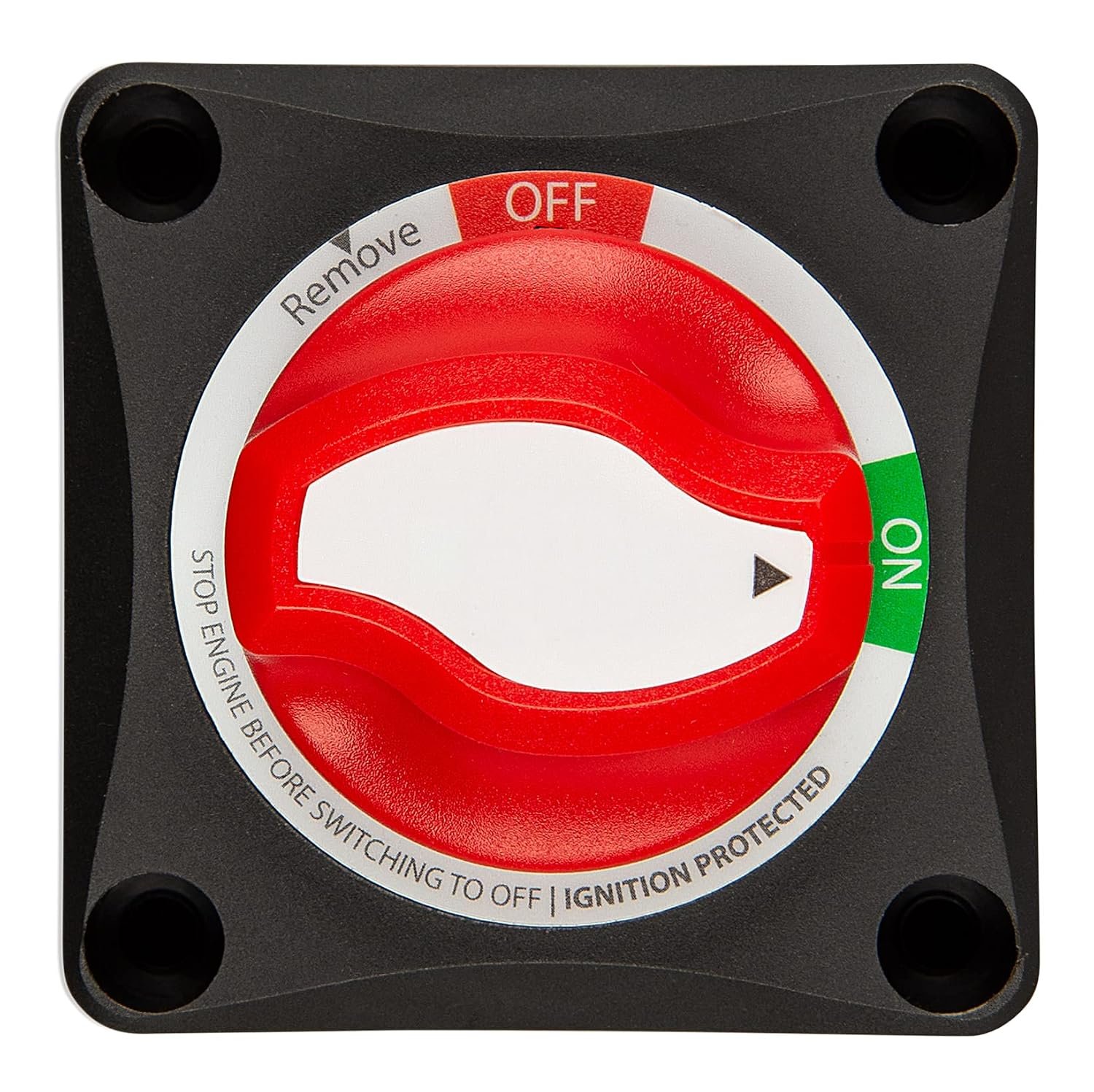
Victron Battery Switch · 275 A
Manual battery-bank isolation for maintenance or storage. Does not replace the fuse.
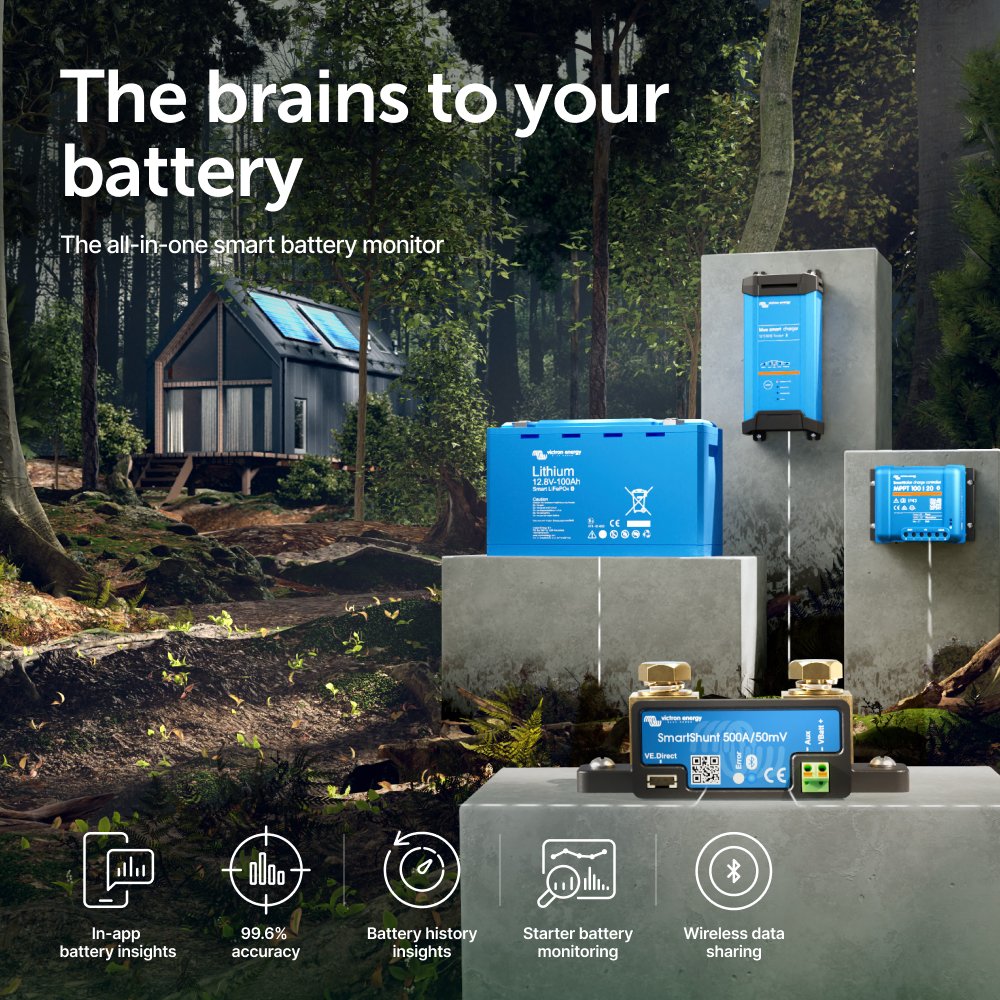
Victron SmartShunt 500A
Measures actual current, Ah and the complete battery-bank balance when all negative current passes through the shunt.
As an Amazon Associate, Spaziou earns from qualifying purchases.
Common mistakes
- Fuse too far from the battery.
- Long, undersized cables.
- Connections without suitable terminals.
- No isolator planned.
- Powerful inverter with inadequate wiring.
- Mixing current-return paths without understanding chassis ground and the shunt.
- No maintenance access.
Content reviewed in September 2026. Spanish regulations may change; check your specific conversion with the Spanish ITV inspection service, technical adviser and/or authorised installer responsible for documenting it.
Spain’s BOE · Low-voltage electrical regulations ↗Spain’s BOE · Updated UNE reference standards ↗