Campervan solar not charging: causes and checks
 Spaziou
Real problem · Solar
If there is sun but no battery charging, distinguish panel, connectors, fuse, MPPT, configuration and battery. The controller readings usually indicate which side of the system has the problem.
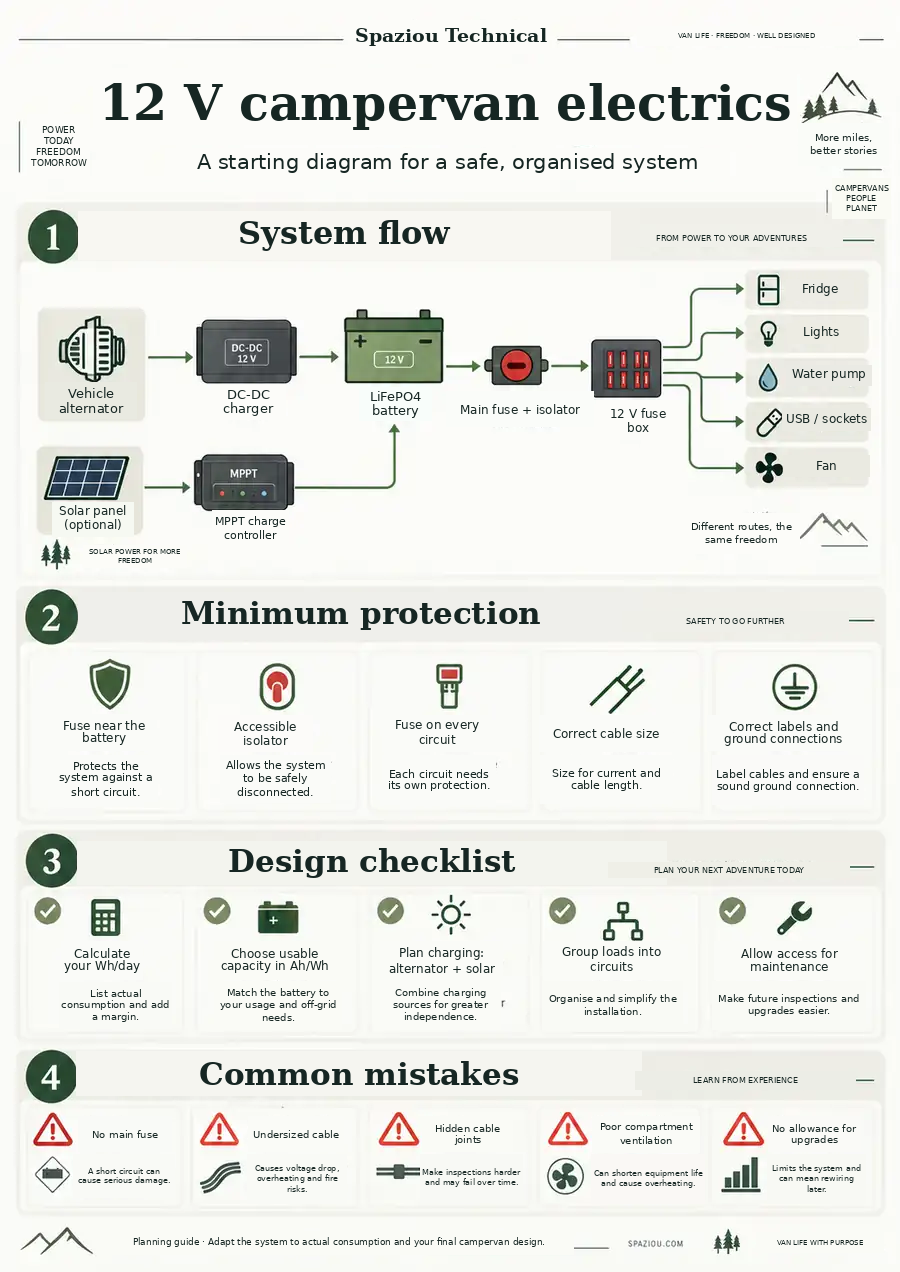
Quick diagnosis
Panel → controller → battery.
No PV voltage detected
Check full/partial shading, connectors, isolator, fuse and wiring between panel and controller. Follow equipment procedures before disconnecting any loaded connector.
PV voltage present, but no charging
Check that the MPPT recognises the battery, the charge profile is correct and panel voltage exceeds the minimum needed to start tracking.
Very little charging
Temperature, orientation, shade, dirt and battery state of charge all matter. A nearly full battery may accept less current without a fault.
Useful test
What to record before replacing the MPPT.
1 · Voc / panel voltage
Compare controller readings with what your configuration and conditions suggest. If solar input is zero, start with the panel and wiring.
2 · Battery voltage
The controller must identify the 12/24 V system correctly and use a compatible profile. Check connections and polarity.
3 · Charging current
Test with a real load and known solar conditions. An isolated early-morning or shaded reading is no basis for condemning the controller.
If the controller fails or is undersized
Three MPPT controllers with actual photographs and Amazon listings.
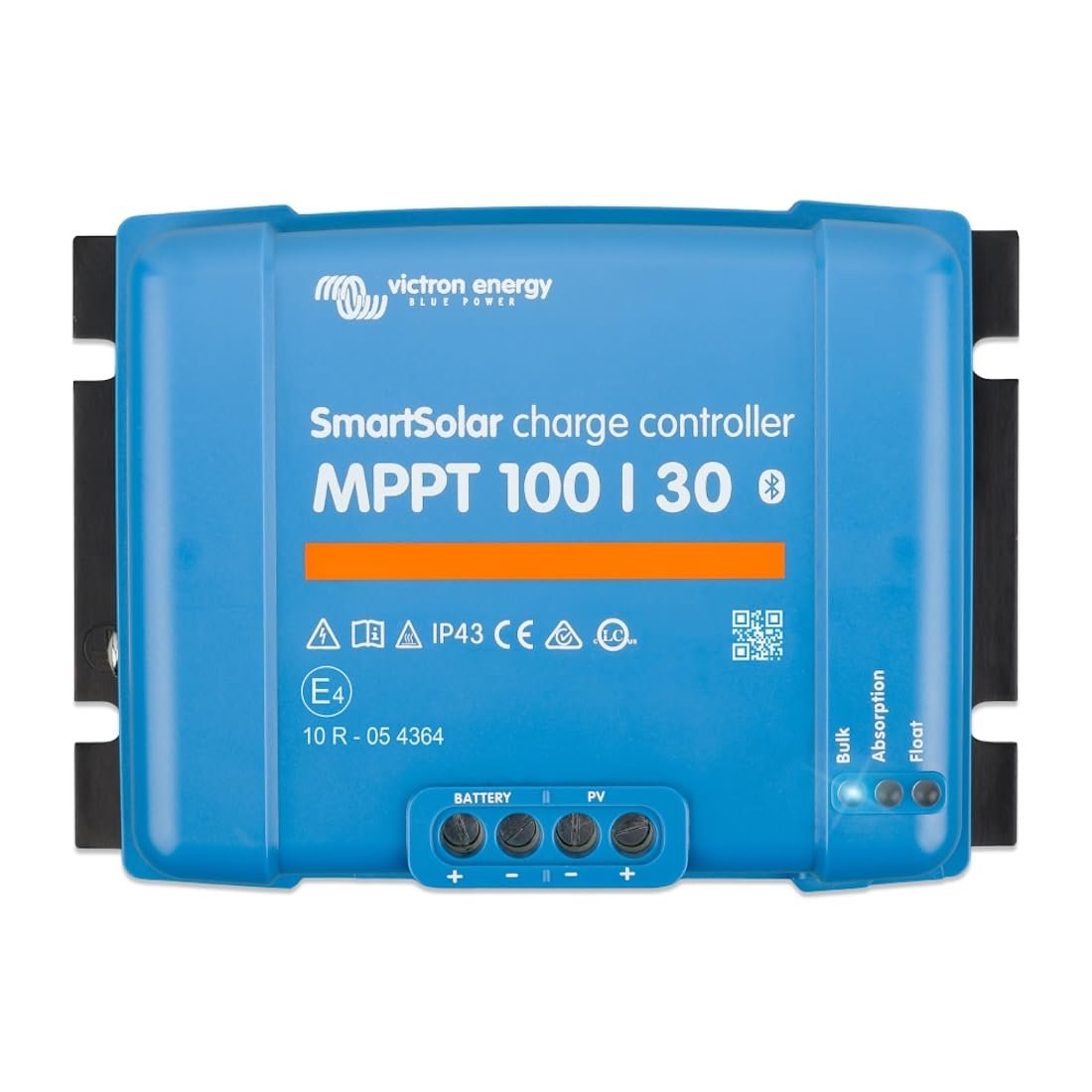
Victron SmartSolar 100/30
30 A and 100 V class. Suitable where more headroom than a small controller is needed; check actual Voc and Isc.
View on Amazon →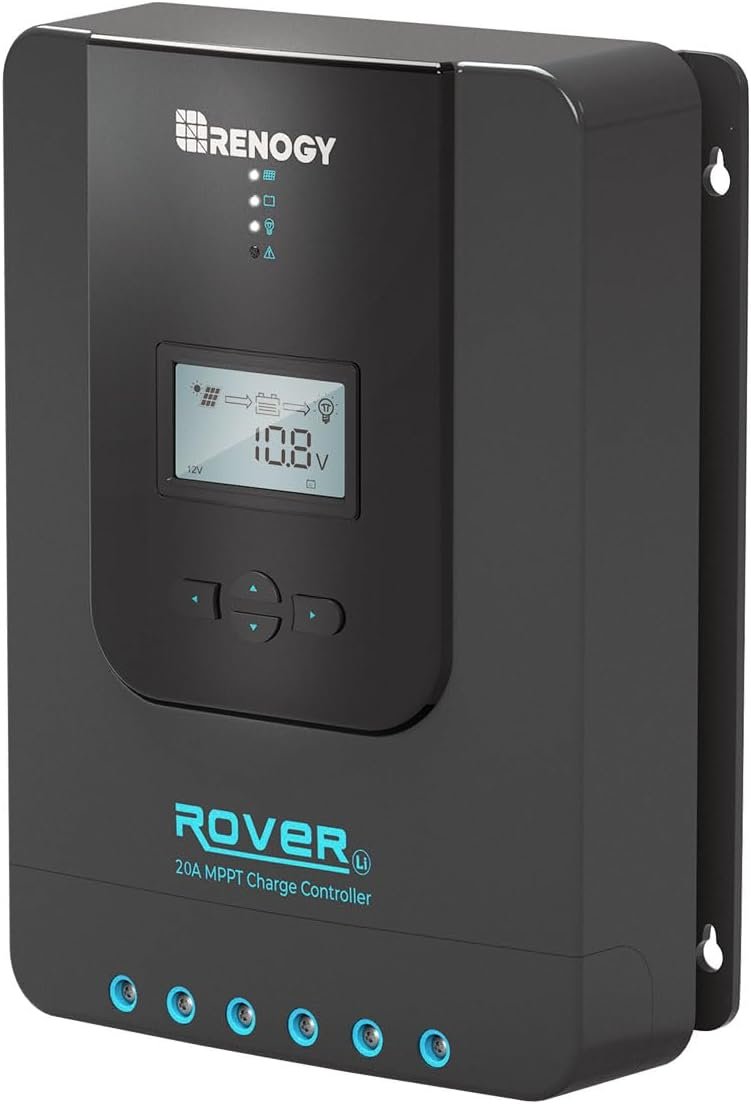
Renogy Rover Li 20 A
A mid-range option for modest solar arrays. Check exact generation and compatible Bluetooth module if needed.
View on Amazon →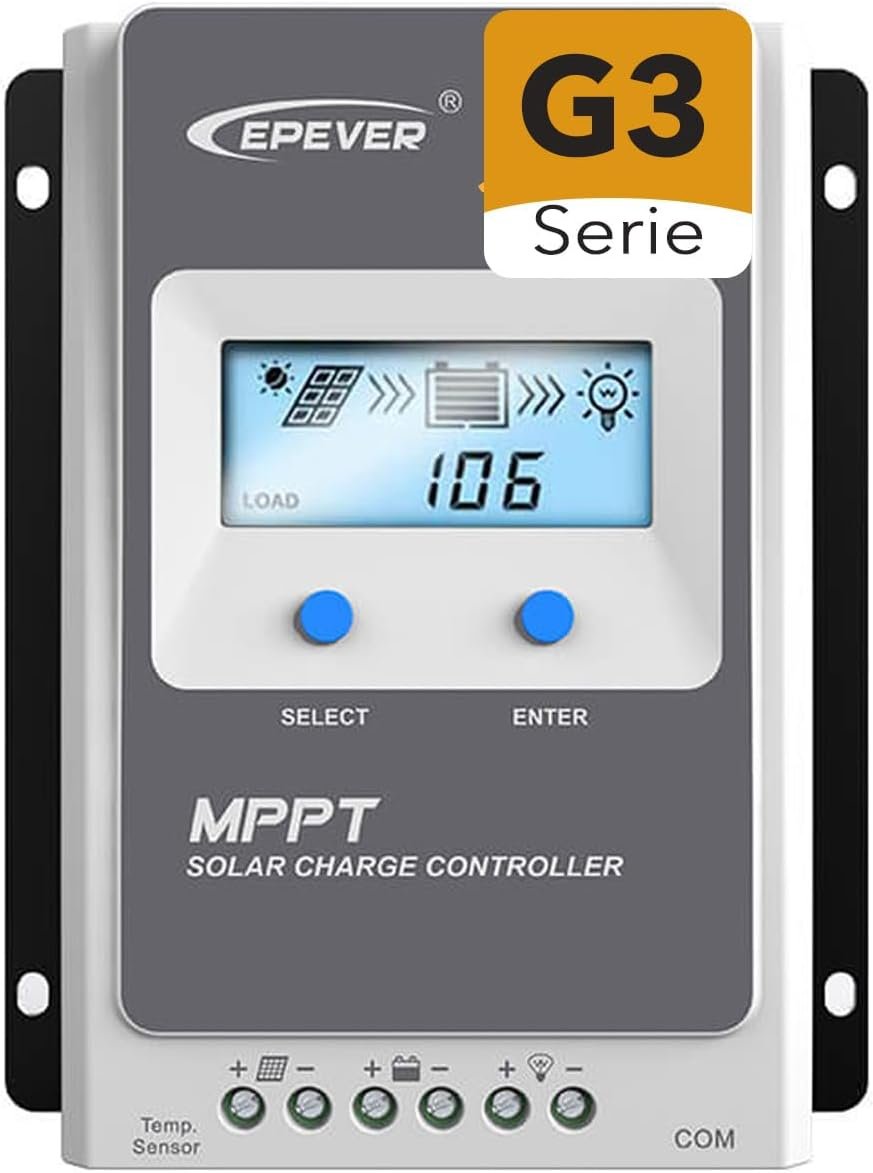
EPEVER Tracer3210AN G3
30 A. Check the G3 variant, maximum PV voltage, lithium profile and wiring before replacing your controller.
View on Amazon →Frequently asked questions
Questions when campervan solar is not charging.
Could it simply be shade?
Yes. Partial shade can significantly reduce output depending on module connections. Test with an unshaded panel and record the MPPT reading before dismantling anything.
Does the MPPT charge a full battery?
Current can fall substantially during absorption or float charging. Check state of charge and controller stage before treating low current as a fault.
Can I fit a larger MPPT?
Yes, if array voltage, current and power stay within its limits and the battery side is correctly sized. Do not choose by amps alone.
Buying decision
When to replace the controller and when not to.
No panel voltage
Do not buy an MPPT yet: investigate the panel, fuse, connectors or wiring.
Normal input, abnormal output
If configuration and battery are correct but the controller still misbehaves, comparing compatible replacements makes sense.
Additional check
Compare behaviour under different conditions.
In strong sunlight
Test around peak solar irradiance without panel shading. If the controller still shows no PV input, panels, connectors or wiring are more likely than simply insufficient sun.
With a discharged battery
A depleted battery should accept more current than a nearly full one. If the MPPT shows available power but delivers little current to a genuinely discharged battery, check configuration, limits and battery condition.
After a modification
If the problem began after adding panels or changing series/parallel connections, recheck Voc, polarity and controller limits before assuming equipment failure.